| Author |
 Replies: 34 / Views: 4,160 Replies: 34 / Views: 4,160 |
Page 3 of 3
|
|
|
|
Moderator
 United States
23522 Posts |
The things that interest me the most are: 1) The die polishing in the eagle's tail 2) The pitting below the L 3) The straight die polishing lines extending from the denticles thru the LUR in PLURIBUS - is that prominent line after the R raised? 4) The dot in the E - there are many examples of such odd dots in 1921 Morgans. It's theorized that they may be the result of hardness tests of the dies. None of those have any mention in available descriptions of 1921-P VAM's. Taken singly, they may not be important enough to warrant designation as a new VAM. Together, they might. One other thing, wrongalot. Do you have any other 1921-P Morgans? If so, can you compare the reeding between this one and another? Some 1921's had 157 reeds instead of the usual 189, and the space between reeds is noticeably wider when comparing the two side-by-side. That won't help us with attribution, but it'll be a point of significance if yours is an Infrequently Reeded type. |
|
Pillar of the Community
 United States
609 Posts |
OK, first off, which part is the reeding? (I know I am dumb), and second no I don't have another P only an S
|
|
Pillar of the Community
United States
609 Posts |
Yes the line after the R is raised.
|
|
Bedrock of the Community
United States
14454 Posts |
the ridges that go all the way around the outside of the coin is the reeding
|
|
Pillar of the Community
United States
609 Posts |
and here I thought that was called a rim...darn it wrong again...hehehe
|
|
Pillar of the Community
United States
756 Posts |
Ok, I can't justify spending money on a magnification system just to look at the couple of 21Ps I own, anyone suggest the next best option?
You all have my interest sparked to look at all my morgans closely.
|
|
Pillar of the Community
United States
609 Posts |
I counted the reeds. and there are 189, boy was that hard to do...  |
|
Bedrock of the Community
United States
14454 Posts |
ok then its regular reed instead of Wide reeding (infrequent reeding) so that answers that question
|
|
Pillar of the Community
United States
1703 Posts |
wrongalot, i enlarged your pic a bit,hope it helps somewhat.You counted all the reeds!   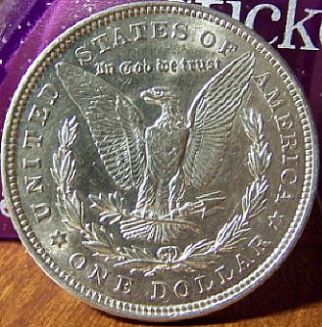 |
|
Pillar of the Community
United States
2365 Posts |
I thought those were called "denticles"?
|
|
Pillar of the Community
United States
609 Posts |
Thank you TL. Yes, I counted them all. I got a toothpick and used it to go from one to the other, lost my place a dozen times, almost threw it out the window, but I got r done.... |
|
Bedrock of the Community
United States
14454 Posts |
dsking the denticles are around the rim which is if the coin is laying flat on the table the circumference of the coin is the rim, the denticles are the ridges around that part, if you stand a coin on its end (where its standing up) and looking at the narrow part of the coin, those ridges are reeds Denticals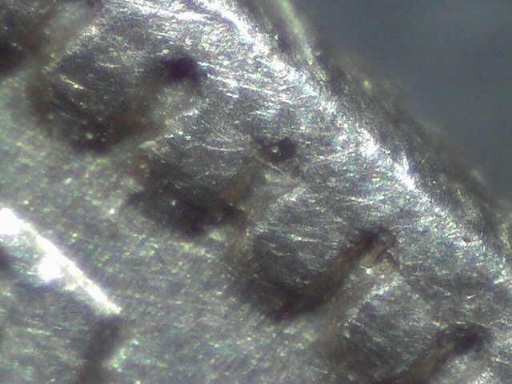 Reeds Reeds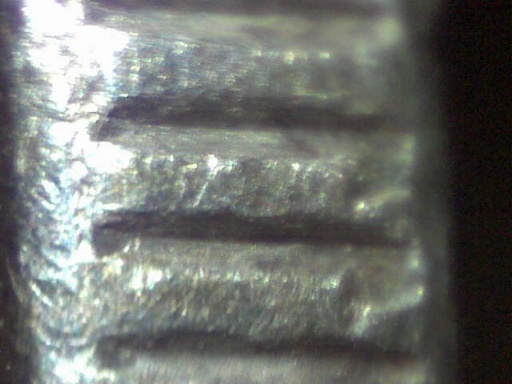 Edited by Bryan1315
09/07/2006 2:09 pm
|
|
Moderator
United States
23522 Posts |
You counted the reeds? I am awed.  The pics you've already taken prove that you have good enough magnification to catch all the details required, and your digipics ain't bad either. The next step, for me, is to invite a couple of acquaintances from other forums (people who know more about 1921's than I) in to read this thread, and maybe express an opinion. Your next step, if you could, is to look for letter, star and date douubling - no need for pics, you can just write it down. We'll get to the bottom of this thing.  |
|
Pillar of the Community
United States
609 Posts |
SD, Thank you for your time and patience. I will endeavor to study the coin for doubling as you asked.  |
|
Pillar of the Community
United States
609 Posts |
SD, ok, I look at the letters and I think I see some slight doubling on the words united states of america, and a couple of the stars on the reverse, did not see anything on the obverse. Also found 3 more lighter die cracks on the obverse.
|
|
Page 3 of 3
|
Replies: 34 / Views: 4,160 |
Page 3 of 3
|







 First Page
 Previous Page


 Posted 09/06/2006 7:27 pm





