| Author |
 Replies: 23 / Views: 3,446 Replies: 23 / Views: 3,446 |
Page 2 of 2
|
|
|
|
Pillar of the Community
United States
3345 Posts |
Quote:
That is one interesting coin! You can say that again! That is one interesting coin! |
|
Pillar of the Community
United States
689 Posts |
Can you attribute this coin? Its almost too good to be true.
|
|
Pillar of the Community
United States
1801 Posts |
The 8R at 9:00 on the reverse is where the 8R should be. I don't see a clash version of the 8R on the reverse. Hard to tell because the obverse clash is so far off center, I would assume the reverse clash would be the same. As far as the weirdness on the face and shield, this appears to be a cast planchet (Early royalist mint coins are very scarce and valuable but it is common among them to find cast planchets). I agree with TwoKopeiki, this is a great series to collect and the royalist coins provide some of the most interesting varieties.
|
|
Pillar of the Community
United States
1147 Posts |
I see the spot you are referring to TwoKopeiki. The 8R puzzles me as I was guessing they were hammer struck. Then I see someone suggesting castings (who would make castings wrought with errors). So I'm wondering how this was struck.
|
|
Bedrock of the Community
United States
10045 Posts |
This 8R reminds me of an ancient coin, in terms of die work and strike.
Is the Guatemala mint a special case in regards to Spanish colonials?
|
|
Pillar of the Community
United States
1801 Posts |
This is a Guadalajara mint coin. Many of the planchets were cast, the coins were struck with a big screw press. For a bit of history, this was a "Royalist" mint set up during the 1810-1821 War of Independence. Prior to the war, the mint at Mexico City pumped out enough coinage to meet demand but during the war regular production and distribution were disrupted and in response these "branch" mints were set up. Conditions ranged from really poor to really well supplied and the resulting coinage reflects the spread. Early Gaudalajara coins like this one were the result. Interesting side note, the first insurgent mint was established in Guanajuato by Hidalgo whose troops captured the city in Oct 1810. They found about 7000 marks of silver in buillion form in the town treasury and utilizing the skills of some counterfeiters and skilled metal workers, they produced 8 reales with the Mo mintmark for Mexico City and to this day there is no recognized feature known to distinguish the rebel coins from the true Mexico Mint coins so there are no known certified examples of the rebel coins.
|
|
Pillar of the Community
 Czech Republic
803 Posts |
I didnt know that about Guanajuato, Jfransch! Pretty cool. But while we're on the subject of Guadalajara mint - here's another neat tidbit of information. When the mint opened in 1812, for whatever reason they went away with using the standard circle-and-square edge design and used flower-and-square. This continued into 1813, but at some point in the year was changed to the colonial circle-and-square edge. Here's an example of the flower and square edge from one of my 1813 pieces:  |
|
Pillar of the Community
Czech Republic
803 Posts |
Another cool anomaly from Guadalajara is the 8 Reales with a backward over-date of 1821/22. Perhaps they were hoping their last obverse die of the year would hold and started cutting 1822's, and when it broke they re-worked it back into an '21? Who knows :) 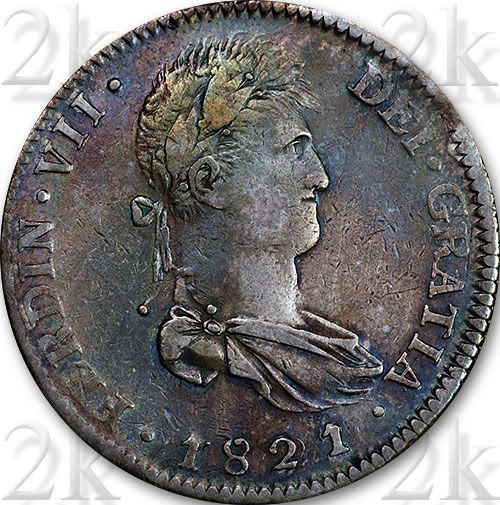 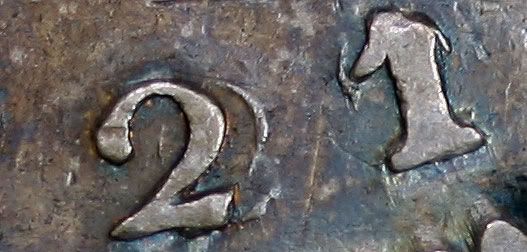 Edited by TwoKopeiki
05/27/2011 01:22 am
|
|
Pillar of the Community
United States
1147 Posts |
Thanks for sharing the edge photos and overdate. Wonderful toning on this 8 reales.
|
|
Pillar of the Community
Philippines
1156 Posts |
the edge artwork is fantastic, very nice! thanks!
|
|
Pillar of the Community
Czech Republic
803 Posts |
Just got a word from NGC: the die style of the coin in the original post was matched to 1814 and it graded XF40. The 1813 who's flower and square edge I posted was attribute 1813/2 and slabbed in a details holder due to cleaning (as I have suspected). Still pretty excited that they were able to attribute the overdate.
The rest of the submission were an 1805 8R in AU, 1777 8R FF in AU (going to send it back for a regrade, since I still believe it's an UNC), 1812 Sobrerete de Vargas in VF, 1821 chihuahua 8R in VF, and a 1765 pillar that got body bagged for repaired surfaces. I can post images if you guys are interested.
|
|
Pillar of the Community
United States
819 Posts |
|
|
Pillar of the Community
Czech Republic
803 Posts |
These would make a great addition to my 8 Reales Madness custom set, as well as a few of the Competitive sets at NGC. 001 ----- 1802MO FT ----- MEXICO ----- 8R ----- AU details (Cleaned) 002 ----- 1821CA RP ----- MEXICO CHIHUAHUA KM-111.1 ----- 8R ----- VF35 003 ----- 1812 ----- MEXICO SOMBRERETE ----- 8R ----- VF25 004 ----- 1808MO TH ----- MEXICO CHARLES IIII ----- 8R ----- AU53 005 ----- 1814GA MR ----- MEXICO GUADALAJARA ----- 8R ----- XF40 006 ----- 1813/2GA MR ----- MEXICO GUADALAJARA ----- VF details (Cleaned) 007 ----- 1777MO FF ----- MEXICO ----- 8R ----- AU55 008 ----- 1765MO MF ----- MEXICO ----- 8R ----- XF details (Repaired) Also, this one recently came back from PCGS: 1808 Mo TH ----- Mexico Charles IIII ----- 8R ----- AU50 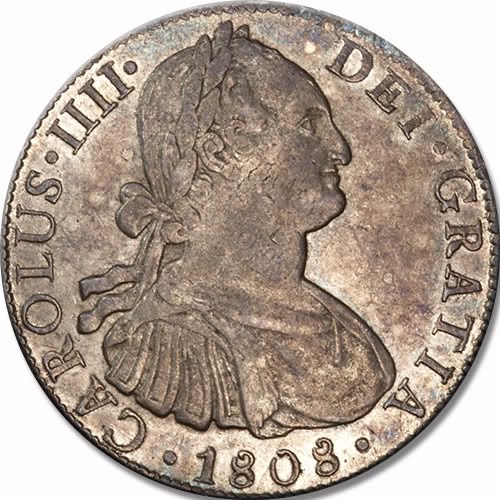 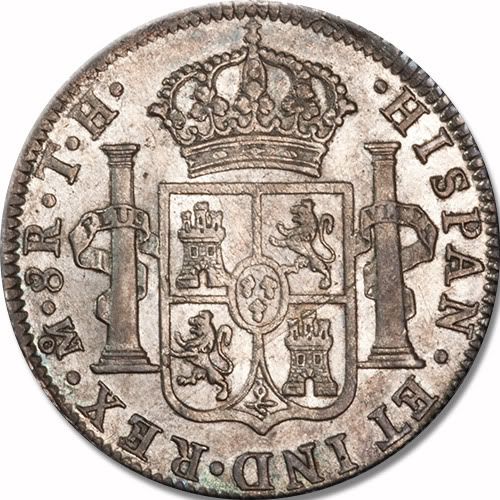 001:002: 001:002: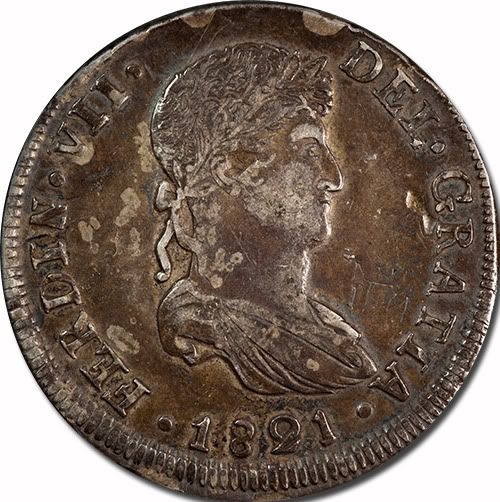 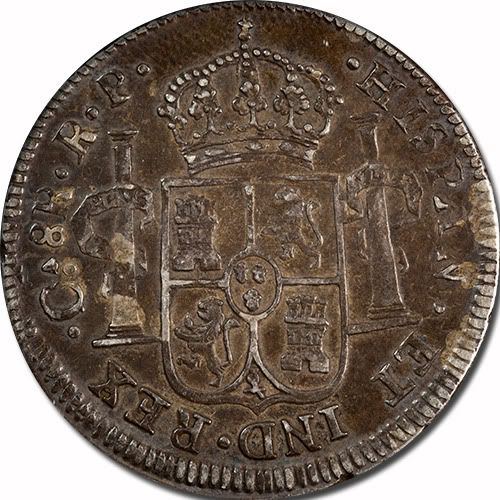 003: 003: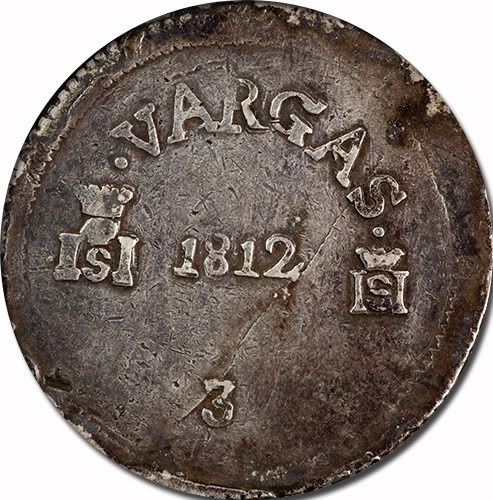 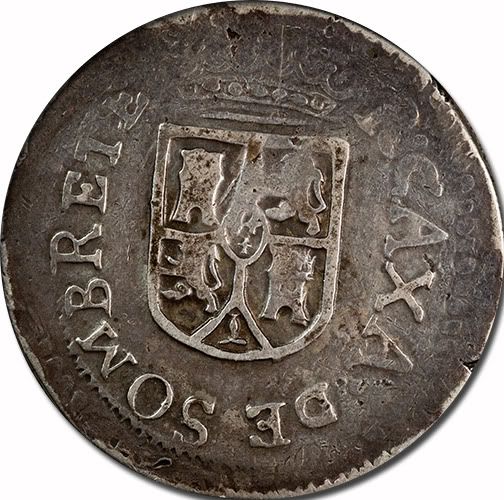 004: 004: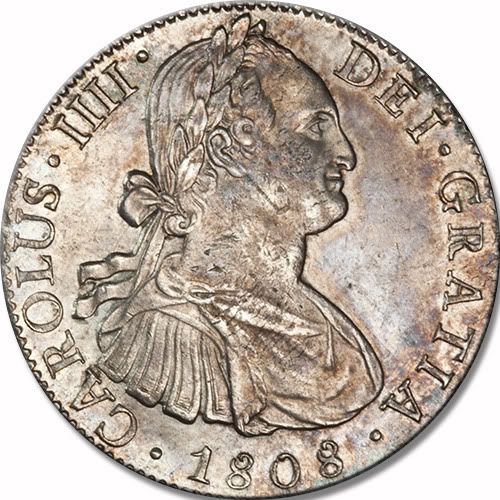 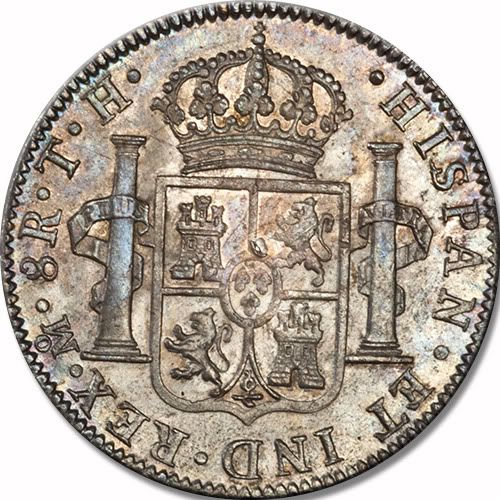 005: 005: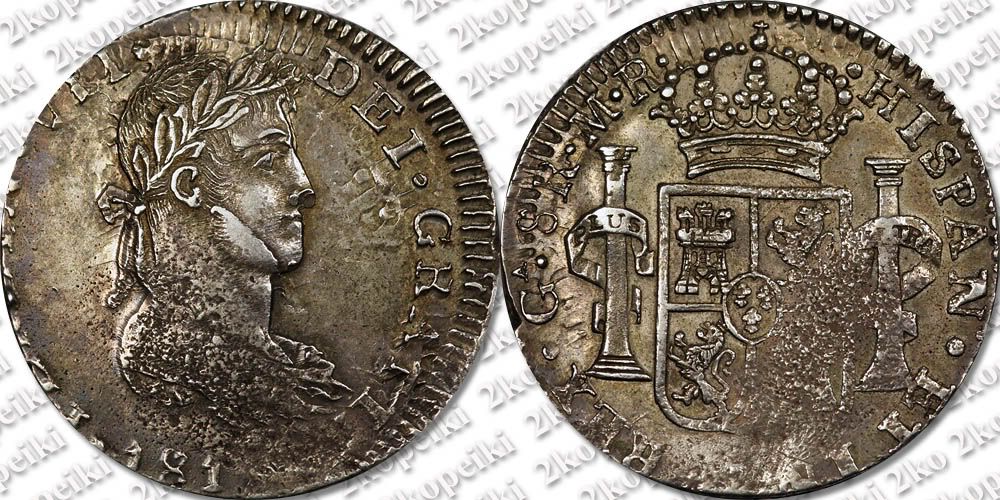 006: 006: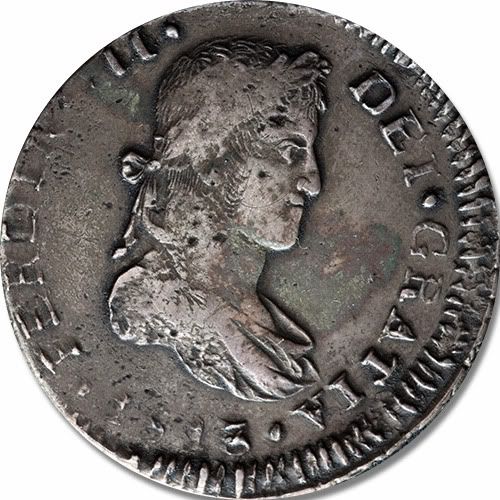 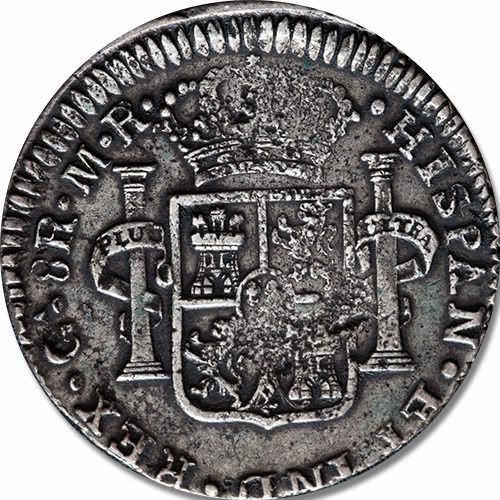 Neat edge design, flower and square, instituted in Guadalajara in 1812 and only lasting just over a year into early 1813 before going back to colonial circle-and-square design. 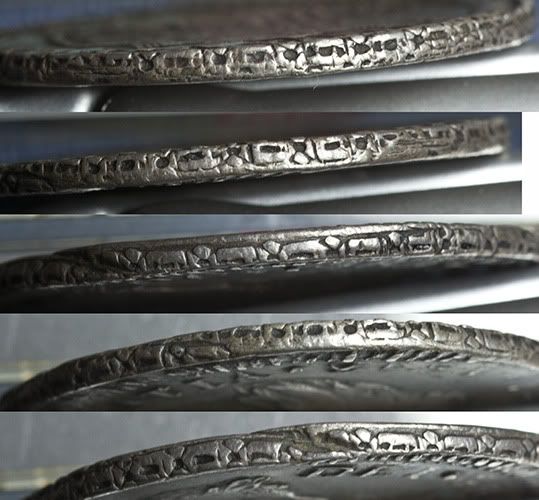 007: 007:  008: 008: |
|
Pillar of the Community
United States
1801 Posts |
Where is the pictures of the pillar? I can't find that one. Nice coins.
|
|
Pillar of the Community
Czech Republic
803 Posts |
Here's the pillar.   Edited by TwoKopeiki
06/27/2011 5:41 pm
|
|
Page 2 of 2
|
Replies: 23 / Views: 3,446 |
Page 2 of 2
|




 First Page

 Posted 05/25/2011 11:01 pm





