Well Sap is right again

. The coin is not a simple Tourist counterfeit like the one in the earlier thread. This one, at quick glance, is either an original or a far better than "average" fake.
But before we can be sure, we need a bit more information. The weight is critical. But I did go through a normal factual review.
As Sap said this design was used on the "Reyes Catolicos" series issued from 1469 to 1504 by Ferdinand and Isabella of Spain. Because of their connection with Columbus and the discovery of America, their coins are VERY popular and have been copied many times. I have seen some VERY well made copies struck in silver, but most copies are cast from originals or cast from poorly made copies with what amount to serious spelling errors. Some like the copy seen in the thread Sap cites have legends that make no sense.
The reported diameter of 25mm makes me tend to believe that the coin is most likely a 1R coin. The size of 1Rs from this reign ranges from 23 to 29 mm. The range of variation in diameter is considerable and it is not possible to exclude a thick 2R as a possibility. I have seen one 2R that measured 25mm. The moneyers tended to adjust planchet size to die diameters so ONE standard die diameter was NOT USED. The 25mm example was not clipped but did have some "partially missing" legend from being struck with dies just about 2mm too large for the planchet diameter. The average range for the 2R is 26 to 33 mm.
The coin in the pictures shows a typical off center strike with a perimeter margin wider on one side of the coin than on the other. Opposite the wide margin is a place where the tops of the letters are slightly off flan. This is consistent with a hand hammered production. When the hammer die (the top die) is positioned on the flan it may or may not be in line with the anvil die. In fact, a position that shows too great a match between the upper and lower dies tends to point to a mechanical press where the two dies are in a fixed orientation with one another. Just remember that these dies (especially the hammer die) were held in place manually for the blow that created the coin.
So operating on the assumption that this is a 1R, I next checked the design against known design examples. To do this I had to re-orient the pictures. The first first fact to be aware of is that the obverse of the coin shows the Royal Shield surmounted by a crown. The crown is the top dead center of the obverse. This picture following is still slightly tilted to the left but the orientation is closer to correct. You can clearly read the King and Queens names followed by D.G. Latin for By the Grace of God. So far so good.
Image Insert: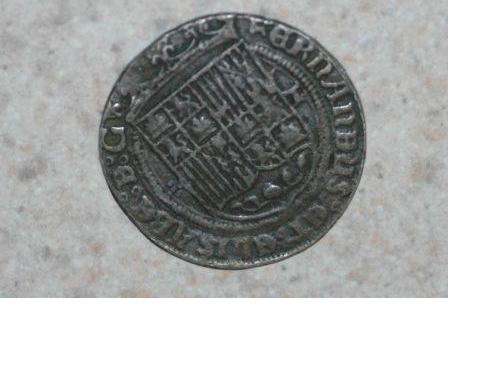
On the right side of the coin near the shield is a letter T. This is an assayer mark. The mark on the left side of the shield is unclear to me - but often this spot is occupied by a denominational mark on larger 2R or 4R coins. The One R normally lacks a denominational indication and this spot can be occupied by various privy type marks. It would be helpful to know what this mark is.
The other side of the coin is the Reverse and it is shown in the original picture in the correct orientation. But a note is needed here. The orientation of the reverse is NOT dependent on the orientation of the inner design but is rather controlled by the legend. The top dead center of the reverse is usually considered to be the Cross that appears directly before the word REX. This is the technically correct orientation, but it may make the mint mark a bit hard to read. Now if that is not confusing enough you need to know the position of the mint mark is adjacent to the ARROW HEADS. This of course means that the mint mark may not read directly when the top of the reverse is top dead center.
So I re-oriented the coin as shown below to try to read the mint mark as it should appear.
Image Insert: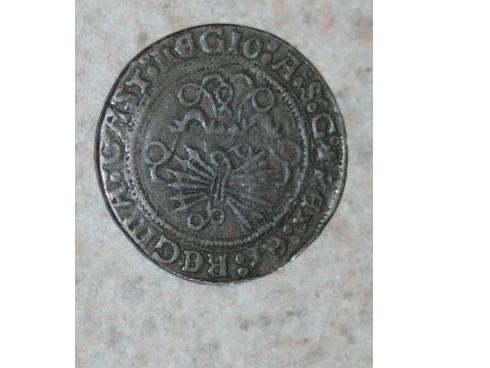
As you can see (I hope), the mint mark is far from clear. The best I can make out is a C positioned in the incorrect orientation to the rest of the coin. It is Tilted and seems to touch other elements as if it was considered to be part of the scroll work and not a separate letter. It looks like a wide letter U when seen from a "normal" orientation with relation to the top of the coin. But I did find a 4R with the same error of position in the mint mark so it is possible. But in the case of the 4R - the C is clear and does not touch the surrounding design.
If the mint mark is C, the mint would be Cuenca. None of the other Mint marks used during this reign for 1R coins fits. But there is NO listing for an assayer T associated with Cuenca. There is a T assayer associated with the Seville mint but the mint mark in this case simply can not be an S.
Next I looked closely at the design. I tended to start to agree with the comments that the surfaces and edges of the letters and features appear to have a cast look. This could be post strike corrosion or a function of the grain in the picture. But the fact that the assayer initial does not match the mint mark makes me suspect a copy made from a mismated die pair or one made by a die sinker that did not know what he was seeing.
So I started checking the legends in more detail and noticed a curious thing. The King and Queen's names are spelled FERNANDUS : ET : ELISABE : This spelling uses a U in FERNANDUS but not the V (FERNANDVS) as I would have expected in a Latinized font. Similarly the letter I in the Latin spelling of Isabella is not the commonly expected Y . So I thought I had a conclusive proof the coin was a fake until I checked the font variations against numerous photographs and found that BOTH uses were in fact found on originals. There was no consistency even by mint for the use of the V or Y as is seen on later Spanish issues.
So the legends appear to check out.
The remaining steps are:
Weight - Does the coin fall in the allowable range for a 1R? This by itself will NOT be conclusive because there is a range and corrosion is quite possible. However, a white metal copy would be outside statistical parameters provided it is not too thick.
Specific Gravity - Does the SG fall in the range for Spanish silver?
This is very critical in this case. SG will be able to tell if the coin is silver, copper of white metal. It will not be able to determine if the coin is cast in silver.
Edge - Has the coin a "proper" edge? I am hopeful that there are clues on the edge. These coins were not edged like modern coins but there are many possibilities that could point to a forgery. Can we see the edge and can the resolution of the scans be improved?
I am suspending final judgement for now, but I am leaning toward a fairly well made forgery at this point. The difference in actual value is considerable.
I have subscribed to this topic and will respond if more data is forthcoming.










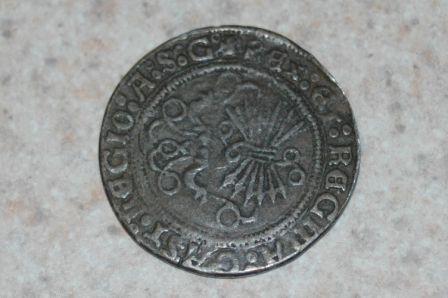 Rarecoin1small.jpg
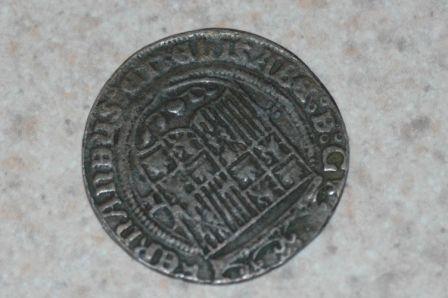 Rarecoin2small.jpg


 Posted 01/17/2008 6:24 pm


