










 Posted 08/08/2006 5:16 pm


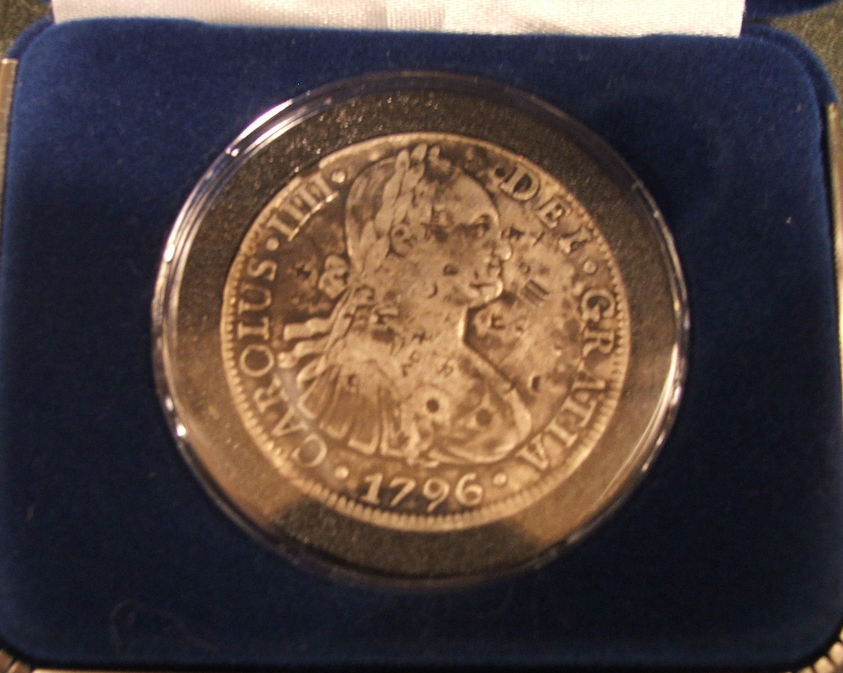
texasmick - Got your note. The coin employs the correct die style. It is not likely to be a contemporary counterfeit. Based on seeing this one side - I would tentatively say it is most likely real.
However, I do have a caution. There is an apparent "Swastika" chop on the neck of this one. I have noticed that there are a disproportionate number of late "bullion" forgeries made with a similar chop. I suspect that at least some of these late forgeries are the "Boston" forgeries made between 1890 and 1930 for use by Merchants Trading with China.
There is a very reliable method to isolate "Boston" forgeries from real coins. Every coin that I place in the Boston group has an edge with only ONE overlap instead of the two. All real 8Rs have TWO overlaps in the edge design located exactly opposite one another. That is due to the way they were made. One overlap is not possible on a real coin. A second clue with the Boston forgeries is that on about half of the edge there are visible diagnal grip marks ON TOP of the circle and rectangle design. But the diagonals do not extend around the entire coin.
I hope that helps. The "Boston" forgeries are full weight silver struck coins made when silver prices fell to levels under 50 cents an ounce. The Chinese Merchants preferred Portrait 8Rs so the Boston merchants had jewelers make copies in full weight silver. They were often chop marked before they were sent to China. They are often treated as REAL by coin dealers because the silver content checks out perfectly.
However, I do have a caution. There is an apparent "Swastika" chop on the neck of this one. I have noticed that there are a disproportionate number of late "bullion" forgeries made with a similar chop. I suspect that at least some of these late forgeries are the "Boston" forgeries made between 1890 and 1930 for use by Merchants Trading with China.
There is a very reliable method to isolate "Boston" forgeries from real coins. Every coin that I place in the Boston group has an edge with only ONE overlap instead of the two. All real 8Rs have TWO overlaps in the edge design located exactly opposite one another. That is due to the way they were made. One overlap is not possible on a real coin. A second clue with the Boston forgeries is that on about half of the edge there are visible diagnal grip marks ON TOP of the circle and rectangle design. But the diagonals do not extend around the entire coin.
I hope that helps. The "Boston" forgeries are full weight silver struck coins made when silver prices fell to levels under 50 cents an ounce. The Chinese Merchants preferred Portrait 8Rs so the Boston merchants had jewelers make copies in full weight silver. They were often chop marked before they were sent to China. They are often treated as REAL by coin dealers because the silver content checks out perfectly.


