|
This page may contain links that result in small commissions to keep this free site up and running.

Welcome Guest! Registering and/or logging in will remove the anchor (bottom) ads. It's Free!
To participate in the forum you must log in or register. | Author |
 Replies: 10 / Views: 354 Replies: 10 / Views: 354 |
|
|
New Member
Switzerland
6 Posts |
Hello everyone, I am new to this forum. I recently inherited a small coin collection from my father, although the coins were originally acquired by my grandfather. I have managed to identify most of the more modern coins, but I am struggling with the ancient ones. Could you please help me identify them and perhaps tell me a bit more about their history? If possible, I would also appreciate a rough estimate of their value. I plan to keep the collection, but it would still be very interesting to know. Thank you in advance and best regards, Fabian 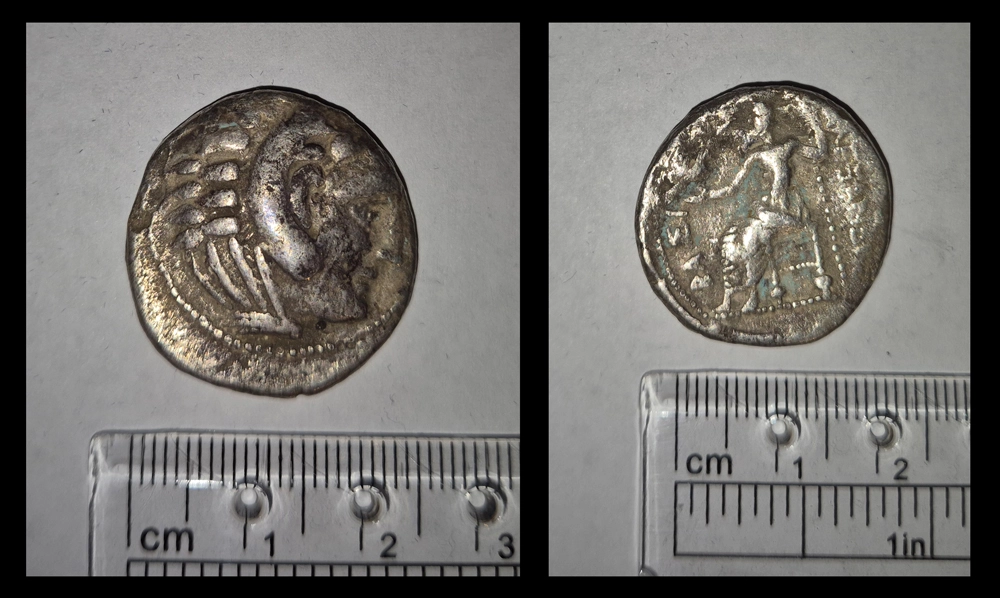 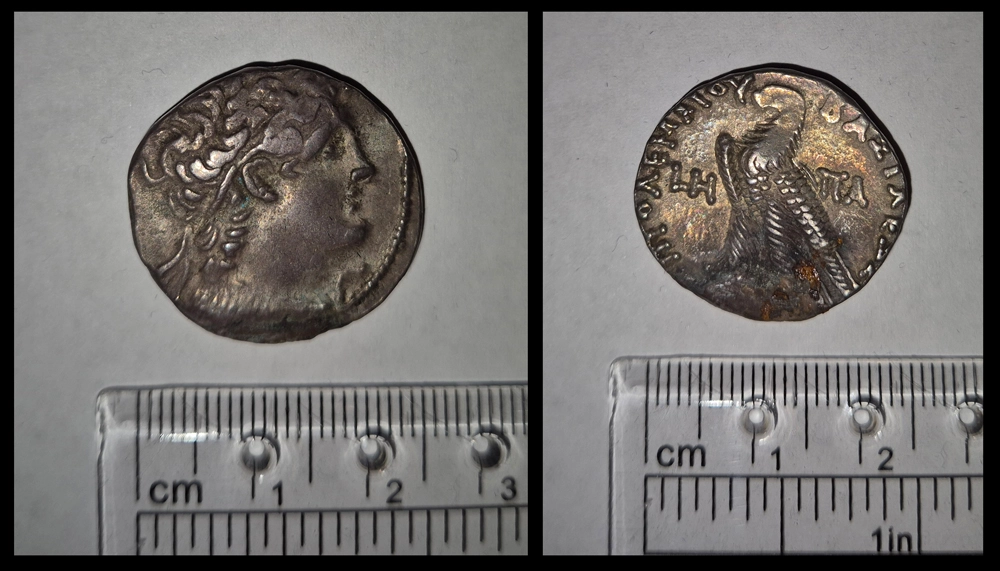 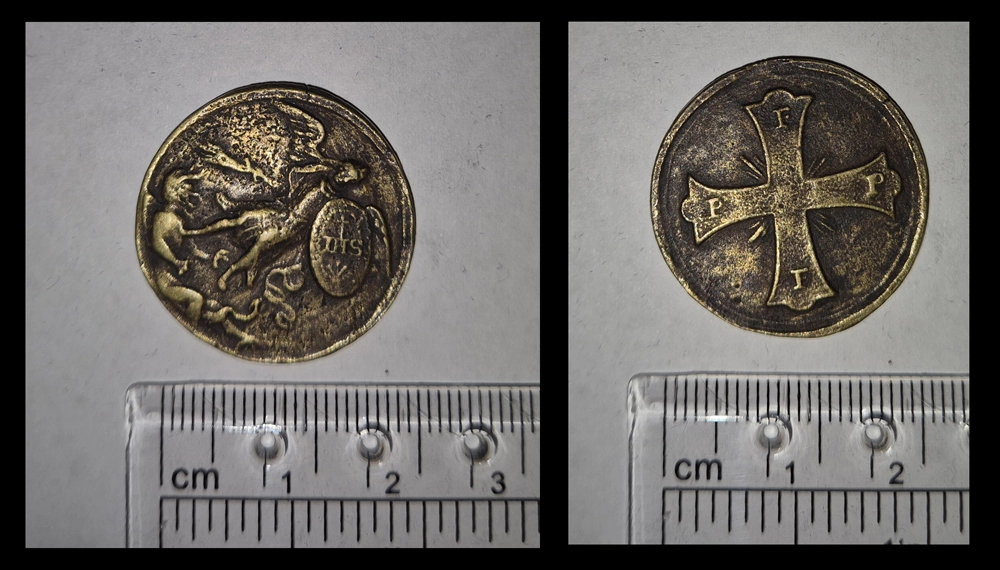 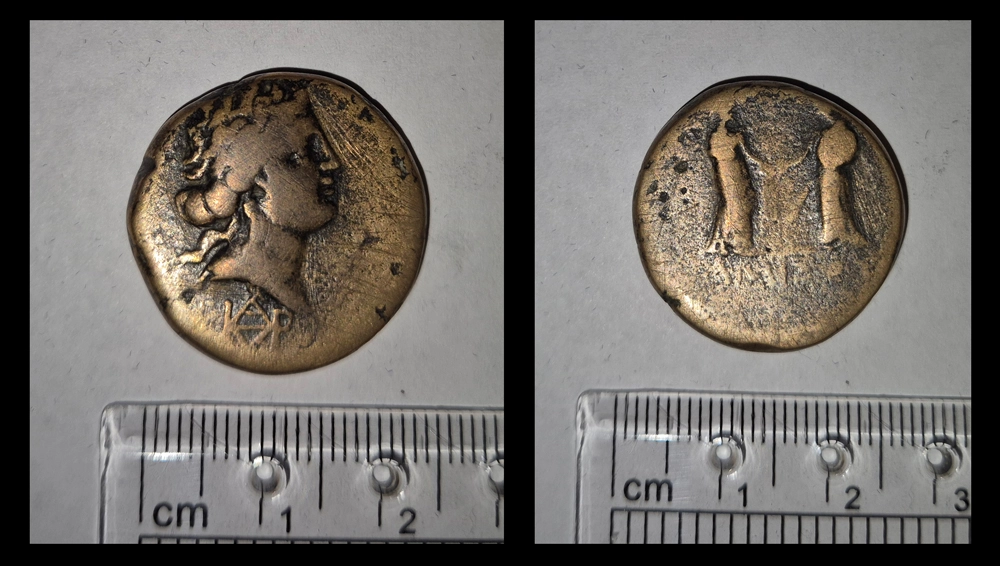 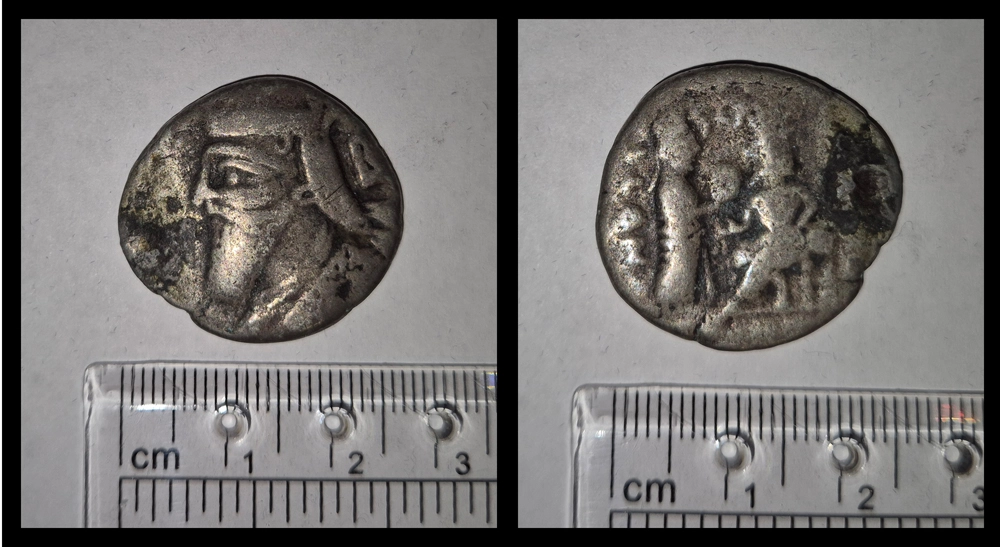 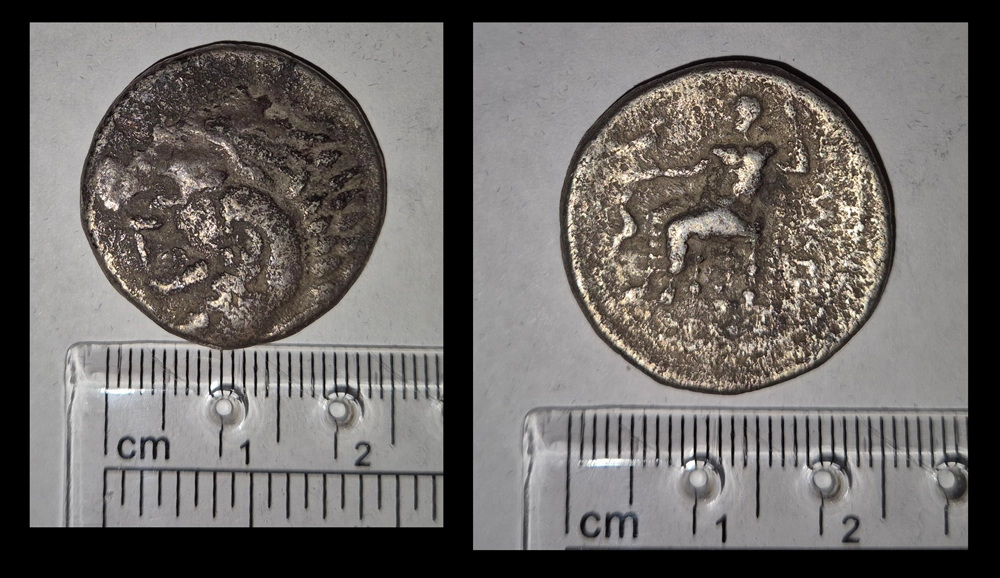 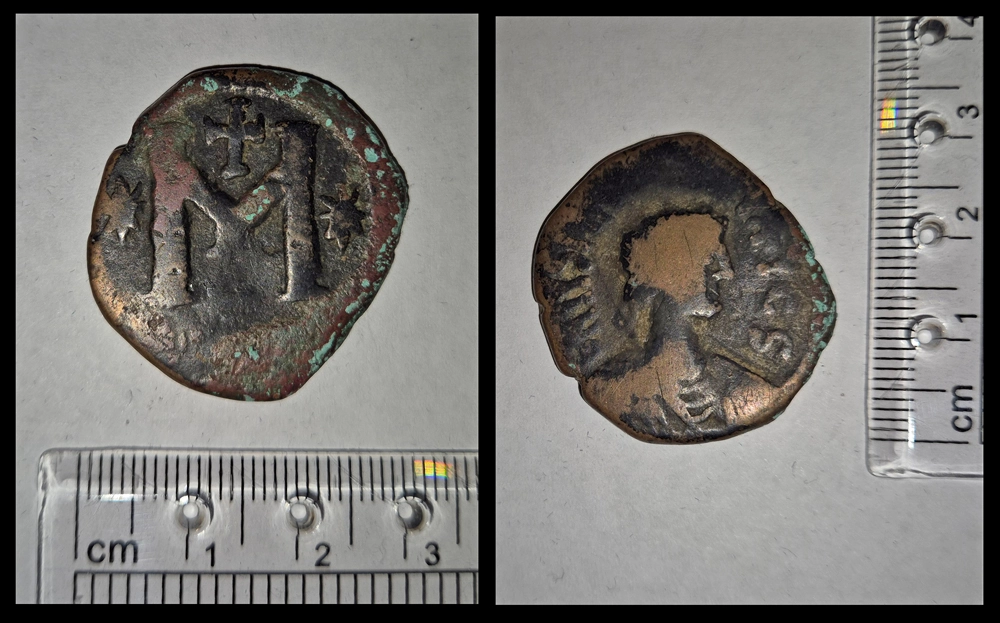 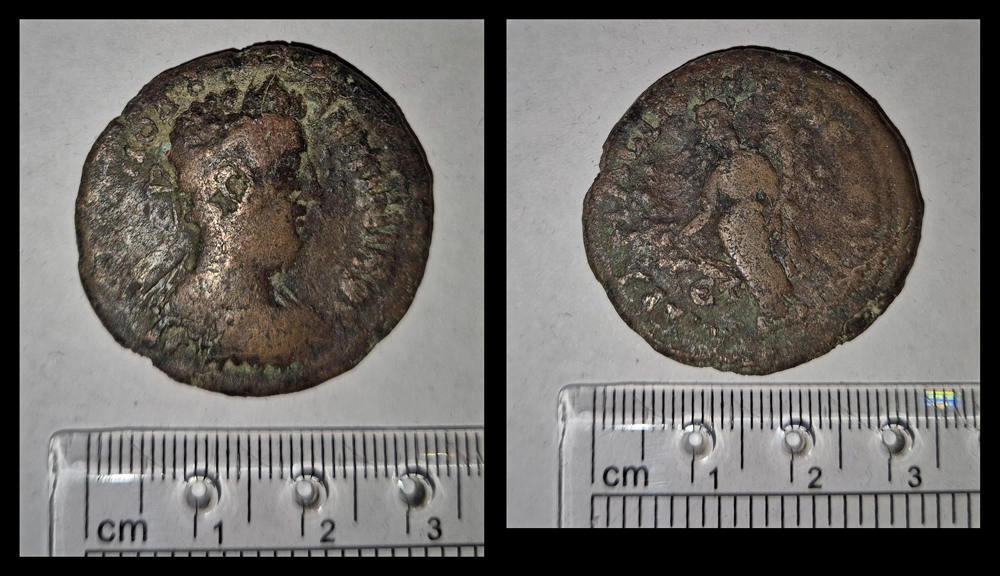 |
|
|
|
Moderator
 United States
34393 Posts |
@scip, first welcome to CCF. Second, best practice is to only post one coin per thread so that we can provide all the attention it needs. Also, it would be helpful to know the weights of each piece (no need to photograph on the scale, you can just tell us). With that said, the third one down doesn't look like a coin to me but rather a religious token of St. Michael. It may have been a pendant at one point, in which case the edge should have a oddly section where the loop was broken off and potentially filed flat. Added: this isn't an exact match, but contains many of the same design elements: https://www.acsearch.info/search.html?id=5290882"If you climb a good tree, you get a push."
-----Ghanaian proverb
"The danger we all now face is distinguishing between what is authentic and what is performed."
-----King Adz
|
|
Pillar of the Community
United States
4959 Posts |
I'll give it a shot, but get conformation from one of the many much more knowledgeable members.
1. Alexander the great or one of his successors, drachm.
2. Ptolemaic era tetradrachm, don't know how..but he lasted at least 8 years! One of the later Ptolemy kings?
3. I had no idea other that "not a coin", good eye spence!
4. I don't know this one, Greek.
5. Parthian tetradrachm.
6. Same as 1.
7. Byzantine 40 nummi, looks like Justinian I.
8. Don't know this one, Roman provincial? Maybe a bearded guy like Commodus?
Can't really help with value, most are in kind of poor shape and not worth a bunch. Number 2 might be the most valuable of the group, it's in decent shape.
|
|
New Member
 Switzerland
6 Posts |
@ Spence Thank you for the welcome and the info about the best practice. I will make a thread for each coin in the future. I have no suitable scale at this time. Today I ordered one however together with the book "Ancient History from Coins". I should get the scale in a week and I will update my post with the weight of each coin. You are right about the third "coin" ... it was a pendant. On top there are clearly marks from a file. @ chrsmat71 Thank you for your analysis of the coins. Very interesing ... especially the Ptolemaic era tetradrachm. I read about them today in the internet. I have eight more such coins ... they all have the eagle on the back and most were also made in Paphos. All those coins were used in jewelry (my gradnfather was a goldsmith) ... two are in keychains, one is a pendant and five are in brooches. As it seems all coins could be removed from the jewelry. Is that recommended? I also have three more similiar coins to coin number 8. Update ... I added two pictures. 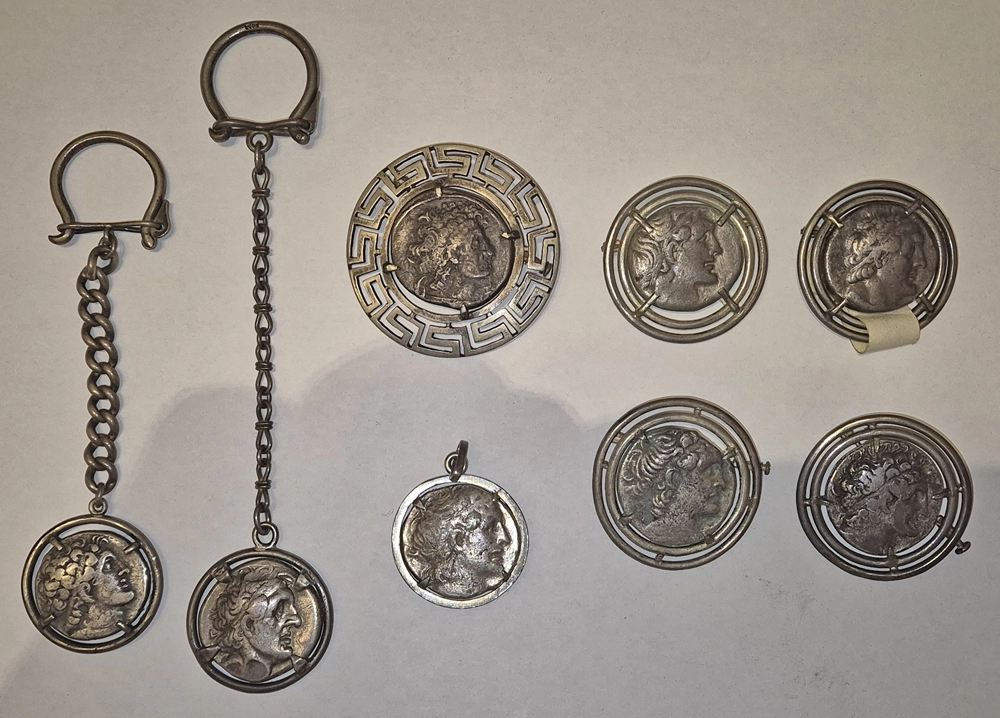 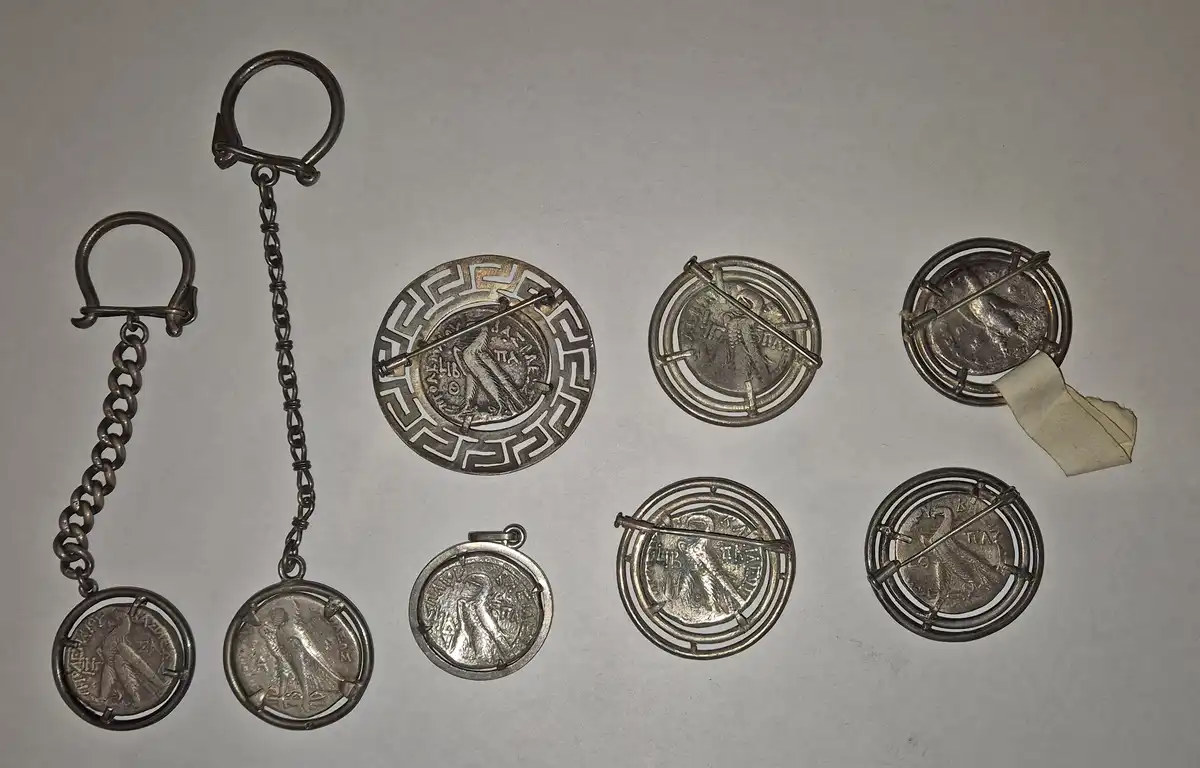 Edited by Scipio75
05/24/2026 4:51 pm
|
|
Moderator
Australia
16804 Posts |
I would mostly agree with chrsmat's identifications, except to add that number 4 appears to say "AMISOY" in Greek underneath the reverse, which would be the city of Amisos (now known as Samsun, in Turkey). Quote:
As it seems all coins could be removed from the jewelry. Is that recommended? The process of inserting a coin into a mount such as these brooches usually damages the coins at the point of contact. They will often scrape away at the coin to make a notch to make good contact, as well as apply a drop of jeweller's solder to act as glue and stop the coin from moving around; such solder would now be impossible to remove. If your grandfather is still around to ask and if he actually was involved in producing these items, you might try to ask him about the process to see how careful he was in not damaging the coins. Due to the likelihood of such coins ending up being "damaged", collectors are unlikely to want them; as such, they are probably better off being kept intact as pieces of jewellery. Don't say "infinitely" when you mean "very"; otherwise, you'll have no word left when you want to talk about something really infinite. - C. S. Lewis
|
|
Moderator
United States
187446 Posts |
 to the Community! |
|
New Member
Switzerland
6 Posts |
@ Sap
Yes I see now most of the letters of the word AMISOY. What kind of coin would that be then and what currency?
I could be lucky about the coins in the jewelery. Most of the coins are slightly loose inside and it seems they were fitted very carefully inside the frames and without any glue.
@ jbuck
Thanks :-)
|
|
Pillar of the Community
United States
1861 Posts |
nice collection-  |
|
Valued Member
United States
116 Posts |
I like the one with the cross and what looks like an angel on the obverse. It kind of looks like the Archangel Michael. |
|
Moderator
Australia
16804 Posts |
Quote:
Yes I see now most of the letters of the word AMISOY. What kind of coin would that be then and what currency? Unfortunately, for many Greek copper and bronze coins, the answer is "we don't know" - the surviving historical records don't name coins or describe copper coin denominations in enough detail for us to figure it out. We know that in the records of some Greek city-states, the copper/bronze coin was called a "chalkous", but because this word simply means "made of bronze", we don't know if that's intended to be a specific name for a specific coin denomination or a more generic term meaning "copper coins". Sometimes, cities issued multiple different sizes of copper coins simultaneously; it's generally assumed that the larger ones are multiples of the smallest one, but this again is uncertain - perhaps there were smaller copper coins that simply weren't made in enough quantity that any of them have survived tot he present day. We have one surviving ancient text (Julius Pollux, who wrote a Greek thesaurus/dictionary some time around AD 180) stating that in Athens at that time, the exchange rate was 8 copper chalkoi to 1 silver obol, but in Delphi, there were 12 chalkoi to an obol, and in Priene there were 16 chalkoi to an obol. For most other cities and most other time periods, we have no idea how many chalkoi were to an obol, or even if those monetary units were called that - unless someone wrote it down somewhere and that writing was preserved, we'd only be guessing, since each city seems to have made up their own rules about this. Archaeologists and coin collectors still have to call these coins something, though; the answer that's universally used is to simply describe it by its diameter in millimetres. Is the copper coin 20 millimetres across? Then it's an "AE20", where "AE" is simply the Latin abbreviation for copper/bronze. I have found a catalogued example of your coin, and it is indeed from Amisos - Check the Amisos page on Wildwinds and scroll down to the bronze one labelled "RPC 2144". It is described as an "AE24" and dating it from "the time of Augustus", so roughly 27 BC to AD 14. In which case, technically this is a "Roman Provincial" coin rather than "Greek" proper. The two female figures on the reverse are identified as personifications of the city of Amisos and the city of Rome, greeting each other. Don't say "infinitely" when you mean "very"; otherwise, you'll have no word left when you want to talk about something really infinite. - C. S. Lewis
|
|
New Member
Switzerland
6 Posts |
Amazing ... you found the coin! Many thanks for the support and also for the very interesting infos about those coins.
|
| |
Replies: 10 / Views: 354 |
|
To participate in the forum you must log in or register.
 
- Is Silver Ready To Hit $50 - 1/29/2026: Will It Hit $130? - Previous Milestones In First Post
- 20 Questions! (Forum Game) 11/04/24
- Project $100k - Circulating US Dollar Coins
- Commems Collection Classic: 1946-51 Booker T. Washington Birthplace Memorial - Artistic License
- Post Your Coins Issued By The Mint As Colourised Coins.
- Fun Thread - Worst Coins On Ebay, Etsy, Craigslist, And Other Buying Sites!
- 19 MM, 2.17 Grams, No ID
- US Mint Best Of The Mint 1916 Mercury Dime Gold Coin And Silver Medal Set Available 6/4/26
- 1960-D Franklin Half Dollar, PCGS MS-67FBL, Rainbow Toned
- Fifa World Cup Coins Releasing June 4th 2026
- Seamonkey's Eisenhower Dollar - Dansco 8176
- 1795 Large Cent, Plain Edge, Struck On 5.43 Gram Half Cent Planchet, PCGS F12BN
- Post Your Coins With Hats
- 1839 Booby Head Large Cent
- Around The World With Coins - A Coin Geography Game
- Continuing List To Show Everyones Latest Acquisitions
- Colombian 1936 50 Centavos Coin
- 2026 Enduring Liberty Half - Anomalies
- Worn 1941 Quarter, DDR FS-801.
- 1943 Merc Dime Damage
Disclaimer: While a tremendous amount of effort goes into ensuring the accuracy of the information contained in this site, Coin Community assumes no liability for errors. Copyright 2005 - 2026 Coin Community Family- all rights reserved worldwide. Use of any images or content on this website without prior written permission of Coin Community or the original lender is strictly prohibited.
Contact Us | Advertise Here | Privacy Policy / Terms of Use
|
| Coin Community Forum |
© 2005 - 2026 Coin Community Forums |
| It took 0.38 seconds to rattle this change. |
 |
|
| |
| |






 Posted 05/23/2026 6:35 pm


