Quote:So you are saying you just put all coins in something and pour acetone from
Walmart over them all and let them sit, then pour out the acetone (maybe filter and re-use it) to jsut give a quick grime removal to all coins?
If so, what it your process and how many uses do you get out of the gallon?
I know it sounds sloppy and brutal. But in actual practice, I probably don't do anything that would offend most collectors.
Second question first, my last quart lasted about a year. I was bathing 4 or 5 nice coins per week, whereas now I am buying 20 really dirty ones per week. Your results may vary.
My procedure is to remove that which is not part of the coin and leave that which is. All the while I am learning. I feel that I can afford to be a bit daring as the last 35 coins cost a total of $2.45 and do not represent real numismatic treasures. I've done museum conservancy work in the field of firearms restoration, so I have an idea of what is considered acceptable by professional standards.
The work starts when the coins reach my desk. Each one is identified as it goes into its own baggie, never to touch another coin again. The first bath is likely to be previously used acetone. Bear in mind that many of these coins have actual dirt on them, and it is often instructive to run the fluid through a coffee filter just to see how much dirt was on a few coins. The bath is in a tapered glass receptacle, so that the coin is suspended by the rim, and never touches the face. After a coin soaks a bit in the acetone, it goes onto an inert receptacle for drying. A chemist's watch glass will do, but I enjoy custom slabbed and polished agate. It doesn't help the coin, I just like them. At this point the coins get an examination under magnification. Most frequently, the sand, dirt and low viscosity oils are removed. What remains will either be a hard wax in the crevices, or corrosion. After the application of other solutions, they will soak before getting a rinse in acetone.
Other solutions are commercially available and may offer varying degrees of success. (As I have not been doing this for a long period of time I hope that I will be forgiven for not trying BadThad's Verdi-Care. I am just about out of my first bottle of brand X, and got my trial size of Verdi-Care from Wizard just a few days ago. My first impression is that is a generous bottle for trial size. I hope to give it a try when I get caught up on a few other projects.)
If liquids alone do not remove all that I want gone, I may don a strong jeweler's loupe and apply mechanical persuasion. I do not encourage this technique for anyone else, and will not describe it. To do so would have the same predictable outcome as lecturing teenagers about the rhythm method or pyromaniacs about homemade explosives.
After all necessary repetitions, the coin gets a final rinse in virgin acetone and is placed in a clean holder.
Several baths mean that I can have several containers of acetone, each of a different level of contamination. When serviceability is questionable, the liquid gets downgraded to the dirt bath, and then properly disposed of.
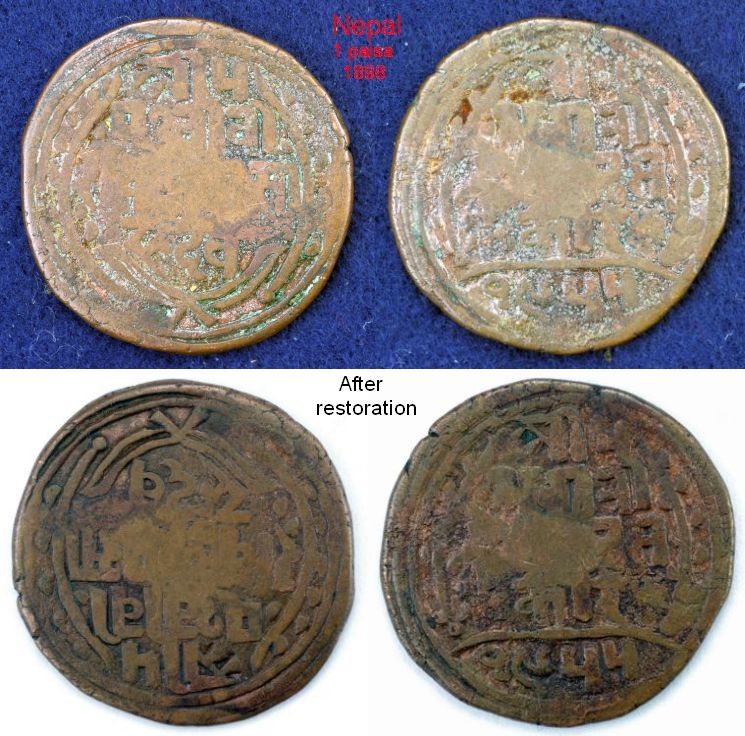
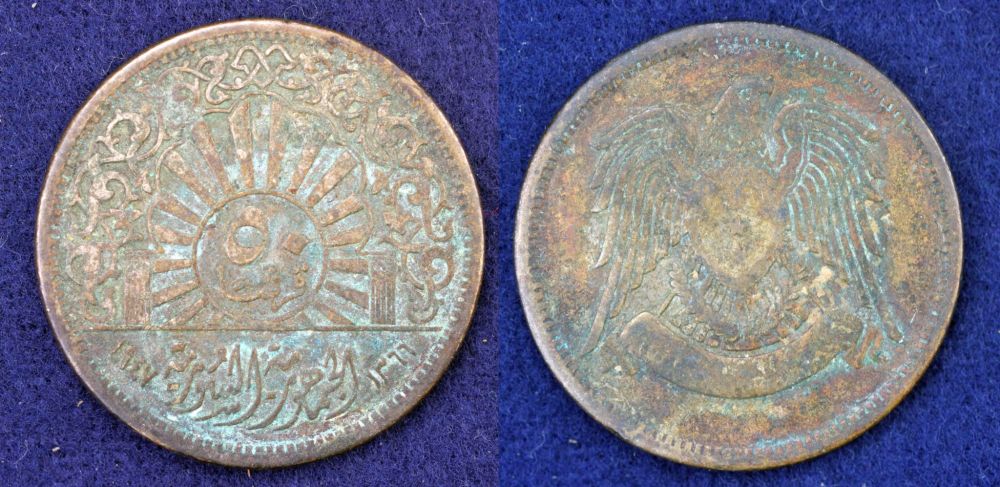
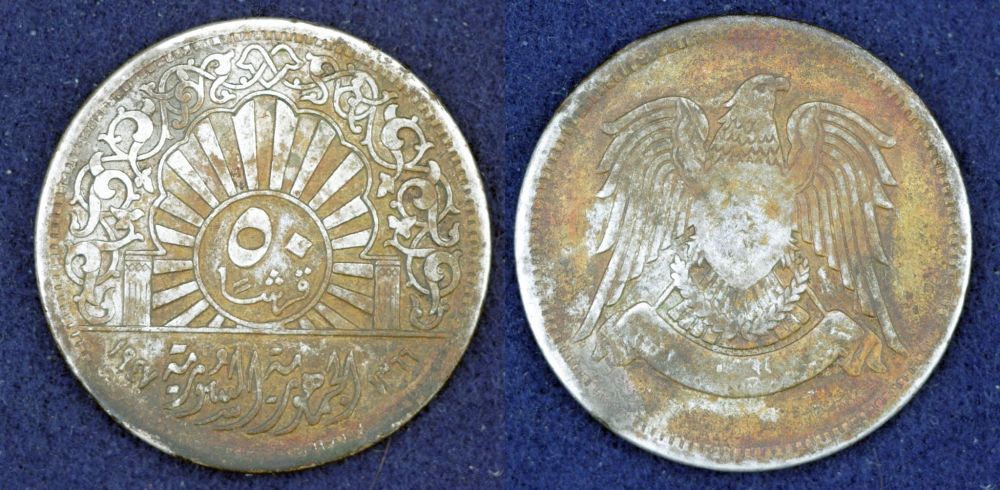
While these aren't the best examples, they may show you something of my study coins.
Something from Nepal.
And varying stages of a Syrian coin.
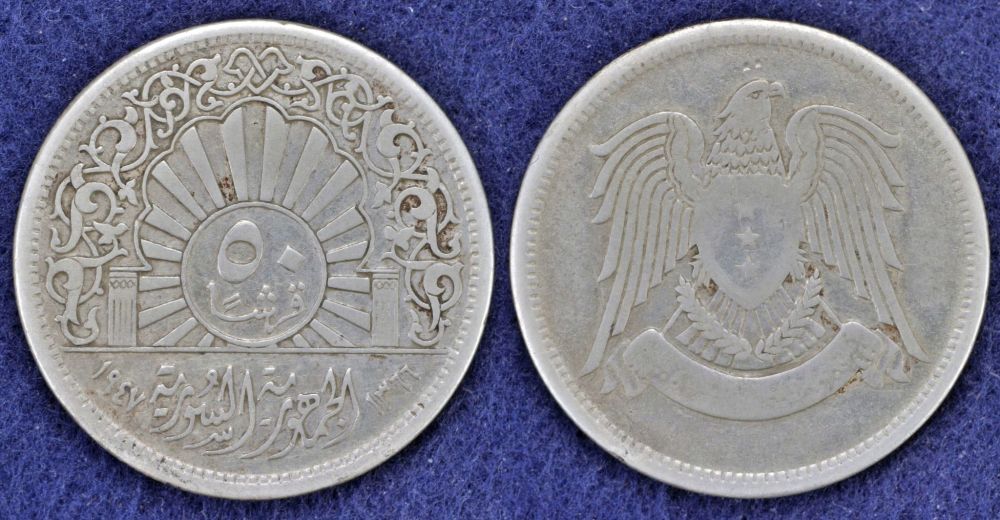
I'm extra careful on something like my Morgans. And the proof is in the pudding. My last 4 submissions to a
TPG came back with straight grades and no mention of cleaning.





 First Page


 Posted 09/27/2015 6:28 pm