As we are now approaching both Christmas and the 886th anniversary of Roger II being appointed King of Sicily (December 25th, 1130 AD), I thought it might be interesting to take a closer look at this time period. Specifically, I'm thinking about the examining the inscriptions and iconography of coins minted in 12th and 13th Century Sicily. I've got a few from this time period and think that perhaps we can learn a little about the times. My thesis is that over the course of these two centuries, the Kingdom of Sicily transitioned from a society that faced both northward toward the center of Christianity as well as southward toward Islam to a realm fully rooted in Christianity. Of course, this general time period was during the crusades and so it would make sense that whereas the trade, language, and religion of this area might have initially been bifurcate, it was driven in one direction by these circumstances. As always, I'd be extremely appreciative of any further insights or comments from CCF.
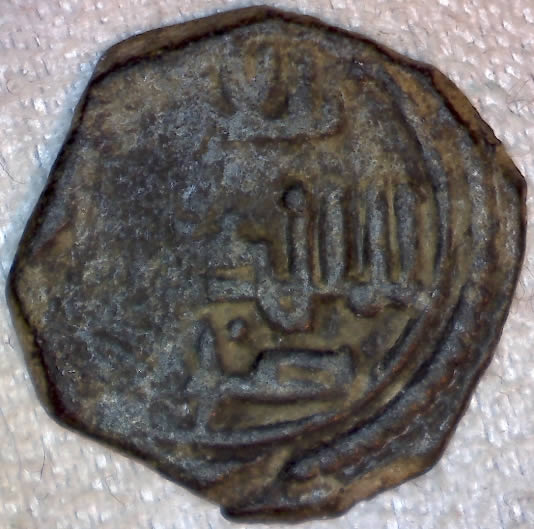
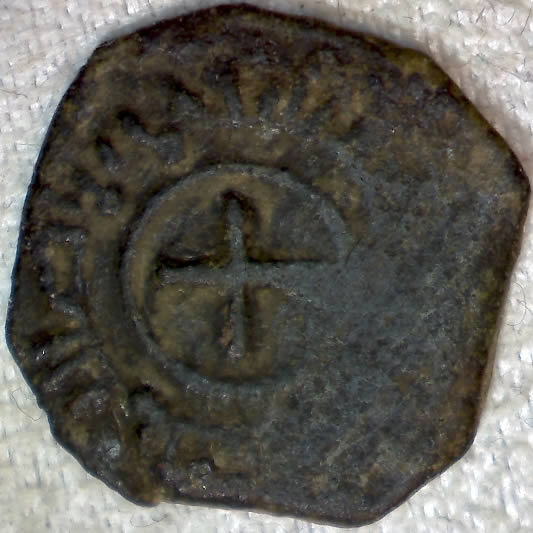
First up is a Half Follaro minted at Messina. The date (AH 536) was frozen on this coin and was minted continuously between 1105 and 1154 AD. The obv inscription states (in Arabic) that it was "struck by order of the king", while the Kufic rec inscription states that is was "struck at Messina in the five hundredth six and thirtieth year". Importantly (for my thesis, anyway), is the presence of the short cross on the rev. The attribution is Spahr 80 (unlisted, I believe, in Biaggi).
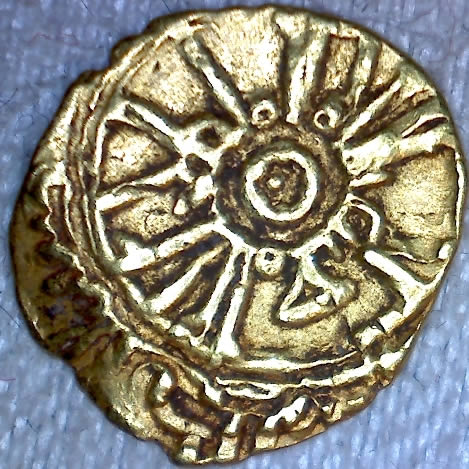
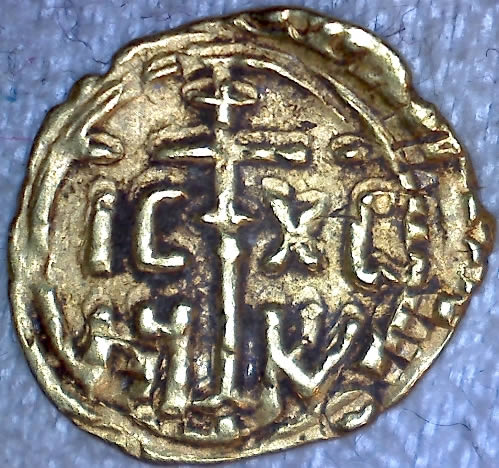
Next up is a Tari minted in Siqilliya Messina. It is the third emission of Tari from the first part of the 12th Century and therefore dates to between 1140 and 1154 AD. As with many of the coins of this variety, the Arabic writing which calls out the date was either struck off flan or succumbed to a bit of edge trimming over the years. I believe that the Kufic obv inscription can be translated to "The King Roger exhalted by God", while the rev has a long cross flanked by two dashes near the top of the coin and the IC XC NI KA (Jesus Christ conquers). The attribution is Biaggi 1220.
Concurrently, this third coin was minted in Messina. This is a Messo Follaro. The obv shows King Roger II seated on his throne, with the words POIEPI ANAE. The rev has a short cross with the familiar IC XC NI KA. The attribution is Biaggi 1222.
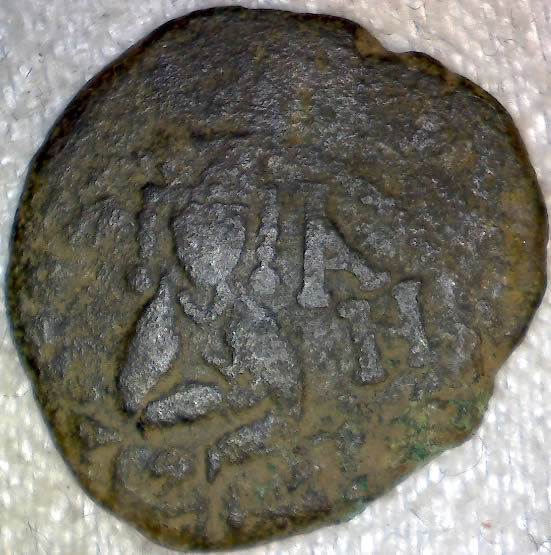
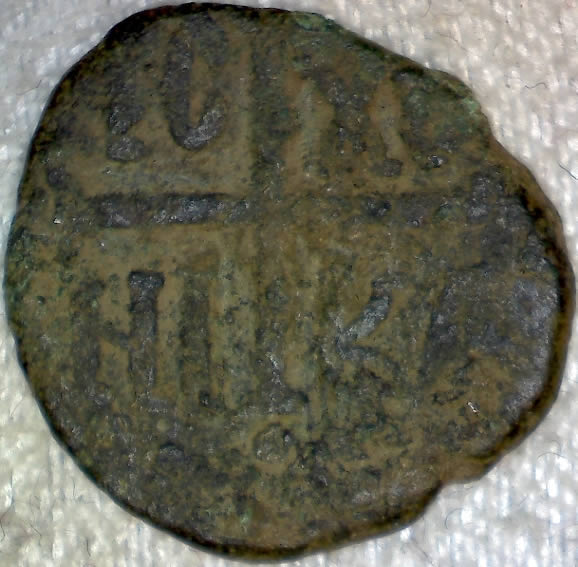
Following Roger II's death in February 1154 AD, his fourth son William I "The Bad" was crowned King of Sicily. The fourth coin was minted during his reign (1154 to 1168 AD). It is scyphate (i.e. cupped as opposed to being flat) and therefore the images and inscription are fairly incomplete. What is visible has been done a dis-service by my poor photographic skills. You may be able to pick up at least parts of the obv inscription REX W, while the degraded Kufic inscription along the perimeter is completely missing. In my experience, that letter W is almost always present and therefore diagnostic of this series. On the rev, is an image of Mary and the baby Jesus, along with the inscription MP OY--shorthand for the Greek phrase Mater Theos (Mother of God). The attribution is Biaggi 1226.


Next is a Mezzo Follaro minted under the authority of King William II "The Good" (1166 to 1189 AD). As an aside, in reading up on the two Williams, it seems that William I perhaps was more deserving of being called The Good, while his son was a bit of a lech and could more properly be called The Bad. But I digress. The obv inscription is O REX W SCOS, which refers to King William II. Along the periphery is the inscription OPERATO IN VRBE MESSANE (made in the City of Messina). The rev of the coin contains two Kufic inscriptions, an inner which matches the obv and an outer, which can be translated as "coined by order of the magnificent king who longed to be exalted by God". The attribution is Biaggi 1233.


This next coin is a Trifollaro minted concurrently by King William II. There are no inscriptions, but the obv has a ¾ view of a leopard, while the rev has a palm tree with ten dates. I have previously posted this coin here:
http://goccf.com/t/262748The attribution is Biaggi 1231.


Now skipping forward from the end of the 12th Century to the middle of the 13th Century, here is a Denaro that was minted between 1254 and 1258 AD. The king, Conrad II "The Boy" reigned for only a few years before being beheaded as a traitor at age 16. The obv of the coin shows a monogram of Conrad II in the center along with SECVNDVS R along the periphery. The rev contains a short cross, and the inscription IER ET SICIL (Jerusalem and Sicily). Gone are any indications of Arabic culture. The attribution is Biaggi 1273.
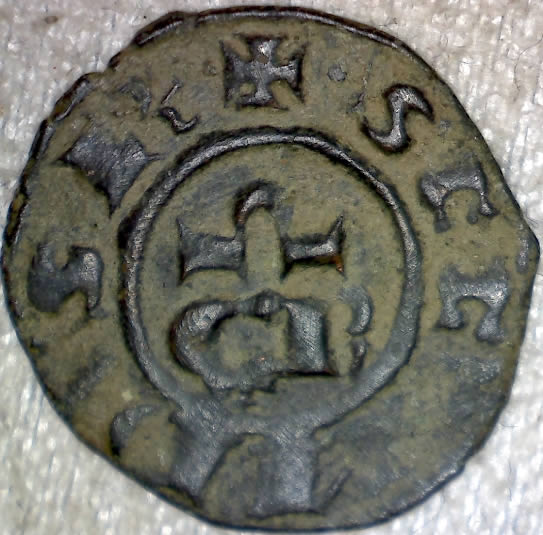
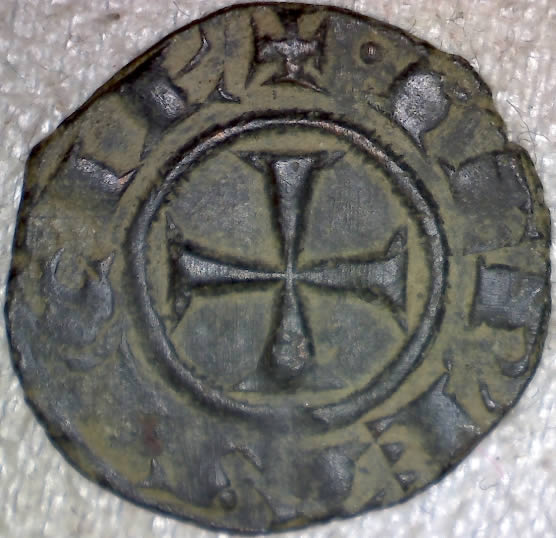
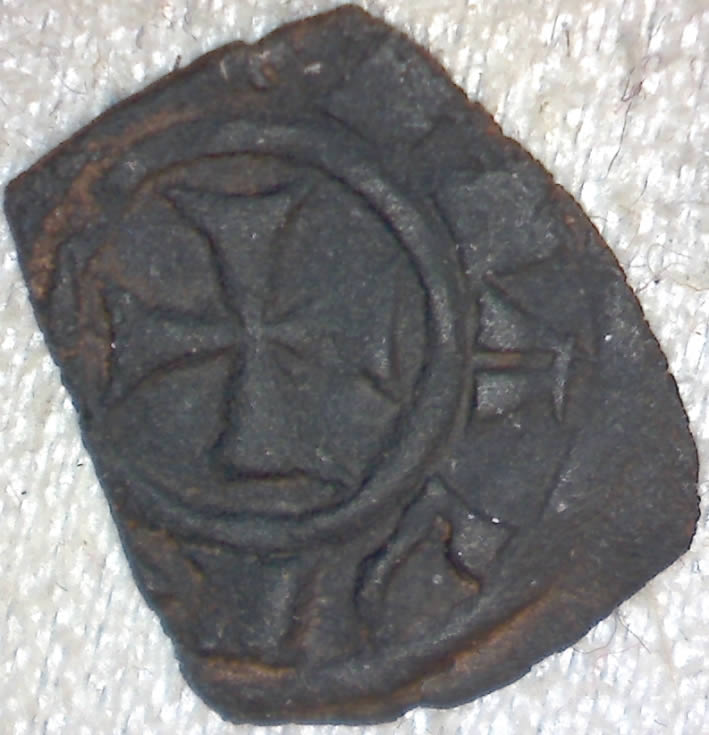
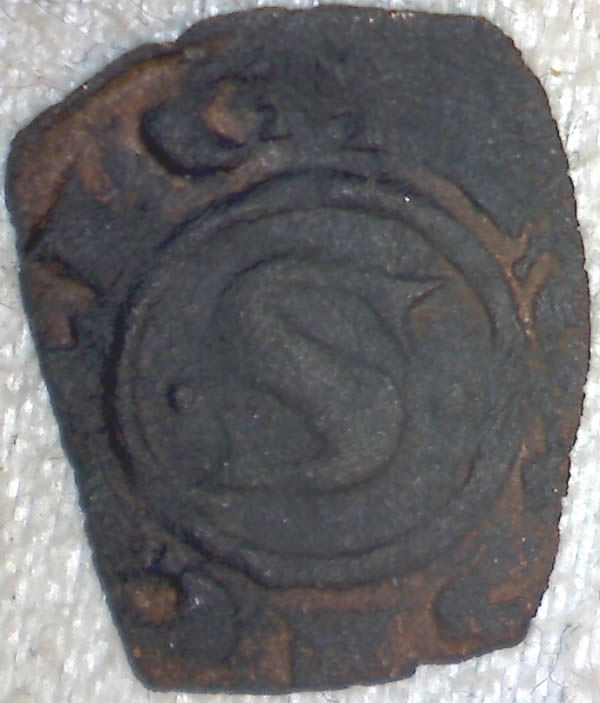
The eighth, and final, coin in this series is a Denaro minted in 1258-1266 AD under the authority of King Manfred. The obv has a short cross surrounded by the inscription MAYNFRIDVS, while the reverse has the letter S surrounded by REX SICILIE. Obviously, this coin has been severely clipped. The attribution is Biaggi 1276.
Having seen these coins, do you arrive at the same conclusion as me? Sicily may have started out with one foot in in Islam and one foot in Christendom, over this time period, its coinage seems to indicate that moved firmly into Christendom.
P.S. Just after completing this short essay, I stumbled upon the Wikipedia page for Norman-Arab Culture:
https://en.wikipedia.org/wiki/Norma...tine_cultureAfter reading this, two points are evident:
1. I need to do more upfront research before embarking on these numismatic journeys.
2. My central thesis was correct. In 12th Century Sicily, Arabs and Christians lived peacefully side-by-side. Sicily became fully Islamic in 965 AD before being fully retaken by Christians in 1091 AD. However, Sicily under Roger II, who ruled 1130 to 1154 AD, "became increasingly characterized by its multi-ethnic composition and unusual religious tolerance". Roger II seems to have incorporated the best practices of both cultures—whether literature, medicine, or warfare. At this time, the populace of Sicily likely was generally more fluent in Arabic than Greek. This peaceful coexistence lasted through William II:
"The attitude of the king is really extraordinary. His attitude towards the Muslims is perfect: he gives them employment, he ch[o]oses his officers among them, and all, or almost all, keep their faith secret and can remain faithful to the faith of Islam. The king has full confidence in the Muslims and relies on them to handle many of his affairs, including the most important ones, to the point that the Great Intendant for cooking is a Muslim."
It is no wonder that the coins of this time period are bi- (or tri-) lingual.
All of this changed in period of 1224 to 1244 AD, when Fredrick II deported many of the local Muslims to the Italian City of Lucera. This "out of sight, out of mind" policy changed when Lucera was sacked by Charles II of Naples and the population killed or sold into slavery. It is no wonder that my Sicilian coins from mid to late 13th Century are monolingual.
I know that this is a numismatic forum rather than a political or religious forum, but perhaps consider whether you would prefer to live in 12th Century Sicily or 13th Century Sicily. Merry Christmas!







 Posted 12/18/2016 10:21 am


