| Author |
 Replies: 18 / Views: 2,864 Replies: 18 / Views: 2,864 |
|
Pillar of the Community
United States
1283 Posts |
I saw a 1909-S Lincoln for sale on auction, PCGS graded EF-40. To me the obverse looks to be VF30 (at best). I've also been looking through other cents by comparison and it seems 1909 cents are given a free pass.
Are the early Lincolns known to be weakly struck, and thus, less detail required for a given grade?
|
|
|
|
Valued Member
United States
473 Posts |
Now I'm not 100% sure, but I think I recall reading that the majority of all four 1909 cents were struck pretty well. By the mid-teens, weak strikes became a problem. If I were you, and you were looking for a nice example of a 1909S Lincoln Cent, i'd pass on the coin in question even without seeing a picture myself. Don't settle for a weak strike if you can get a strong strike for the same price. As you know, "buy the coin AND the slab" :) |
|
Pillar of the Community
United States
936 Posts |
I know BadThad made up a sheet that had which years were struck weak, maybe he will chime in here.
|
|
Bedrock of the Community
United States
20026 Posts |
The 1909's are all well struck and the dies were fresh. I don't ever recall seeing a poorly struck example. One thing you have to realize with wheats, a lot of the grading on circ coins is done using the reverse and judging the wear on the wheat heads and stalks. I posted some examples of how PCGS grades VG-EF wheats. https://goccf.com/t/27817I normally don't even have to see the obverse to tell you how PCGS graded the coin! That's how much weighting they use IMO. Of course, there are exceptions, but I've looked at a TON of pics on Heritage of PCGS graded Lincolns and it's pretty amazing....the wheat head wear is important. EDIT - I should also add that PCGS doesn't seem to add consideration for strike quality. I've seen poorly struck examples with high grades just due to the lack of hits. Perhaps they will consider it at MS67 and up, but I've never seen strike quality affect grade personally. Maybe I should send in this coin as a test: Image Insert: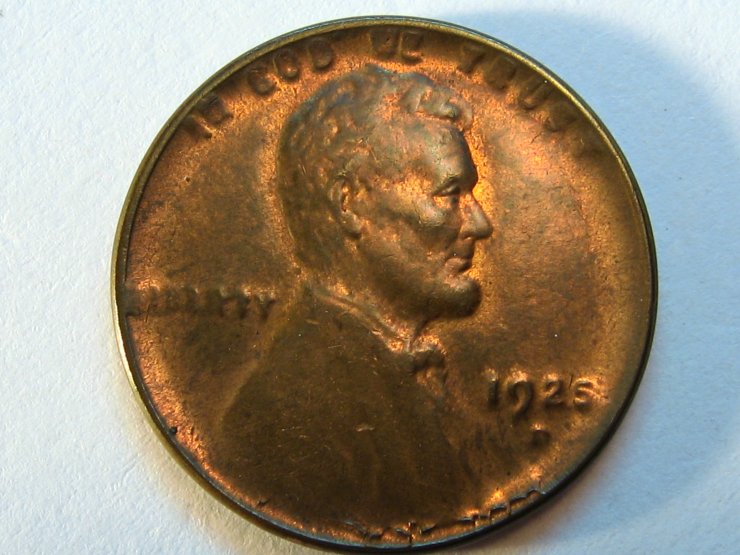 Edited by BadThad
04/15/2008 3:42 pm
|
|
Pillar of the Community
United States
666 Posts |
that's a crazy looking 5 on that image.
Looks like a 192S
|
|
Bedrock of the Community
United States
20026 Posts |
Yes it is! LOL It's worst case of die wear I've ever seen on a coin and I was lucky enough to find it in AU condition.....yes, that's a solid AU55-58 coin believe it or not. I've often toyed with the idea of sending it to PCGS just to throw them a loop. I'm 99% sure it would come back as AU though....they don't seem to care about anything but wear and hits.
|
|
Pillar of the Community
 United States
1283 Posts |
BadThad, in a grading book I read they claimed grading is supposed to be based solely on wear and surface hits. Things like sharpness of strike and eye appeal aren't even supposed to be considered for a technical grade. But it seems to me the real world works differently. Imagine a sharply stuck, UNC Lincoln with flawless surfaces and unattractive toning. How likely will it even make MS65-RB, much less 66 or 67? BTW, BadThad, perhaps you can give me your critique on this. This is the coin in question, PCGS XF40. The ear and hair look awfully flat to me for an XF coin, even for a low XF. 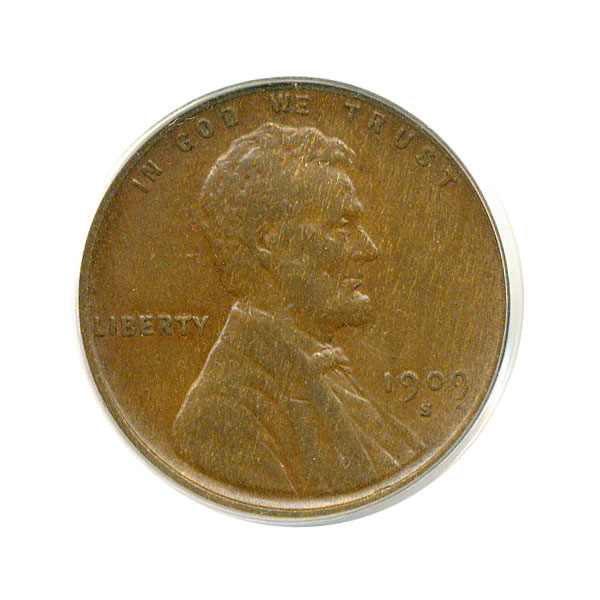 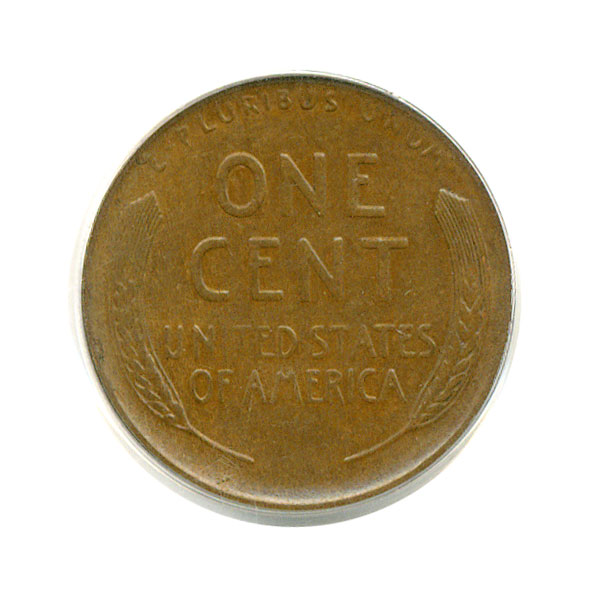 Edited by USArmyParatrooper
04/15/2008 11:34 pm
|
|
Valued Member
United States
336 Posts |
|
|
Bedrock of the Community
United States
20026 Posts |
That coin BARELY makes EF40 IMO. I can't make out the lines on the left wheathead, but I think it's the picture and not the coin or PCGS wouldn't have given it EF40. The obv looks about EF40, it's a weakish strike...could be due to the planchet, fairly rare to see wood graining on this year. Perhaps this is a hard planchet so the design didn't strike well. You can tell the dies were sharp....interesting 09S.
Lincoln Cent Lover!VERDI-CARE™ INVENTOR https://verdi.care/
|
|
Valued Member
United States
157 Posts |
BadThad you mentioned wood graining...what is that? I do notice some of my pennies have like a grainy long texture..is that what your referring to.. and is that a bad thing? Would you put a grainy one in vs a cleany shiny version?
|
|
Pillar of the Community
United States
2600 Posts |
BadThad, I think you are on to something with the idea that the wood grained planchets were harder. I don't seem to remember erver running across a highly detailed well struck wodd grain Lincoln. May just be I have not bumped into one. I wonder if Chuck, Bill of Coop have any thoughts on this. Jim  |
|
Bedrock of the Community
United States
20026 Posts |
quote:
BadThad you mentioned wood graining...what is that? I do notice some of my pennies have like a grainy long texture..is that what your referring to.. and is that a bad thing? Would you put a grainy one in vs a cleany shiny version?
Just what you see on the obverse of the coin posted. No, it's not a bad thing, it's due to uneven alloy mix in the planchet. Some collectors even seek these out. Personally, I don't care for them and I prefer a nice, even color (be it "clean shiny" BU or brown). It's all a matter of preference. |
|
Bedrock of the Community
United States
20026 Posts |
Jim, I'm pretty sure of that....it's an uneven alloy mix and the machines are calibrated for a properly mix alloy, i.e. the punch pressure. When it hits a "hard" planchet (uneven alloy), the design just doesn't come though well. Maybe I'm wrong, I'm just trying to use science....copper is one of the softer metals, pretty sure zinc is harder....time to dig. LOL EDIT - I'll be, copper is harder than zinc! I didn't know that! On the Mohs scale: Cu 3.0 and Zn 2.5 OK, this is making sense to me now. When you see the woodgraining, it's the zinc that's not mixed well into the copper. I believe those are actually fine strands of zinc, almost thread-like in the coin, that have oxidized at a rate different from the copper. Since the zinc is not evenly distributed thoughout the planchet, the planchet is in fact HARDER than it should be, which could result in a weaker strike.  Lincoln Cent Lover!VERDI-CARE™ INVENTOR https://verdi.care/
Edited by BadThad
04/16/2008 2:38 pm
|
|
Valued Member
United States
473 Posts |
Very informative Badthad! Glad I've been following this post
|
|
Pillar of the Community
United States
7123 Posts |
the coin in question is a VF-30 its not the first time that a key date got a leg up from the TPG's. |
|
Pillar of the Community
United States
7123 Posts |
Thad you may want to give the tin a little bit of thought in your hardness thoughts. and also ,individual mints for strike weakness in a series ,as well as die state of the coin in question . The coin pictured does not appear to me to be from strike weakness, but rather die state and wear . keep in mind that detail is lost to die state and then more to wear , beginning from an early die state ,wear will have somewhat less of an affect on the grade of a coin to a certian point ,but once the coin has lost enough detail either from die wear and circulation then it will grade accordingly . only on BU examples above MS-65 does strike quality become a factor ,so on a circulated coin the TPG's do not render a grade based on die state or strike quality ,they mimick each other to closely for consideration . what has affected the grade on this coin is the collector value ,nothing more nothing less .the TPG bumped it and in MHO 2 grades to achieve the EF grade on this coin ,,it is a true example of market grading . |
| |
Replies: 18 / Views: 2,864 |






 Posted 04/15/2008 2:28 pm





