In the annals of history,
Laura Gardin Fraser (LGF) is credited as being the first woman to design a US coin - the 1921 Alabama Statehood Centennial half dollar. But was she?
Had history played out a bit differently, LGF might have been second or third on the list.
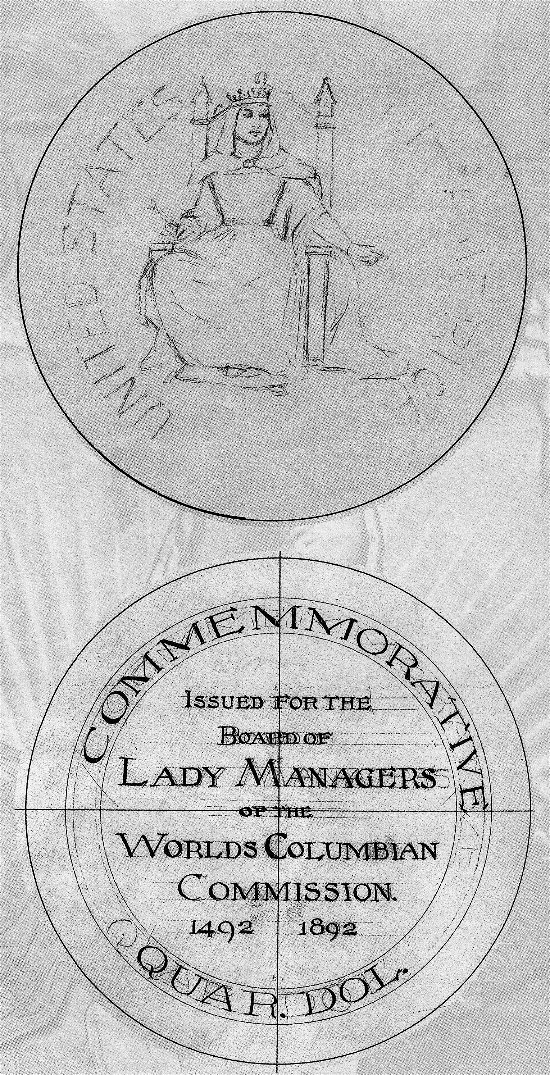
When the Board of Lady Managers for the 1892 World's Columbian Exposition secured from Congress its commemorative/souvenir quarter dollar, its president, Mrs. Bertha Potter Palmer, was of the opinion that a woman should design the coin. She engaged Caroline Peddle to create the designs. Ms. Peddle's initial sketches showed a full, front-facing, seated portrait of Isabella on the obverse and a lengthy commemorative inscription on the reverse; the wording was proposed by Mrs. Potter Palmer.
Caroline Peddle in Her Paris Studio (between 1897 and 1902)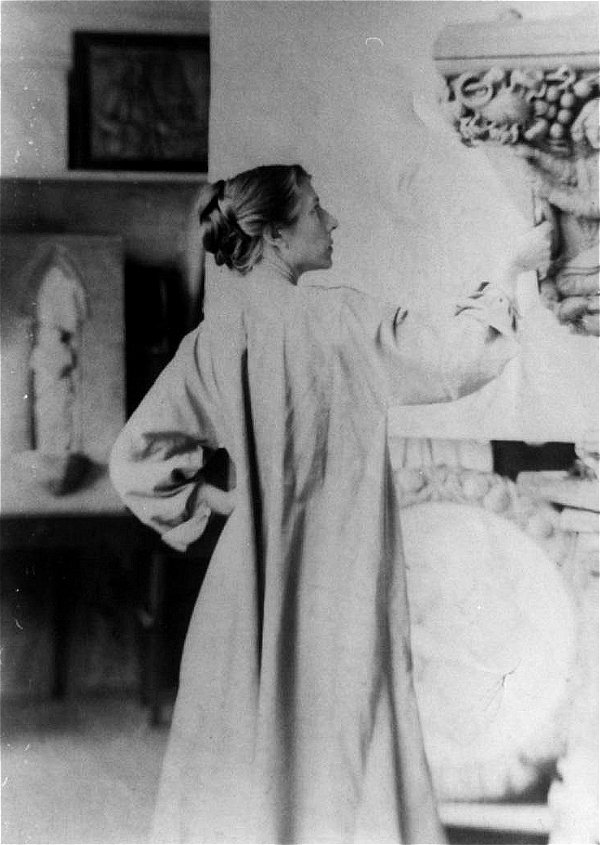 (Image Credit: Fair Use, via Vigo County Public Library)Design Sketch for Isabella Quarter by Caroline Peddle
 (Image Credit: Public domain, via Wikimedia Commons) Charles Barber
, the US Mint Chief Engraver at the time, however, was not in favor of outside artists being used to design and model
US coins. So, something of a "battle" ensued in which Barber began by criticizing Ms. Peddle's designs and recommended a bust portrait vs. Peddle's figure portrait for the obverse. He also successfully pushed to take control of the design for the coin's reverse. Miss Peddle then threatened to discontinue her work on the coin and went so far as to send a letter to the Lady Managers indicating that she had decided to decline working on the coin.
She was, however, eventually convinced to send in her completed model for the redesigned, bust portrait for the coin's obverse. Though it is generally believed that the portrait seen on the coin is the work of Barber, the lack of definitive records stating such allows for the possibility that Peddle's obverse model may have actually been used.
As an alternate to the initially proposed reverse inscriptions, the Lady Managers suggested depicting the Woman's Building that was part of the Exposition. Barber objected to this idea as well, arguing that it was unsuitable for a coin as small as a quarter-dollar. (An interesting comment in light of today's
Statehood Quarter and
America the Beautiful Quarter designs!) He prepared several heraldic eagle designs for the reverse, but none were selected for use. After several additional design exchanges between the Board and the Mint, Barber ultimately arrived at the "Women's Industry" reverse design seen on the struck coin.
At the time, Mrs Potter made it clear that the Board was unhappy with the reverse design but that its hand was forced. Commenting on the coin's reverse design, she stated, "The design for this figure we did not consider typical of the woman of the present day, as the woman is presented kneeling, with a distaff in her hands, but the necessity of haste forced us, while recording our objection, to ask that the minting of the coin be proceeded with without waiting for other sketches." (from
Addresses and Reports of Mrs. Potter Palmer. p. 123. 1894.)
So, the first opportunity for a woman-designed US coin went unfulfilled as Barber took over.
Two decades later, another woman was engaged to design a US commemorative coin. This time out, it was Miss Evelyn Beatrice Longman, an accomplished and well-respected artist. She was selected to design the gold quarter eagle ($2.50) for the Panama-Pacific International Exposition coin program.
Evelyn Beatrice Longman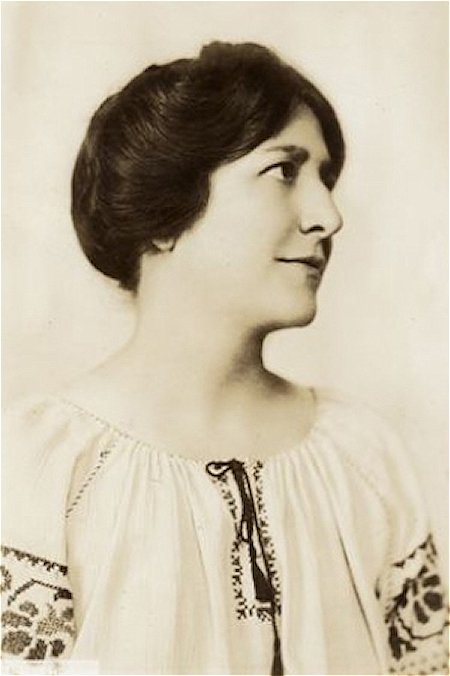 (Image Credit: Fair Use, via ConnectictuHistory.org/Loomis Chaffee School Archives, Loomis Chaffee School, Windsor, CT)
Ms. Longman was a leading artist/sculptor of the time, with noteworthy commissions for a monumental sculpture of
Victory for the 1904 Louisiana Purchase Exposition (aka St. Louis World's Fair), the
Great Bronze Memorial chapel doors at the US Naval Academy in Annapolis, MD and was responsible for the decorative fasces, wreaths and eagles that surround the inscriptions of the Gettysburg Address and Lincoln's Second Inaugural address in the interior of the Lincoln Memorial (she carved the inscriptions as well; she worked under the direction of Daniel Chester French).
Ms. Longman was every bit as talented as
Laura Gardin Fraser, but far less known to most numismatists because she never designed a struck coin. Unfortunately, she became too ill to complete her work on the Pan-Pac quarter eagle. She had created preliminary sketches for the coin, but the seriousness of her illness would have prevented her from completing the work within the available timeline. So, the coin's design and modeling was taken over by
Charles Barber. I can only imagine what the talents of Ms. Longman would have brought to US coin design! My optimistic side believes that her design for the Pan-Pac quarter eagle would have been outstanding!
Side Note: Longman's talent was on display at this Exposition, as she was able to complete a sculpture that was titled L'Amour
; it depicts a man and woman interlocked in a loving embrace while kissing. She also created the Exposition's Fountain of Ceres (Ceres
, from Greek Mythology: Goddess of Agriculture) located in the Forecourt of the Four Seasons. It was a magnificent sculpture that combined a central figure of Ceres
on a sculpted pedestal that featured dancing maidens celebrating a good harvest. And so, the stage was set for
Laura Gardin Fraser, a few years later, to become the first woman to design a US coin that was actually minted - she was not, however, the first to be asked to design one!







 Posted 06/01/2021 12:07 pm





