


Coin Community Family of Web Sites
Shop CCF Members on eBay! Royal Canadian Mint products, Canadian, Polish, American, and world coins and banknotes. Specializing in Modern Numismatics Coin, Banknote and Medal Collectors's Online Mall Shop for APMEX Bullion on eBay!Vancouvers #1 Coin and Paper Money Dealer 300,000 items to help build your collection!


Username:
Password:
Save Password
Forgot your Password?


This page may contain links that result in small commissions to keep this free site up and running.

Welcome Guest! Registering and/or logging in will remove the anchor (bottom) ads. It's Free!

Why Do Earlier Proof Coins Look Different Than More Modern Proof Coins?

To participate in the forum you must log in or register.
Author Previous TopicReplies: 5 / Views: 960Next Topic  
Pillar of the Community
Humanist1287's Avatar
United States
1108 Posts
 Posted 07/14/2025  1:18 pm Show Profile   Bookmark this topic Add Humanist1287 to your friends list Get a Link to this Message Number of Subscribers
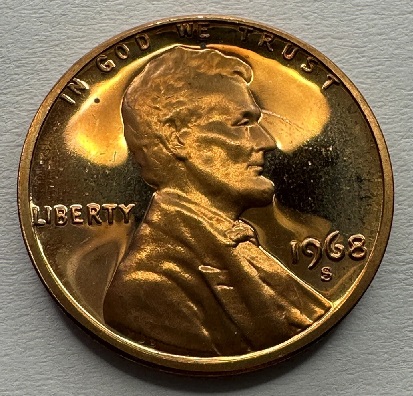
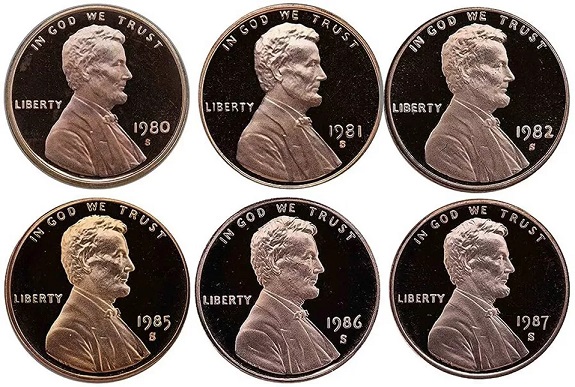
Just curious about this. I've noticed from many coins, most notably the ones that I have, Lincoln cents and Jefferson nickels... The strike in the proof coins from the 50's and 60's is much different from that of the coins that came later. I don't know about other coins other than those... But I would assume probably a similar scenario?

I know Philadelphia produced many of the earlier proofs before San Francisco became mostly proof only, with exceptions obviously.

For example, it seems many earlier proofs have a more mirror-like strike, as opposed to a cameo or frosted effect. I personally like the more mirror finished ones.

I'm sure somebody will fill me in on this. Any thoughts?

Just for comparison take of what I'm talking about...
Why-Do-Earlier-Proof-Coins-Look-Different-Than-More-Modern-Proof-Coins?

Why-Do-Earlier-Proof-Coins-Look-Different-Than-More-Modern-Proof-Coins?
Edited by Humanist1287
07/14/2025 1:25 pm
Pillar of the Community
Learn More...
Brandmeister's Avatar
United States
6451 Posts
 Posted 07/14/2025  1:44 pm  Show Profile   Check Brandmeister's eBay Listings Bookmark this reply Add Brandmeister to your friends list Get a Link to this Reply
There are many factors. The obverse and reverse designs have seen changes over the years. The coining machinery has been changed occasionally. Probably the single biggest factor in proof coin striking is the manufacture of dies. The techniques to polish the fields and to produce a cameo effect on devices has changed (and improved) drastically over the years.
Moderator
Learn More...
jbuck's Avatar
United States
187537 Posts
Bedrock of the Community
Learn More...
Marv65's Avatar
United States
10472 Posts
 Posted 07/14/2025  5:19 pm  Show Profile   Bookmark this reply Add Marv65 to your friends list Get a Link to this Reply
Starting in the 50's the dies were soaked in an alcohol/acid type solution then the fields were polished which gave the dies devices a frosty affect but only for the first coins from the dies then it wore off leaving you with highly reflective coins like your cent shows.
In Mid 70's the mint changed to sandblasting the dies then polishing the fields and plating them with some type of material. From there they refined the die process and since the 80's every coin was a cameo/deep cameo - that is why proof DCAM/CAM coins from the 70's on up don't are common to see.
Edited by Marv65
07/14/2025 5:20 pm
Pillar of the Community
Learn More...
Brandmeister's Avatar
United States
6451 Posts
 Posted 07/14/2025  5:29 pm  Show Profile   Check Brandmeister's eBay Listings Bookmark this reply Add Brandmeister to your friends list Get a Link to this Reply
Now they use some kind of laser stippling process to produce the frosting, right? You can see the dots if you zoom in close enough. This article provides a lot of details on the most recent process, I believe:

https://www.coinworld.com/news/us-c...sting-c.html
Moderator
Learn More...
Sap's Avatar
Australia
16806 Posts
 Posted 07/14/2025  6:13 pm  Show Profile   Bookmark this reply Add Sap to your friends list Get a Link to this Reply
In short, the "cameo effect" became popular with collectors at least in part because it was rare - some proofs showed it, while most did not.

The Mint noted this trend, and so sought to deliberately create the cameo effect for all their coins, in the theory that this would make them all more popular. Thus, "proof = frosted" became the standard.
Don't say "infinitely" when you mean "very"; otherwise, you'll have no word left when you want to talk about something really infinite. - C. S. Lewis
  Previous TopicReplies: 5 / Views: 960Next Topic  

To participate in the forum you must log in or register.


Disclaimer: While a tremendous amount of effort goes into ensuring the accuracy of the information contained in this site, Coin Community assumes no liability for errors. Copyright 2005 - 2026 Coin Community Family- all rights reserved worldwide. Use of any images or content on this website without prior written permission of Coin Community or the original lender is strictly prohibited.
Contact Us  |  Advertise Here  |  Privacy Policy / Terms of Use

Coin Community Forum © 2005 - 2026 Coin Community Forums
It took 0.38 seconds to rattle this change. Forums