| Author |
 Replies: 20 / Views: 3,431 Replies: 20 / Views: 3,431 |
|
Pillar of the Community

United States
4051 Posts |
I bought a lens on ebay a while back and finally got around to testing it. It's a Vivitar 28-70mm Macro Focusing Zoom, Nikon AIS mount. On its own it can only focus to 1:4, so won't work well for coins. But coupled with a Vivitar 2X Macro Focusing teleconverter, the combo has good range! It seems like a decent lens at infinity, and can go as big as 1.2:1, where it does a really good job. Here it is at 0.42:1 ( Morgan dollar on APS-C sensor), followed by a detail shot of same Morgan dollar at 1.2:1.   This combo gives more focus range than most dedicated macro lenses, which mostly go to 1:2 or 1:1 but not beyond. Of course the setup is completely manual, but most macro work is anyway. It is interesting having to adjust 4 rings on the lenses: teleconverter focus; aperture; zoom; lens focus. Takes some getting used to. But you can generally pick these up pretty cheap on ebay. I got this one for ~$25 and the teleconverter for ~$45, so for $70 I have a broad-range 56mm-140mm Zoom Macro Lens capable of native 1.2:1 magnification. And of course the teleconverter works with other lenses as well. Tried it with a 100mm and a 200mm and got pretty good results, but not as good as with this Vivitar zoom. The Vivitar seems to be corrected reasonably well at Macro distances. |
|
|
|
Pillar of the Community
 United States
4051 Posts |
Here's a 1:1 crop of the cornflowers:  |
|
Moderator
United States
23522 Posts |
You *do* realize that, once your work is known more widely, you will be realized as having shifted upwards the acceptable definition of "quality," right?
You are changing everything, Ray. You've moved the goalposts a long way backwards, the whole time explaining in detail how you've done it. You are personally refining the whole subspecialty of coin photography.
|
|
Pillar of the Community
United States
4051 Posts |
And I thought I was just guilty of Sunday night ramblings while sipping my Islay Single Malt! You are too kind SuperDave. The quality of these is pretty good, though not quite up to a 105VR or the like. But then for $70, I agree this is within reach of most folks who would be interested in taking coin photos. And the usefulness of the 2X Macro Tele goes well beyond these experiments. I'm happy that my experiments and discoveries may prove useful...Ray
|
|
Pillar of the Community
United States
3076 Posts |
 RAY its crap like this that puts over the top ...to WAY OVER THE TOP!your combinations of old and new are truely amazing..KEEP IT COMMING!...with your posts...I just bought a lens, and don't even have a camera! bought a bellows  and don't know how to use it LOL and by the way for most of you who follow thews threads.. we are not ignorant to follow such advice which is freely given, the results are plain and simple....one does not need to buy the newest of cameras to get superb shots....I have followed many a thread which shows definately that there is some GREAT GLASS out there which is older than today's standards...its simply a matter of conversion...rather than to think you can buy it as an "ALL IN WONDER" camera.. RAY......many of your comparisons are at the peak of DETAIL macro most do not follow, I personally appreciate your efforts. your explinations and RESULTS....in your endevours... YOUR WORK CLEARLY SHINES" above the rest....and I am humbled in that you share your work with us....you allow us to reach above what we could not do by ourselves.... I look forward to what you will do next!Gene |
|
Pillar of the Community
United States
891 Posts |
As I enjoy reading all the posts I see alot of talk about ratios. I have been reading some on it and understand some of it. But does it really matter what the ratio is or is there a ratio that one tries to achieve when photographing coins? What is meant when you have a 1:1 crop. Is that the original size crop from the original sized image? I do thank you for all your posts. They are real informative.
|
|
Pillar of the Community
United States
4051 Posts |
Magnification ratios are all about framing the shot. If you want to have the coin completely fill the sensor frame and be the same size every time, the ratio is fairly important.
The desired ratio depends on
1) physical sensor size (not # pixels)
2) coin size.
Most folks won't be using a professional, FX size (24x36mm) sensor DSLR, but a lot of folks (like me) use cameras with the smaller DX size (16x24mm) sensor, so that's what I'll use as my example:
A US Dollar is 38.1mm in diameter. To fill the sensor frame with the coin, the image on the sensor must be 16mm tall. The ratio is 16/38.1, or 0.42:1. Cents are 19mm, so the ratio is 0.84:1.
So why "fill the sensor"? Simply to make use of the whole sensor, ie to get the most pixels possible into the shot. The more pixels, the more detail.
In some cases you want to show only one part of the coin, maybe the mintmark or a die crack. You have two choices:
1) Take an overall picture of the coin and crop away what you don't want
2) Increase the magnification to fill the sensor with the part of the coin you want to photograph
Often cropping-out the detail you want to see is a good way to go. But the quality of the image will be worse than if you could increase the magnification.
One thing that confuses folks is that we don't usually show images on the web that have a large number of pixels, so why would we care about filling the sensor and getting more pixels than we need? SuperDave has suggested a standard of 800x800 as ideal for most work, which is a fine size to show a lot of detail. So why not just make sure the coin fills 800x800 pixels on the sensor, and crop away the rest? The problem is that "individual" pixels are not as sharp as "resized" pixels. This is due to a lot of fairly esoteric factors that limit local contrast such as lens aberrations, sensor noise, anti-aliasing filters, and the fact that each "pixel" is an amalgam of 3 individual Red, Green and Blue sub-pixels that are not physically coincident (except on some Sigma cameras). It's all about "information". The more pixels you have, the more information you have about the coin. For these reasons, a 1600x1600 coin image resized to 800x800 is usually sharper than a 800x800 coin image. When you resize a 1600x1600 original image to 800x800, each pixel in the final 800x800 image is made up of information from 4 pixels in the 1600x1600 original.
There are a few crazy folks out there on the quest to get the sharpest images possible, which means improving sharpness at the individual pixel level. To see how sharp those individual pixels are, it is common practice to do a "1:1" or "100%" crop of the image. This is simply a crop that is not resized, in order to show the pixel-level detail. The sharper the pixel-level detail, the sharper the final image.
Hope this answers the questions...Ray
Contact me for photographic equipment or visit my home page at: http://macrocoins.com |
|
Moderator
United States
23522 Posts |
As you'll understand, Southern Yankee, what goes in the business end of a lens isn't the same size as what comes out the back; that's how you can get an entire building onto a 35mm sensor. The ratios used here describe the relative size transmitted to the sensor. 1:1 means that what comes out is the same size as what went in - so, a 38.1mm Morgan dollar at 1:1 will be a 38.1mm image on the sensor. A dSLR APS-C sensor is much smaller than that, of course (Nikon's APS-C measures 23.7 x 15.7 mm). So, a 1:1 on a dSLR sensor will not capture a whole Morgan or even a whole Dime. What you'll get is some stupid magnification on your computer screen, when you consider that the 15mm-ish vertical on your sensor translates to 3400+ vertical pixels on your monitor. So, 1:1 isn't an effective usage for imaging whole coins. The goal is to get your coin to completely fill the sensor, while remaining sharply-focused. Point-and-shoot sensors are much smaller than dSLR sensors, making it actually easier to fill the sensor - you need less-sophisticated optics because the "magnification" through the lens is less. However, the individual pixels on a point-and-shoot sensor are far smaller than those on a dSLR, making it a lot tougher to come up with a nice sharp focus. That's why you hear me gush so heavily when someone using a point-and-shoot comes up with a nice image - they're doing it under much more severe restrictions than I am with a dSLR and a dedicated lens designed for the job I'm doing. It's a lot harder to do it right with a P&S. Now, as regards cropping: The term we prefer to use in photography is a "100% crop." That means you've blown the image up to full size on your monitor - with a Canon T3i, for instance, that would be 5184x3456 pixels - taken a slice of that full-size image and posted it here at the same size. Here's where it gets complicated. Coin Community's forum software automatically resizes an image if its' size exceeds a certain percentage of your browser screen. But monitors differ. My monitor, for instance, has a screen resolution of 1920x1200. I can see a larger image full-size than someone using a screen resolution of 1024x768; I may see the image full-size when they'll get that dashed border and have to click the image to see it full-size. |
|
Moderator
United States
23522 Posts |
Heh. Photo-nerd dogpile.  |
|
Pillar of the Community
United States
4051 Posts |
Quote:
I just bought a lens, and don't even have a camera! bought a bellows and don't know how to use it LOL Gene...what bellows did you buy? |
|
Pillar of the Community
United States
891 Posts |
Thanks guys that cleared it up for me. Now I can at least kinda understand what you are talking about. Also answers my next question about the image size. Was going to downsize it in the camera so I wouldn't have to reduce it so much, but I see that's not the way to go. Thanks.
|
|
Valued Member
344 Posts |
O.O you guys are into these photos like I am into my music :D.
But now that I got my little nikon coolpix I can take photos that show the coin good enough for me :D.
But what you two (dave and rmps) do is pretty sweet and I am appreciative of your fellas efforts :).
|
|
Pillar of the Community
United States
3076 Posts |
Yes, SouthernYankee, take the biggest pixle shots to capture the most information..If focused correctly, these result in highly detailed photo,s..resizing them keeps the detail when you are sharing your photo's online with us.. Ray, I bought a canon AF bellows, real nice shape, I also bought an unopened (NOT!) 75mm EL-OMEGAR enlarging ring which has scratches ion the edges of the lens, though I think it might not be seen in the photo's once used...Got a total refund so its worth playing with.. I just need to find out the required adapters to hook it all up...I just bought the Canon Rebel T1i DSLR, a whole new monster...totally different than the point and shoot camera... I am once again a "TOTAL NEWBIE" The bellows is something I am slowly moving towards for extreme close ups not something I'm working on right now, as the new camera has me trying to figure out how to turn it on..LOL both the new camera and the bellows are for something different than most shooters are going for.... I appreciate the input and the many threads that reflect the "whole of " the varieties of photography... something for everyone to munch on.. |
|
Pillar of the Community
United States
4051 Posts |
Sounds great. Can't wait to see some pics. For the adapter, you'll need a Canon-to-M39 adapter. There are simple ones that allow only manual mode, and some that trick the camera into thinking it has a lens attached. Here is a full manual type: http://www.ebay.com/itm/M39-screw-l...em3f0cd942abAnd here is one of the tricksters: http://www.ebay.com/itm/AF-Confirm-...em336a9f072dI think since your bellows is an AF type that it should transfer the adapter info (not lens info, just fake info to allow aperture priority mode operation) to the camera. If not, then just the simple one will do. |
|
Pillar of the Community
United States
3076 Posts |
I finally got my LCD screen to show me whats what..for most of you who use the point and shoot cameras, the LCD screen is "ALWAYS" on, not so with the higher DSLR cameras...But I did figure out how to get a photo LOL...I have to still figure out so much..but here's my first try's photo's 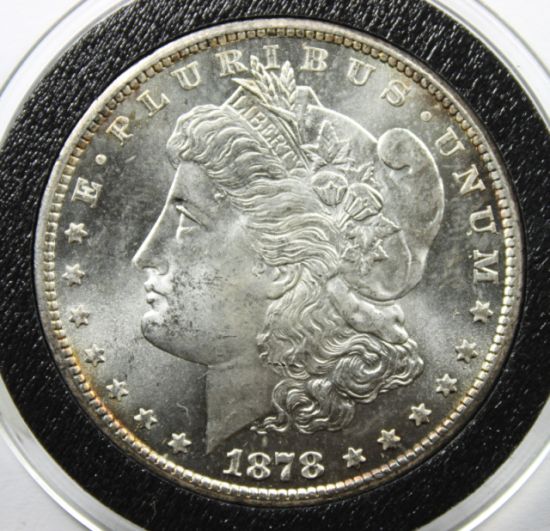 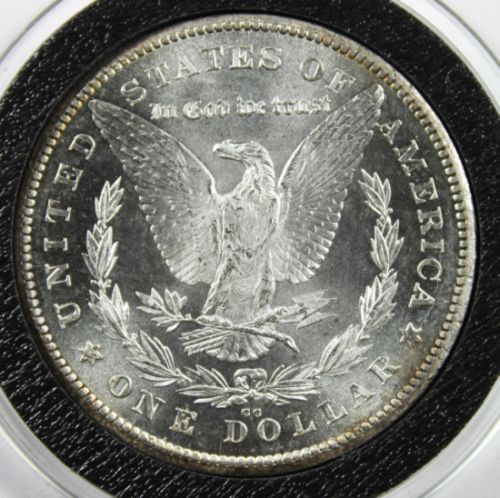 |
|
Pillar of the Community
United States
3076 Posts |
Pic's are still to over lighted...just learning the new camera and glad to at least get a photo. say Ray is the M39
adapter the adapter to connect the camera to the bellows, OR to connect the El-Omegar to the front of the FL bellows? I'm thinking this is the case..still need the adapter with or without the electronics for the EOS to the FL all should be manual control...
|
| |
Replies: 20 / Views: 3,431 |








 Posted 10/02/2011 11:53 pm


