Coin Community Family of Web Sites Join Thousands of Coin, Bullion, & Money Collectors
Vancouvers #1 Coin and Paper Money Dealer Join Thousands of Coin, Bullion, & Money Collectors Royal Estate Auctions - $1 Coin AuctionsSpecializing in Modern Numismatics Royal Canadian Mint products, Canadian, Polish, American, and world coins and banknotes. 300,000 items to help build your collection! Coin, Banknote and Medal Collectors's Online Mall


Username:
Password:
Save Password
Forgot your Password?


This page may contain links that result in small commissions to keep this free site up and running.

Welcome Guest! Registering and/or logging in will remove the anchor (bottom) ads and the security checks. It's Free!

Definitive Test For Black Beauty Nickels

To participate in the forum you must log in or register.
Author Previous TopicReplies: 297 / Views: 79,748Next Topic
Page: of 20
Moderator
Learn More...
nickelsearcher's Avatar
United States
15950 Posts
 Posted 04/25/2026  07:34 am  Show Profile   Bookmark this reply Add nickelsearcher to your friends list Get a Link to this Reply
to the

I don't believe your 1964 nickel is a Black Beauty. Likely some form of environmental toning.

Please crop and properly rotate your photos before posting them here.
Take a look at my other hobby ... http://www.jk-dk.art
Pillar of the Community
Learn More...
CoinForMe's Avatar
United States
2458 Posts
 Posted 04/25/2026  09:35 am  Show Profile   Bookmark this reply Add CoinForMe to your friends list Get a Link to this Reply
I would say it's very hard to tell if it's a Black Beauty nickel in a picture; lighting will affect the surface's appearance.
Take your coin to a knowledgeable local dealer for a more accurate response.
BTW, Proof Coins mostly look black in pictures...
Pillar of the Community
Chase007's Avatar
United States
7598 Posts
 Posted 04/25/2026  10:51 am  Show Profile   Bookmark this reply Add Chase007 to your friends list Get a Link to this Reply

Quote:
I don't believe your 1964 nickel is a Black Beauty. Likely some form of environmental toning.


Quote:
I would say it's very hard to tell if it's a Black Beauty nickel in a picture; lighting will affect the surface's appearance.


Could not agree more since a "Black Beauty" nickel is primarily caused by an improper annealing process during minting and it is difficult to identify and confirm the real deals by just looking at the pictures and in most cases they are not .

Quote:
"Black Beauty" nickels were most often 1958 and 1959 business strikes - never heard of a "Proof" Black Beauty nickel.

Absolutely correct..
Edited by Chase007
04/25/2026 11:05 am
Moderator
Learn More...
Dearborn's Avatar
United States
107837 Posts
Pillar of the Community
colonialjohn's Avatar
United States
1766 Posts
 Posted Yesterday   5:46 pm  Show Profile   Bookmark this reply Add colonialjohn to your friends list Get a Link to this Reply
Incredible. Since I completed my Jefferson nickel WW II Lamination XRF/SEM-EDS study and its published in the Newman Portal and in the recent Mint Error News #97 - see here - https://minterrornews.com/issue97.pdf on page 144 I was considering what is the next challenge? Seems these Black Beauties of 1958 & 1959-P are next? I contacted the two principal people in this thread today by E-Mail to consider being reviewers/consultants to this paper. So that I get a clearer picture of what is bothering you guys on these BB's feel free to ask some questions after reading my paper in Mike Byers Journal on these WWII nickels and how this technology can be used for BB's. I did not think this would be my next metallurgical project another coinage from the U.S. in the 20thC but these coins I believe would work well using this dual analytical approach. Shoot me some questions on this topic thread or privately. Realize I only heard of BB's only a week ago but have been doing serious reading on this phenomenon for the last week. I already worked out an anlytical schematic on what probably needs to be done but if people ask questions and I answer perhaps I can get some YOUR WRONG/THIS MAKE SENSE/TRY THIS/WHY ARE PCGS-NGC DIFFERENT? WHY ONLY ANACS. WHY the metal Co? Initially this can be complex/confusing due to other minting factors, coinages, etc exhibiting dark colors. Lets talk. John Lorenzo, Numismatist.
Edited by colonialjohn
Yesterday 5:49 pm
Pillar of the Community
colonialjohn's Avatar
United States
1766 Posts
 Posted Yesterday   10:06 pm  Show Profile   Bookmark this reply Add colonialjohn to your friends list Get a Link to this Reply
I plan my project to start in January 2027.
Pillar of the Community
CoinHI's Avatar
United States
2817 Posts
 Posted Today  15H 15M ago  Show Profile   Bookmark this reply Add CoinHI to your friends list Get a Link to this Reply
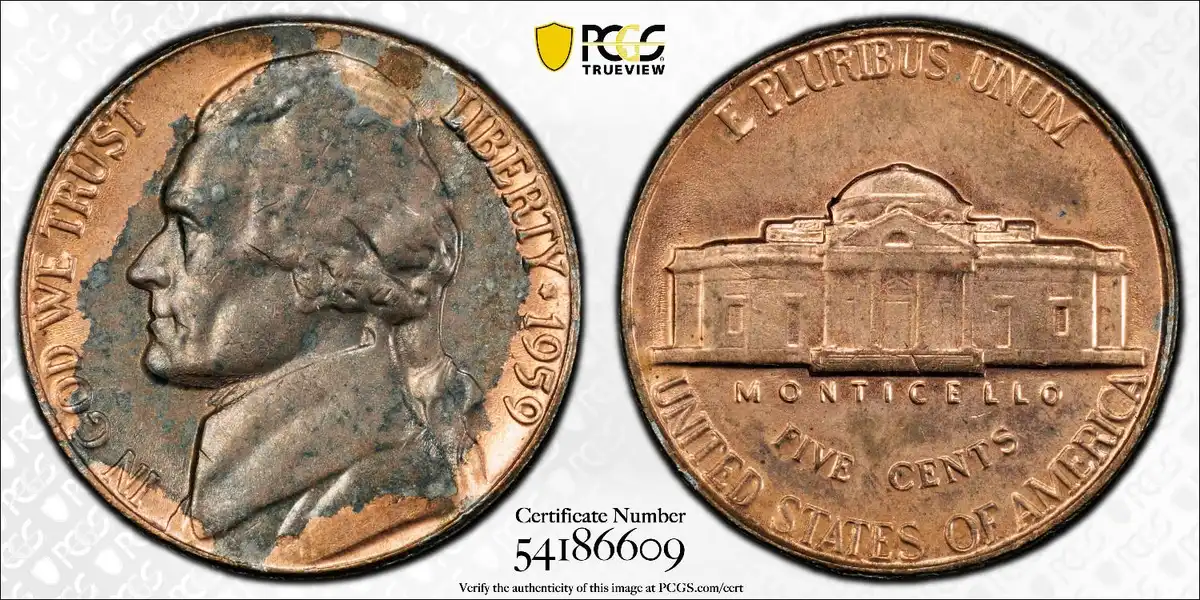
Here's my 1959 Black Beauty that might interest you John

https://goccf.com/t/454864&whichpag...s=Improperly

Definitive-Test-For-Black-Beauty-Nickels
"Pride is yoked with callous behavior, as humility is with compassion." St. Gregory Palamas

Top Finds - 1969-S 1c FS-101 http://goccf.com/t/477681 1976 D WQ FS-101 http://goccf.com/t/382777 - 1968 D 1c FS-801 http://goccf.com/t/422254
Cool clashed dies - 1972 D 1c http://goccf.com/t/429855&SearchTerms=CCL
Struck-In Rim Burr - 1969 S 1c http://goccf.com/t/425587&SearchTerms=burr
Floating (Type II) Counterclash - 1978 D 1c http://goccf.com/t/434991&SearchTerms=1978


Pillar of the Community
colonialjohn's Avatar
United States
1766 Posts
 Posted Today  9H 57M ago  Show Profile   Bookmark this reply Add colonialjohn to your friends list Get a Link to this Reply
Unfortunately its no good since its PCGS slabbed. Here is my proposed analytical methodology at this point in time = Black Beauties require both a surface shot and a polished edge shot because the phenomenon is entirely a surface chemistry result of improper annealing, not a structural defect. During 1958 and 1959, the nickel feedstock supplied to the U.S. Mint likely carried elevated cobalt impurity levels—possibly even above 0.1%!?, which would have altered how the cupronickel alloy responded to annealing heat. When overheated, this cobalt bearing alloy forms a blue black, glossy oxide layer that is visually distinctive on Uncirculated coins. A surface shot preserves this unaltered skin so SEM/EDS can document the cobalt&-influenced oxidation chemistry, while XRF captures the surface biased readings that differ from the interior. Because the Black Beauty effect exists only in the outer few microns, the surface shot records the metallurgical signature responsible for the color.

A polished edge shot is equally important because it demonstrates that the interior alloy remains completely normal with the exception of Cobalt (Co). Probably. Polishing removes the cobalt enhanced oxide layer and exposes a flat, uniform surface for XRF to measure the true bulk composition and also to take a non-corrosion layer SEM/EDS target shot. This confirms that the cobalt impurity influenced only the surface oxidation behavior during overheating, not the interior matrix. SEM/EDS at the polished edge also verifies that Black Beauties are annealing driven surface anomalies, not structural errors. Together, the two geometries establish the complete picture: normal interior alloy + cobalt influenced annealed surface = Black Beauty, providing the contrast needed for analytical work comparing these coins to standard 1958-59-P Jefferson nickels. These are not sintered errors which are dark gray and porous. Any connotation to a sintered planchet is a TPG error. Additionally - Improper alloy mix is the wrong classification for Black Beauties because their interior metal composition is completely normal for 1958-59-P Jefferson nickels, with no evidence of abnormal bulk chemistry or mixed metal contamination. The blue-black appearance comes from surface oxidation behavior during overheating, not from an alloy level mistake. The most plausible metallurgical cause is that the nickel feedstock delivered to the Mint in 1958 and 1959 in Philadelphia contained elevated cobalt impurity levels—likely above 0.1%?. Cobalt at this level does not alter the bulk alloy enough to qualify as an "improper mix," but it does change how the surface oxide forms when the planchets are annealed too hot. This produces the glossy, bluish & black skin characteristic of Black Beauties while leaving the interior alloy completely standard. Because the core composition remains correct and only the surface oxide is abnormal, the proper classification is improper annealing, not improper alloy mix at this time (in theory). It seems also in this study to add a fourth specimen - a so-called sintered Jefferson nickel outside of 1958/1959 Philly group which has that BB glossy blue black look. JPL
Edited by colonialjohn
Today 8H 28M ago
Pillar of the Community
CoinHI's Avatar
United States
2817 Posts
 Posted Today  6H 1M ago  Show Profile   Bookmark this reply Add CoinHI to your friends list Get a Link to this Reply
"Sintered Planchet" I believe is no longer used by TPG's. MIke Diamond got a response from US MInt officials on this subject here: https://www.error-ref.com/?s=annealing

"Pride is yoked with callous behavior, as humility is with compassion." St. Gregory Palamas

Top Finds - 1969-S 1c FS-101 http://goccf.com/t/477681 1976 D WQ FS-101 http://goccf.com/t/382777 - 1968 D 1c FS-801 http://goccf.com/t/422254
Cool clashed dies - 1972 D 1c http://goccf.com/t/429855&SearchTerms=CCL
Struck-In Rim Burr - 1969 S 1c http://goccf.com/t/425587&SearchTerms=burr
Floating (Type II) Counterclash - 1978 D 1c http://goccf.com/t/434991&SearchTerms=1978


Pillar of the Community
colonialjohn's Avatar
United States
1766 Posts
 Posted Today  2H 20M ago  Show Profile   Bookmark this reply Add colonialjohn to your friends list Get a Link to this Reply
Correct. Thanks. News to me as I don't collect these errors. Major grading companies no longer use the term sintered planchet in their current attribution vocabulary*, and you will not see it on modern labels. PCGS, NGC, ANACS, and CACG all use improper annealing as the standardized designation. The shift happened as TPGs aligned terminology with metallurgical accuracy: U.S. Mint planchets are not powder metal, so "sintered" was always a misnomer.

So how can TPG's differentiate between improper annealing vs. environmental corrosion?

How TPGs differentiate mint annealing vs. environmental damage
Even without SEM/EDS, the physical differences are stark. Here are the diagnostics they rely on:

1. Surface texture
Improper annealing: Smooth, metallic, non-porous surface; luster remains visible under the oxide film.

Environmental corrosion: Pitted, granular, or "frosty" texture; luster is broken or absent.

2. Color uniformity
Improper annealing: Even, stable gunmetal/blue-black across fields and devices.

Environmental: Blotchy, patchy, streaked, or two-tone; often brown-black or green-black.

3. Device edges
Improper annealing: Oxide layer is continuous over devices; no haloing.

Environmental: Darkening creeps into recesses first; raised devices often remain lighter.

4. Strike behavior
Improper annealing: Strike is normal; metal flows cleanly.

Environmental: Weak or mushy strike from surface degradation.

**5. Stability over time
Improper annealing: Color is stable for decades; does not flake or change.

Environmental: Continues to evolve — darkens, spots, or develops texture changes.

**6. Rim and edge diagnostics
Improper annealing: Edge coloration matches the faces.

Environmental: Edges often show different color because corrosion is air exposed, not furnace formed.

The bottom line
A TPG can still tell the difference because annealing oxidation is a thin film metallurgical phenomenon, while environmental corrosion is chemical degradation of the metal itself. These two leave permanent, visually distinct signatures that don't disappear with age.

Which is why I am doing this October-December comment period besides the budget reasons. A typical investigation like the WWII Jeffs was $300-400 for analytical costs for XRF and SEM/EDS. Mostly the later instrument SEM/EDS. JPL

Edited by colonialjohn
Today 1H 35M ago
Pillar of the Community
colonialjohn's Avatar
United States
1766 Posts
 Posted Today  2H 6M ago  Show Profile   Bookmark this reply Add colonialjohn to your friends list Get a Link to this Reply
So the study so far will contain three specimens:

1. 1958-P Jefferson BB in ~AU/UNC (Raw). Glossy Black appearance.
2. 1959-P Jefferson BB in ~AU/UNC (Raw). Glossy Black appearance.
3. 1958 or 1959-P Normal Nickel Looking Jefferson ~AU/UNC (Raw).
4.?

This comment period may direct us to look at other specimens but I want to limit it to maybe 4-6 specimens. Since sintered is OUT still looking for OTHER recommendations preferably of the same 5C Jefferson denomination. A great question does a BB occur on another date/mintmark other than Philadelphia in 1958 & 1959? Keep the inquires/pics coming here & privately to my E-Mail. JPL
Edited by colonialjohn
Today 1H 59M ago
Pillar of the Community
CoinHI's Avatar
United States
2817 Posts
 Posted Today  1H 11M ago  Show Profile   Bookmark this reply Add CoinHI to your friends list Get a Link to this Reply
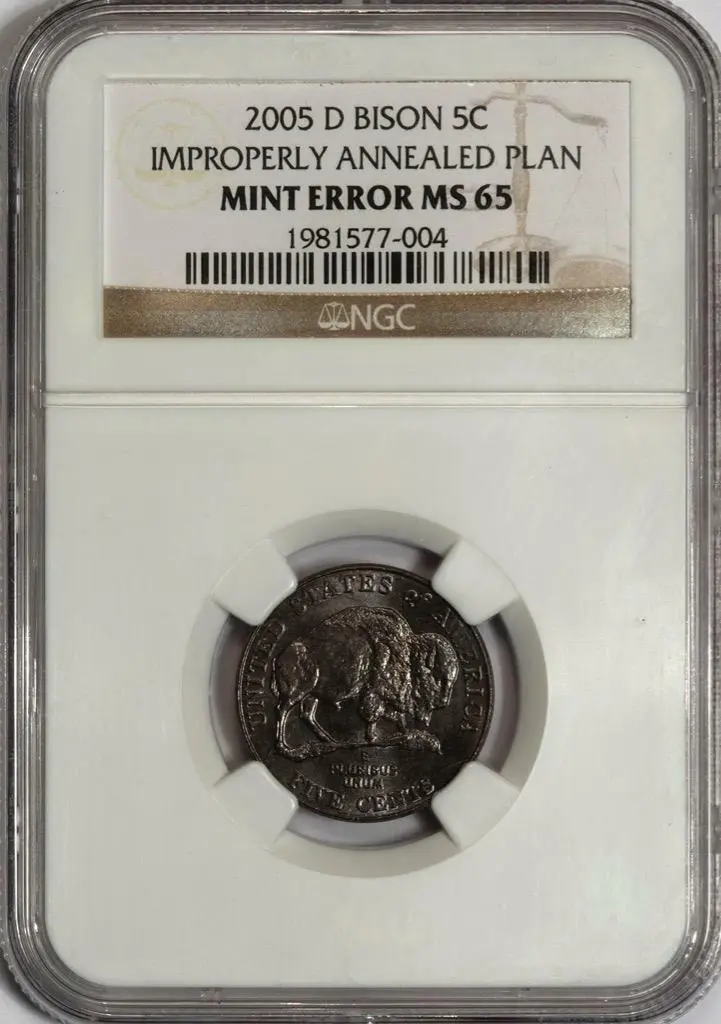
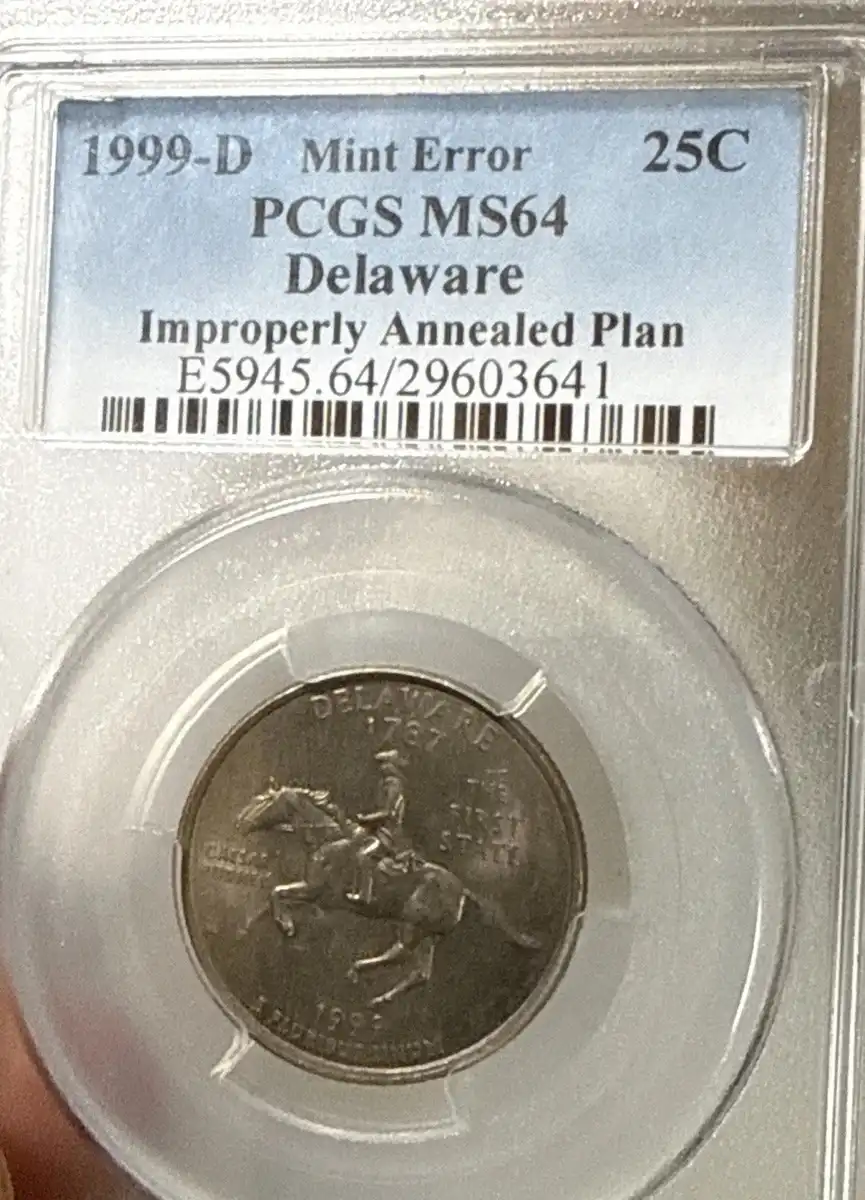
A quick ebay search and I found these coins.

Improperly annealed planchets come in many different denoms, years, and colors. The Black Beauties are the more minor forms of this error but gained popularity early on amongst error collectors and hence got a fancy name.

I had a top expert convinced my above 1959 example was not an improperly annealed error which is what prompted me to get it graded. That example was obvious to me as a genuine error but I would not expect minor examples to be accurately labeled by the majority of TPG workers especially outside of the 1958-59 Jefferson examples.


Definitive-Test-For-Black-Beauty-Nickels
"Pride is yoked with callous behavior, as humility is with compassion." St. Gregory Palamas

Top Finds - 1969-S 1c FS-101 http://goccf.com/t/477681 1976 D WQ FS-101 http://goccf.com/t/382777 - 1968 D 1c FS-801 http://goccf.com/t/422254
Cool clashed dies - 1972 D 1c http://goccf.com/t/429855&SearchTerms=CCL
Struck-In Rim Burr - 1969 S 1c http://goccf.com/t/425587&SearchTerms=burr
Floating (Type II) Counterclash - 1978 D 1c http://goccf.com/t/434991&SearchTerms=1978


Edited by CoinHI
Today 1H 4M ago
  Previous TopicReplies: 297 / Views: 79,748Next Topic
Page: of 20

To participate in the forum you must log in or register.


Disclaimer: While a tremendous amount of effort goes into ensuring the accuracy of the information contained in this site, Coin Community assumes no liability for errors. Copyright 2005 - 2026 Coin Community Family- all rights reserved worldwide. Use of any images or content on this website without prior written permission of Coin Community or the original lender is strictly prohibited.
Contact Us  |  Advertise Here  |  Privacy Policy / Terms of Use

Coin Community Forum © 2005 - 2026 Coin Community Forums
It took 0.36 seconds to rattle this change. Forums