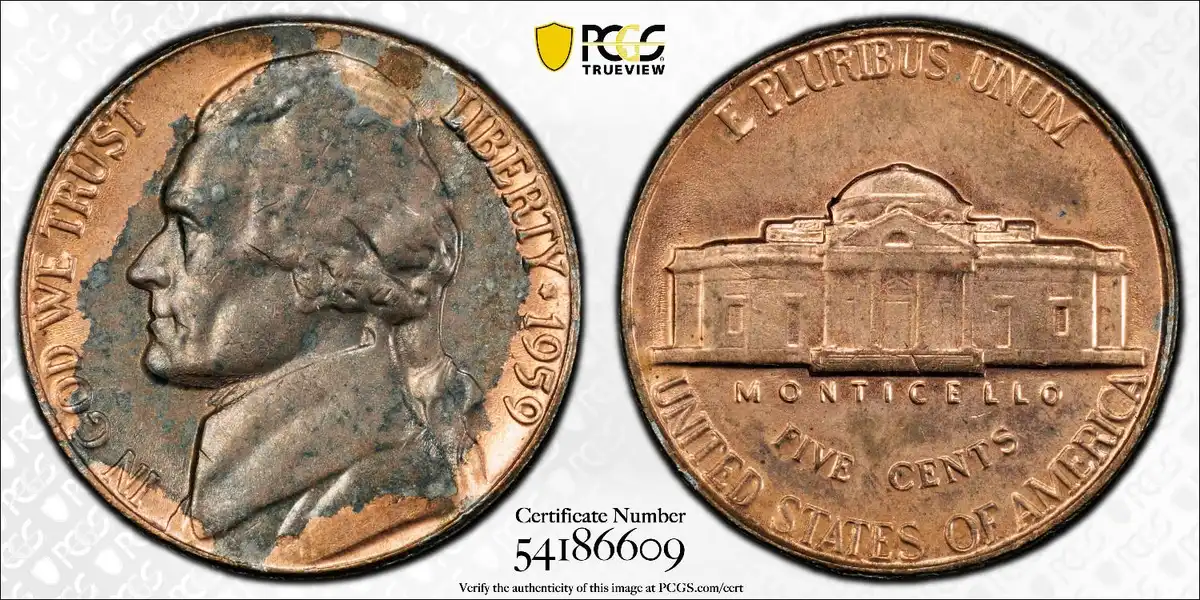
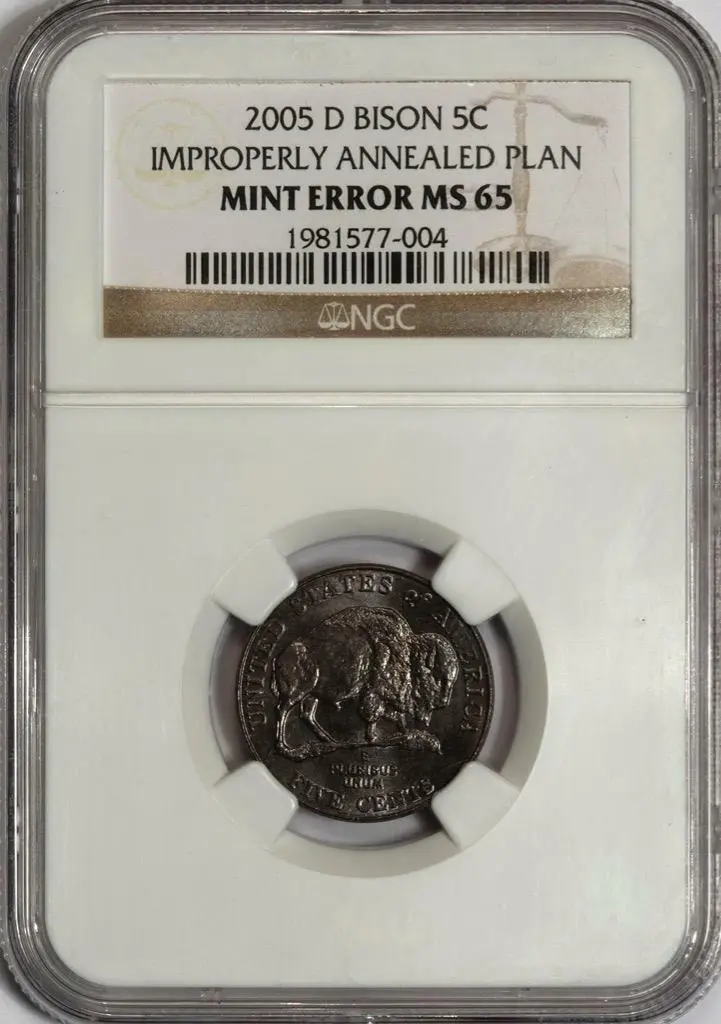
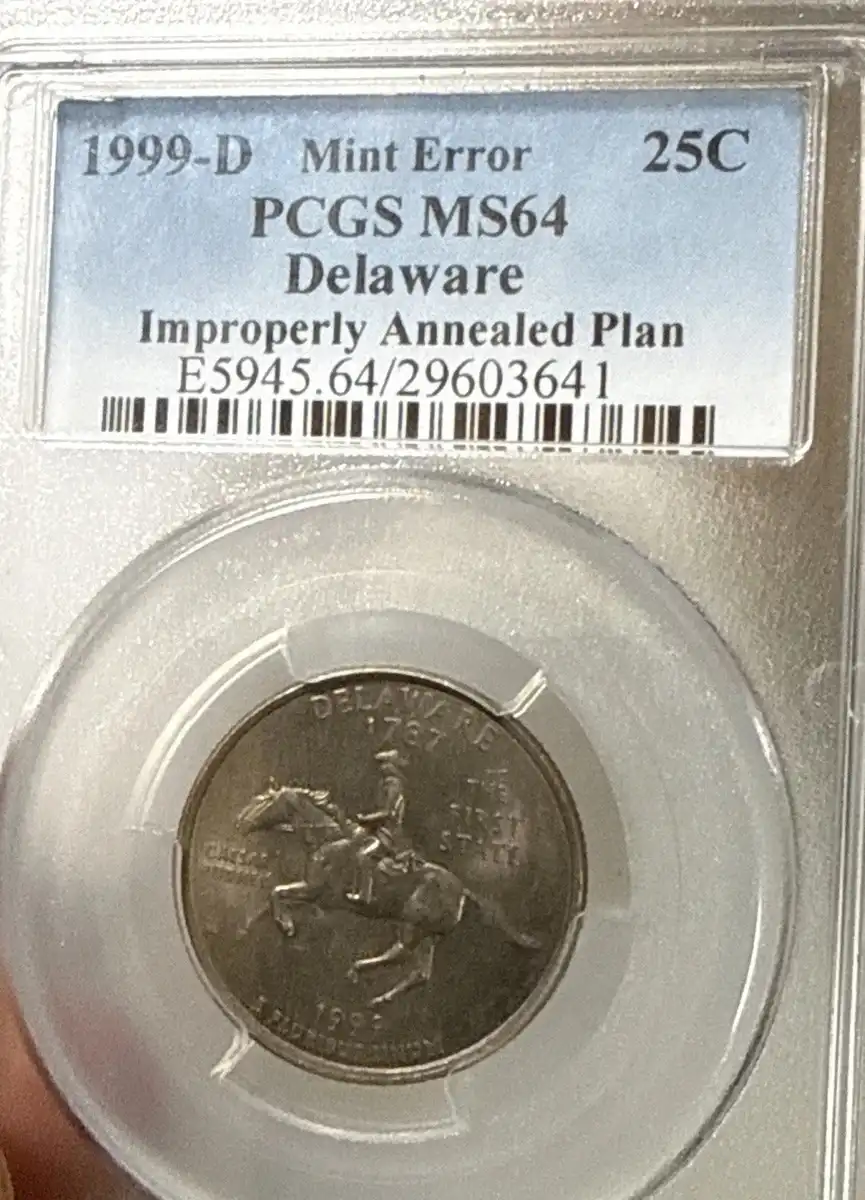
Correct. Thanks. News to me as I don't collect these errors. Major grading companies no longer use the term sintered planchet in their current attribution vocabulary*, and you will not see it on modern labels. PCGS, NGC, ANACS, and CACG all use improper annealing as the standardized designation. The shift happened as TPGs aligned terminology with metallurgical accuracy: U.S. Mint planchets are not powder metal, so "sintered" was always a misnomer.
So how can
TPG's differentiate between improper annealing vs. environmental corrosion?
How TPGs differentiate mint annealing vs. environmental damage
Even without SEM/EDS, the physical differences are stark. Here are the diagnostics they rely on:
1. Surface texture
Improper annealing: Smooth, metallic, non-porous surface; luster remains visible under the oxide film.
Environmental corrosion: Pitted, granular, or "frosty" texture; luster is broken or absent.
2. Color uniformity
Improper annealing: Even, stable gunmetal/blue-black across fields and devices.
Environmental: Blotchy, patchy, streaked, or two-tone; often brown-black or green-black.
3. Device edges
Improper annealing: Oxide layer is continuous over devices; no haloing.
Environmental: Darkening creeps into recesses first; raised devices often remain lighter.
4. Strike behavior
Improper annealing: Strike is normal; metal flows cleanly.
Environmental: Weak or mushy strike from surface degradation.
**5. Stability over time
Improper annealing: Color is stable for decades; does not flake or change.
Environmental: Continues to evolve — darkens, spots, or develops texture changes.
**6. Rim and edge diagnostics
Improper annealing: Edge coloration matches the faces.
Environmental: Edges often show different color because corrosion is air exposed, not furnace formed.
The bottom line
A
TPG can still tell the difference because annealing oxidation is a thin film metallurgical phenomenon, while environmental corrosion is chemical degradation of the metal itself. These two leave permanent, visually distinct signatures that don't disappear with age.
Which is why I am doing this October-December comment period besides the budget reasons. A typical investigation like the WWII Jeffs was $300-400 for analytical costs for XRF and SEM/EDS. Mostly the later instrument SEM/EDS. JPL






 First Page
 Previous Page


 to the


 Posted 04/25/2026 09:35 am