









 front_1.jpg
 back_1.jpg


 Posted 12/21/2006 9:22 pm


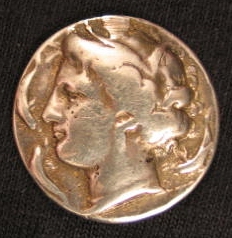
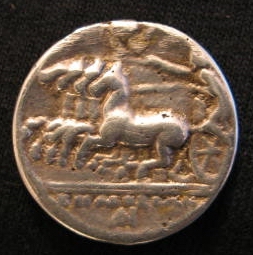
That's a tetradrachm of the Greek colony of Syracuse, Sicily, circa 300 BC. Coins of Syracuse are one of the most attractive and popular early ancient Greek series (their early dekadrachms are considered by many collectors the most beautiful coins ever made, anywhere) - and one of the most widely copied. This one looks like Sear#971, BMC#346. Catalogue value £850 (though that's for ones in better condition than yours) if genuine, but this one looks suspicious to me - particularly the lack of detail in the low-relief parts of the design. For example the charioteer's arm seems to be disconnected from the body, and the writing is barely legible - you'd have to already know its supposed to say "SYRAKOSION" to be able to read that. Here's a similar coin from the CoinArchives site:

Take it to a dealer to confirm it, by all means - but please don't set your hopes too high on this particular one, unless you know the person you inherited them from was an expert in ancients and/or acquired this coin from a reliable source. Make sure the dealer you take it to is an ancients expert, too.
Take it to a dealer to confirm it, by all means - but please don't set your hopes too high on this particular one, unless you know the person you inherited them from was an expert in ancients and/or acquired this coin from a reliable source. Make sure the dealer you take it to is an ancients expert, too.
Don't say "infinitely" when you mean "very"; otherwise, you'll have no word left when you want to talk about something really infinite. - C. S. Lewis

 front_2.jpg
 back_2.jpg


