| Author |
 Replies: 10 / Views: 16,657 Replies: 10 / Views: 16,657 |
|
|
Valued Member
United States
257 Posts |
Can anyone (or everyone) identify the type of error that would cause a 1965 (clad quarter) to be very thin, WITH reeded edge, and with some parts of lettering off the rimless portion? I understand that cladding sometimes came off in the earlier years of clad quarters, but the Red Book also indicates that a few clad quarters were struck on copper cents. The quarter is very thin, but, unfortunately, it is not yet in my possession so I don't know it's weight. I am providing pics below. Thanks in advance for sharing your expertise, guesses, and/or snide remarks.  I am having technical difficulties posting a second photo of the reverse. It will be provided shortly (hopefully).  Edited by fmtaxguy
11/01/2011 07:49 am
|
|
|
|
Pillar of the Community
Canada
1166 Posts |
My first thought is that it looks more like enviromental damage..... probably a dug up coin. However, I don't have the coin in hand. Also, can you take a pic to show how thin it is?
|
|
Bedrock of the Community
United States
62064 Posts |
It has been acid dipped. The rim is missing and thinned the quarter. Just a damaged quarter. if it were missing a clad the full rim would be present. 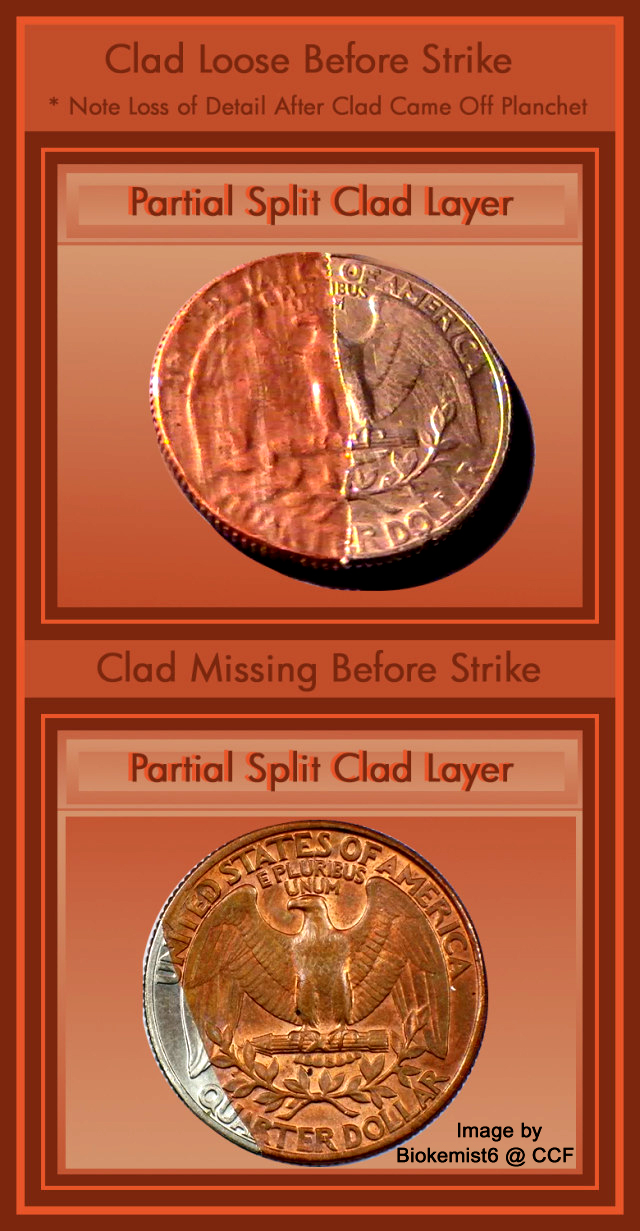 |
|
Valued Member
 United States
257 Posts |
Unfortunately, I don't have current possession of the coin, or else I'd be happy to provide a rim view and the weight. It is not a dug up coin, however. I believe it is one of the two options originally considered. The clad is missing or it was struck on copper. Note the lettering cut off towards the rim, for example. Environmental damage wouldn't cause that, in my opinion. Thanks for your input.
|
|
Bedrock of the Community
United States
62064 Posts |
Acid dipping removed an overall amount of of the surface thickness and circumference. Here are a few other examples: 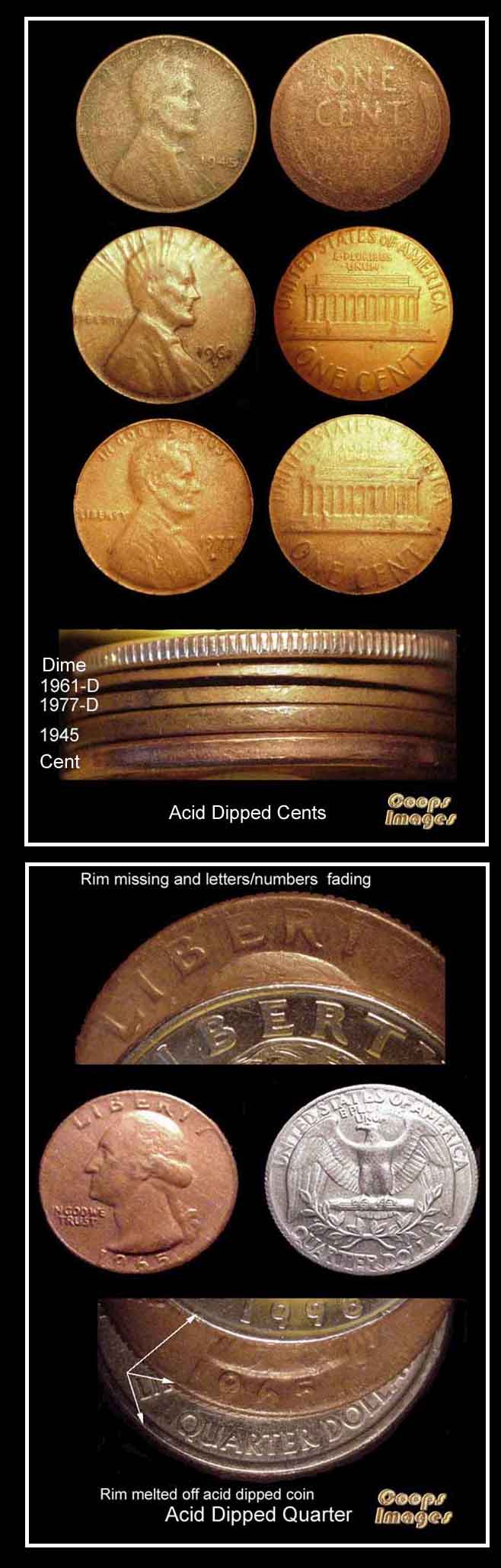 |
|
Valued Member
United States
257 Posts |
Coop, the photo you provided looks VERY close to the quarter I pictured, EXCEPT that, in all of your pictures of various coins, there is marked pitting of the entire surfaces, and no pitting exists on the quarter I've pictured. I understand acid will cause pitting pretty reliably, yes? It's amazing how, in all other aspects, your photo of the quarter is similar to mine. I'm just having difficulty getting past the pitting issue (or lack thereof).
|
|
Bedrock of the Community
United States
62064 Posts |
Look closer with a glass at your coin? It has the pitting as well when you look as close as the images I posted on the acid dipped coins.
|
|
Bedrock of the Community
United States
12437 Posts |
The slightly contracted diameter is a strong indicator of acid damage. A quarter struck on a cent planchet or an unclad copper core would display significant strike weakness due to its undersized nature. Also, a copper core would still have a normal diameter while a cent planchet would not expand enough to have reeding formed.
|
|
Valued Member
United States
257 Posts |
As mentioned before, I don't currently have the coin in my possession, unfortunately. I will look under strong glass when I do. Is there no other possibility? sigh......
|
|
Valued Member
United States
496 Posts |
I agree with acid dipped. I guess you paid a good amount for it?
|
|
Valued Member
United States
257 Posts |
Happily, I paid nothing for it as I never completed a purchase. I know better than to buy with uncertainty without tapping into this knowledge well first. Thanks all!
|
| |
Replies: 10 / Views: 16,657 |
|






 Posted 11/01/2011 09:01 am





