Its been one of those weeks, but I was able to finish cleaning the 32 'crusties' I received about a week ago. But I need to do the disclaimers first before we get into the results.
1. You know I just started this hobby less than a month ago, so everything below is strictly experimental and I'm not claiming anything except what I observed.
2. I have a day job and it isn't working for the British Museum Restoration department, where I could SLOWLY remove the crud on these coins day after day. This is an important issue. I rushed this process and know it.
3. These chemicals are VERY caustic. If you try this, wear proper nitrile chemical resistant gloves and eye protection. And don't do it on your wife's kitchen table without covering it with something that will resist these chemicals. You'll wish you hadn't :)
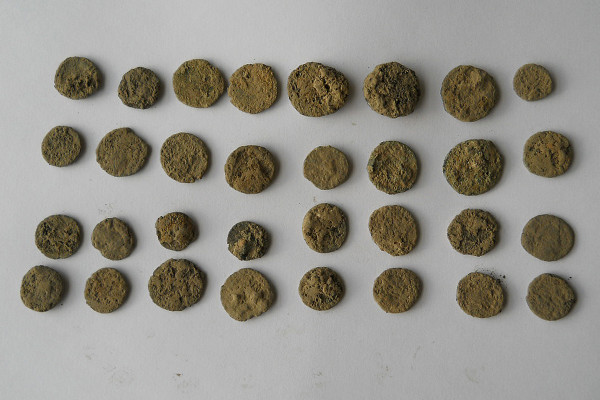
Ok. The first photo is as I received the crusties. I bought them for about $3.50 each including shipping.
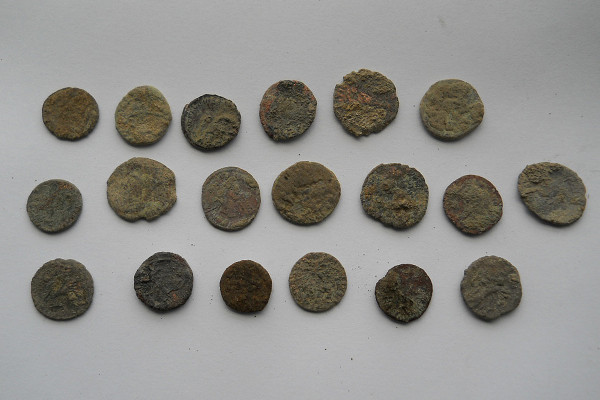
I soaked them overnight in distilled water and removed the outer clay/dirt coating as much as possible and then soaked them in CLR to remove the next layer of calcified/mineralized deposits. Some of the coins were totally encrusted and took a lot of effort to get that layer off of them. This is the next photo. (All though not all of them at a time).
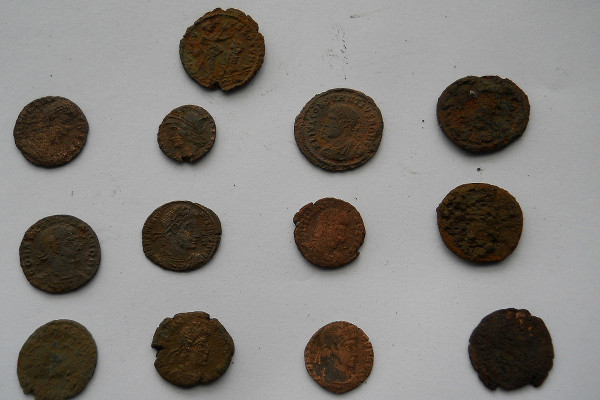
Next step was the Rochelle Salt Solution. I bought the 1 lb. Rochelle Salt and 1 lb. Sodium Hydroxide (pure lye) from a seller on
ebay for a total cost delivered to my door for just about $30. I have enough to make several batches of this solution. Below is the first run through the solution. Again, some cleaned quickly, others not so much and took some heavy cleaning. If I had the time I would have stayed on the solution at the recommended 10-30 minutes and then clean with q-tips or soft toothbrush. I confess I left some of the dirtier coins in longer. So this is the first dip. (next photo)
Finally, this is the end product. I laid out the obverse first and the best coins left to right, where you can see some that have good detail and over to the right where they were pretty well gone before I cleaned them. These were the ones that had the most mineralization and took more solution to free them, which probably didn't help with the surface of some.
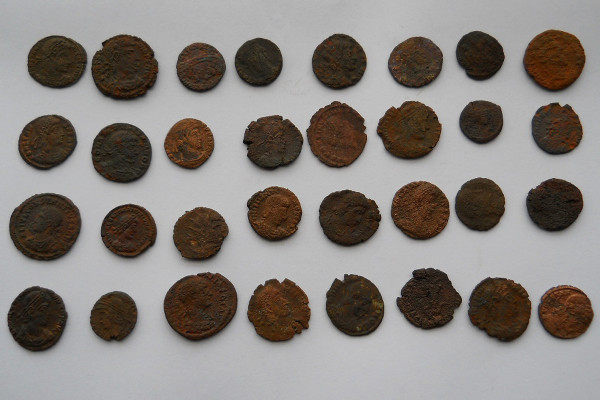
One of things I noticed as I was cleaning was that some of the coins had great detail on one side and not so on the other. I suspect that they had an electrolyze effect going on if laid directly on top of each other. Just a guess. So the reverses show good detail on some, but not on the obverse (see photo below).
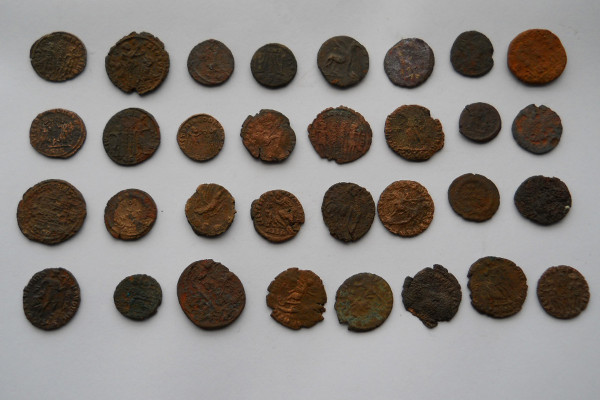
Finally, these coins were from the Balkan Peninsula, specifically from Serbia. I'm not looking to attribute these from this post, although I will be bringing some to the forum soon.
So would I do it again? Absolutely! Couple things I would do different. Only do a few coins at a time. Keep to the time limit the British Museum recommends. Don't use a heavy nylon or fine brass brush (especially the last). And finally, won't do this on my wife's kitchen table. :) Regards!










 Posted 01/07/2012 3:30 pm


 with jessvc1's comments. If you can select coins you can reasonably expect to have more detail remaining, the better your results will be. That being said, you did a good job. BUT, stay off the kitchen table buddy!


