| Author |
 Replies: 16 / Views: 3,212 Replies: 16 / Views: 3,212 |
|
Pillar of the Community
Canada
1984 Posts |
I picked this cent up recently. It is pretty odd looking and I wondering if it is a Struck Through Grease error? PMD? The weight is slightly heavy at 3.24g. It is dimensionally correct although the collaring is not straight. It looks as if extra metal was forced up through the reverse side of the collar just above the "Cent" in "1 cent". The collaring is kind of crooked at that point. Any thoughts? Thanks! 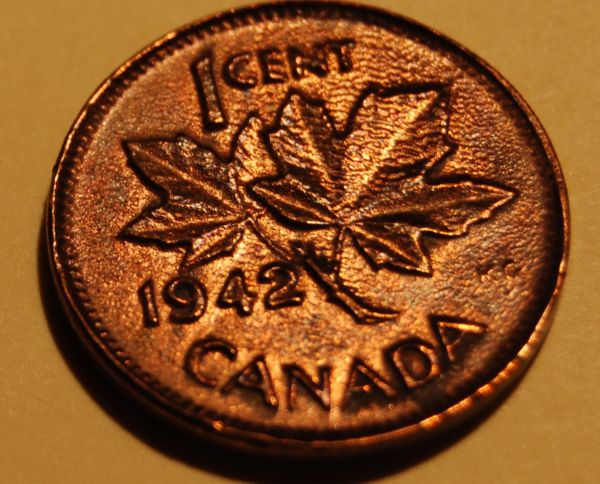 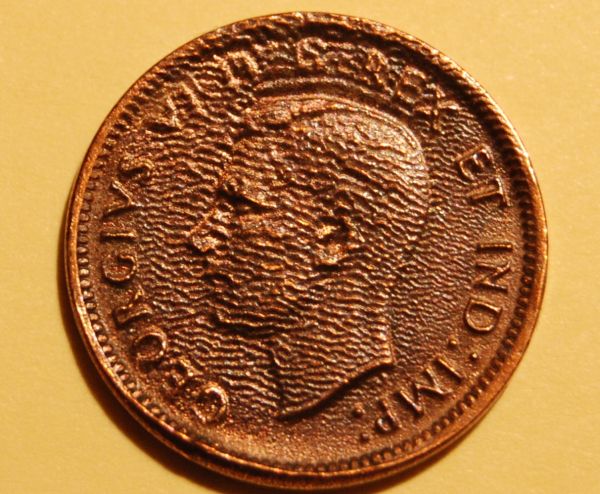 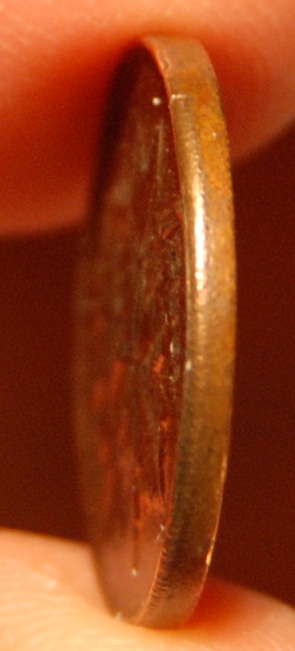 |
|
|
|
Pillar of the Community
Canada
1731 Posts |
struck through grease... I would say.  |
|
Pillar of the Community
United States
4212 Posts |
I'd think it would be a worn-die problem, causing the orange peel look. Just my 2c.
|
|
Rest in Peace
1988 Posts |
Would not heat cause this affect also...?
|
|
Pillar of the Community
United States
5900 Posts |
|
|
Valued Member
Canada
223 Posts |
It looks like grease to me also but either way its darn cool looking lol almost like a rippled planchet
|
|
Pillar of the Community
 Canada
1984 Posts |
I wondered about acid, but it is more than full weight and thickness. Also, it has no erosion issues on the edges. The edge near "cent" is raised and is quite sharp. Also there is the shape distortion on the edge. If it is PMD, I am thinking it has something to do with heating. I am not sure how this would be done with heat. |
|
Rest in Peace
United States
9104 Posts |
Looks like a "spooned" or Dryer Coin, then acid on the faces after the rim was raised, but I'd certainly listen to other arguments. Very doubtful struck through greece, or even italy. |
|
Valued Member
Canada
64 Posts |
Most likely polished with a wire grinding wheel.
A closer look at one of the sides of the leaves (or any raised feature) should show a tapered incline and the other side should show steep drop off that would have more dirt or browning. The rim also shows nicks from the wire wheel.
|
|
Pillar of the Community
Canada
1984 Posts |
I don't think it was a wheel or a mechanical process. The marks on the coin do not have a "mechanical" look to them. Also, the coin is overweight, so any mechanical process could not have removed any metal to speak of.
As I mull it over, I am becoming more confident that this is grease-related error. I am thinking that there was a large amount of grease on both sides of the dies, particularly the obvers. The grease prevented the metal from filling the dies, particularly near the top of the head, and ultimately escaped by displacing some of the metal near the head toward the reverse side forcing it to go almost out of the collar.
|
|
Pillar of the Community
Canada
1733 Posts |
Anything fluid like grease wouldn't behave this way under pressure. if it's a strike though it was some material I can't immediately picture in my mind. Like a brick.
I'm thinking it through - paper, cloth, metal, grease, oil, water, wood, glass - things you find at a mint in 1942... none of that does this.
I can recreate some of this effect by replating a cent in copper in too extreme an acid bath but it doesn't quite look like that either.
I am baffled. I'll put the acetylene torch on one later today but I don't think it's heat , unless maybe it was in a fire at lower heat for longer periods. It looks a bit warped.
|
|
Pillar of the Community
Canada
1984 Posts |
The thing I find odd is that the edge, with the exception of the mechanically distorted shape near Cent, is as you would expect it from the mint. No sign of damage or distortion from heat. If something was done with say a torch I would expect to see heat damage or rippling on the rim. The damage on each sign occurs in the same place on the coin. If this was damaged by a torch I am thinking that the coin would have to have been held in a collar, torched one side, then flipped over and torched on the other side in the sale place--all without hurting the edge or warping the coin. Ans that still wou;dn't account for the mechanical rim distortion. I still like the grease or other foreign material strike through explanation more.
|
|
Valued Member
141 Posts |
I have a couple of pennies like this too Smallcentguy...it's interesting how it could get to that state.
Take care
|
|
Bedrock of the Community
United States
12437 Posts |
I do not know what exactly caused it but I have seen this effect before and I am fairly certain that it is some form of PMD. Grease will clog the die causing a reduction in detail(flatness) but it certainly will not make a coin look like that. |
|
Rest in Peace
1988 Posts |
Well for what it's worth, and I am NO pro....This is way out there, but could the coin (it was done in the 40's-50's) be covered in varithane and heat applied to it to get the ripple affect...?
|
|
Pillar of the Community
Canada
1733 Posts |
Actually wert that's not that far out there at all, a lot of cents were lacquered.
|
| |
Replies: 16 / Views: 3,212 |







 Posted 01/24/2012 4:23 pm





