| Author |
 Replies: 9 / Views: 1,407 Replies: 9 / Views: 1,407 |
|
|
Pillar of the Community
Canada
838 Posts |
In looking through some reverses of these date for the DDRs (wishful thinking, I know), I noticed that 2 x 1982 and 1 x 1983 each have very noticable serifs on the "U" of "UNITED", while the others did not. Am I just seeing a weaker strike here? I do realize that sometimes serifs can come and go based on the strength of strike. BUT, these really look like very different letter "U"s to me. It reminds me a little of the Jefferson nickel reverse design change around this time. I'm probably out to lunch, but just wanted to check. === edit: First, this one has absolutely no serifs on "U" 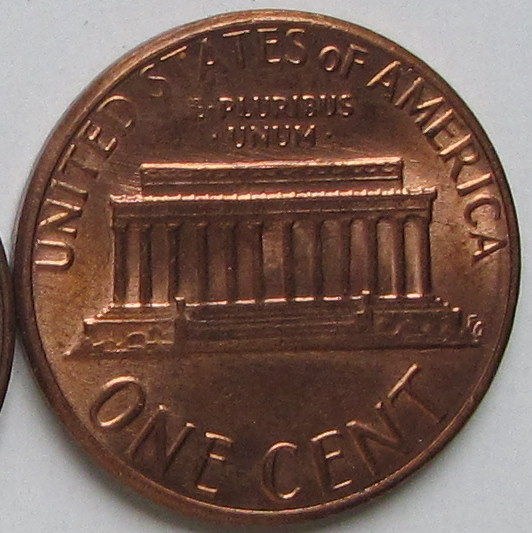 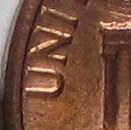 Next, (I think) I see serifs on the top of the right bar of "U". I sure do with my microscope. 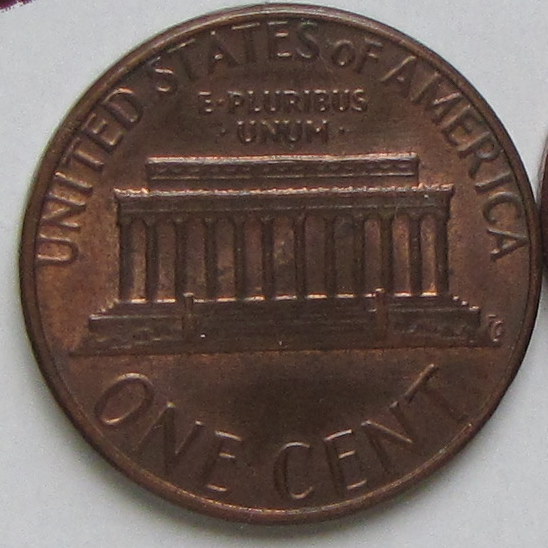 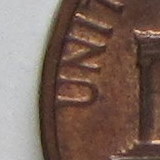 Is this kind of variation common? I must admit that -- while I'm not a total novice, I have not studied LMC reverses much. By the way, "FG" looks very similar on both, as you can see from the full views. Also, sorry for the lousy pics. I'm still learning how to use my camera for coins. (You'd think they would be easy subjects, but they sure aren't!) Edited by bibd
02/11/2012 6:03 pm
|
|
|
|
Rest in Peace
United States
3039 Posts |
Edited by numismo
02/11/2012 08:45 am
|
|
Pillar of the Community
United States
7629 Posts |
I don't think those differences are due to wear, but before really getting excited you should know there are known differences on the reverse of early Jeffersons - you may not have discovered anything new, but if there's any possibility you have, you will need to obtain better grade examples to be sure.
|
|
Pillar of the Community
 Canada
838 Posts |
numismo: I took some rather poor pics and posted them above. I know of 1939 Jefferson varieties, but I had an impossible time trying to identify them. My Jeffersons from 1939 are mostly too low grade, or the nicer ones are weakly struck.
You look like you have different "M"s, for sure.
Did you mean to post the same pic top-left and top-right?
|
|
Pillar of the Community
Canada
838 Posts |
I'm sorry to bump this... but with my added pics, can't anyone see the serifs on one of my 1983 reverses and not on the other? These look like different letter "U"s to me.
In the meantime, I'll check some more of this date, and nearby dates.
|
|
Rest in Peace
United States
3039 Posts |
Edited by numismo
02/13/2012 9:10 pm
|
|
Rest in Peace
United States
3039 Posts |
OK bibd, here are pix of the 1939s I meant to post b4 I repeated one.   |
|
Rest in Peace
United States
9104 Posts |
bibd-
I wonder if what you see as a serif on the top of the "U" isn't some sort of bulge near the rim, like when you see a slight bulge around the edge on Zincolns.
numismo-
On your left example, I see serifs on both legs of the "U", but only on the first leg of the right example.
|
|
Pillar of the Community
Canada
838 Posts |
biggfredd: Perhaps you're right. I should say, however, that (to my eyes) it's not so much that the serifs look like an enlargement as the rest of the "U" looks thinner. Admittedly this thickness of lettering does vary based on strike and die wear. Not sure that's going on here, but that's why I'm asking for some input.
|
|
Pillar of the Community
Canada
838 Posts |
OK I had another careful look at my 83 cents (and a few others). My conclusion is that the "serifs" are probably an illusion caused by a weak strike. It seems on the "serif" example that less metal is pressed into the "U". The corners on the top of the U are angled depthwise into the design, and these look a bit like serifs when the strike is not strong.
Does this seem reasonable?
|
| |
Replies: 9 / Views: 1,407 |
|










 Anyway, I thought the same type of thing was on 1939 nickels but there was no interest on this forum.


 Posted 02/11/2012 2:57 pm


