| Author |
 Replies: 12 / Views: 2,553 Replies: 12 / Views: 2,553 |
|
|
New Member
United States
4 Posts |
Edited by cmlcpt
04/02/2012 02:44 am
|
|
|
|
Moderator
 United States
23731 Posts |
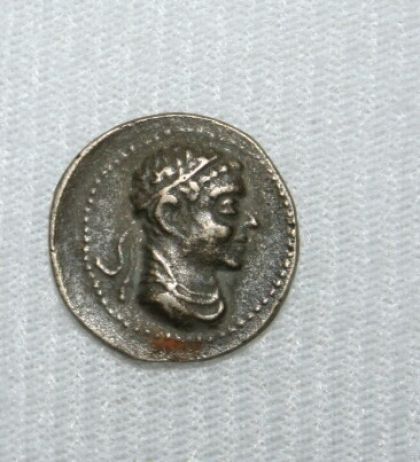
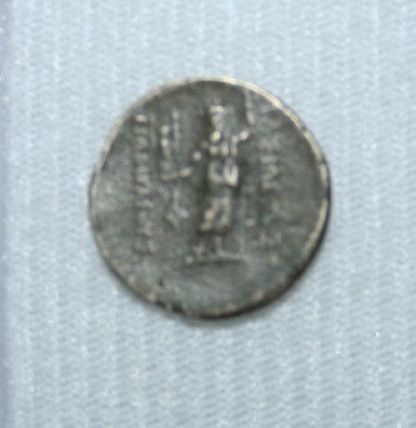
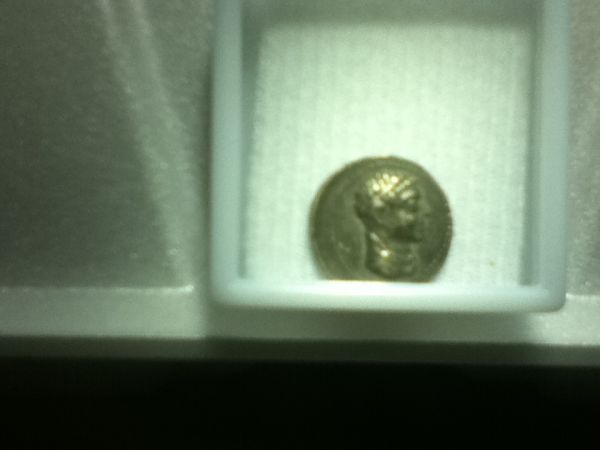
 to the community The pictures are too unclear to be about to tell much about these coins. If you could take closer and clearer pictures it would help. We would also need to see the reverse of the first coin. |
|
Bedrock of the Community
United States
10045 Posts |
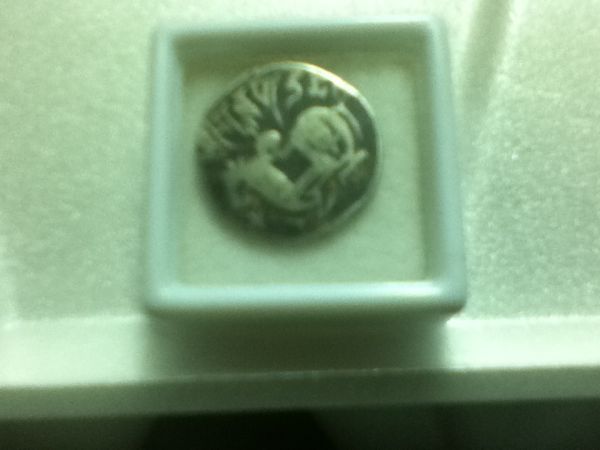
The first coin resembles a tetradrachm of Greco-Bactria, a kingdom that covered much of present-day Afghanistan. Larger pics would help narrow down the ruler, but you would need an expert to authenticate, as a lot of Bactrian copies are finding their way into GI hands. The genuine Bactrian tetradrachms are quite valuable. Here is a Bactrian tetradrachm of Agathokles, c. 185-170 BC, 16.94 gr  Edited by DVCollector
04/01/2012 12:50 pm
|
|
Pillar of the Community
United States
3499 Posts |
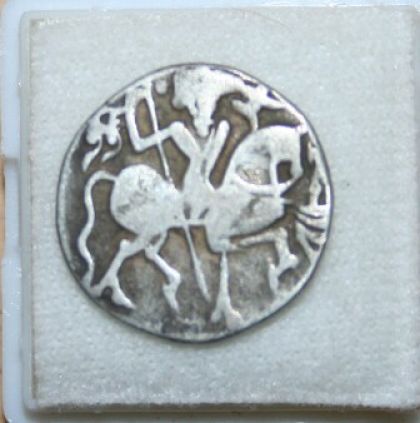
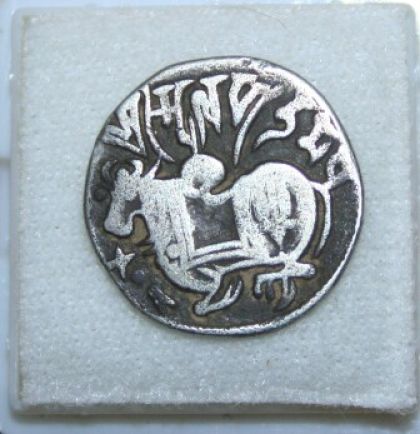
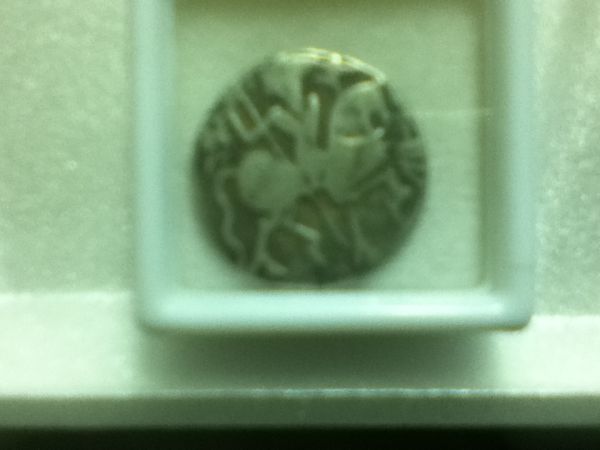
The second coin almost looks like the "Horseman and Bull" type of coins struck under the Ghurid dynasty in Afghanistan during the middle ages. (The Ghurids also became the founders of the Delhi sultanate in northern India)
|
|
Pillar of the Community
Egypt
3470 Posts |
to CCF |
|
New Member
 United States
4 Posts |
Thanks I will have updated pictures tomorrow!
|
|
New Member
United States
4 Posts |
|
|
Bedrock of the Community
United States
10045 Posts |
I cannot read the inscription on the first coin, but overall it resembles the type I posted earlier.
Not to cast doubt on a coin that's a gift, but those I've seen show better style and details than this one.
Also, what is the orange spot under the portrait--is that rust? Is the coin magnetic? The real coins are silver.
|
|
New Member
United States
4 Posts |
Thanks for all your help. They will probably just y sit in a shadow box in my house. But now I know where to start with my research.
|
|
Moderator
United States
23731 Posts |
I have to agee with DVC, it doesn't have the style that you would expect to see on this type of coin.
|
|
Moderator
Australia
16982 Posts |
The Bactrian coin seems a fair match for the one DVC posted, but the reverse pic is still too blurry to read the name on, and one other thing we don't know about it is the size. If the box it's sitting in is identical to the one the jital is sitting in, then it's a pretty small coin. The "bull and horseman" jital pictured above is from the Hindu (pre-Islamic) period, not the Islamic dyansty Archraz mentioned. See the Zeno.ru and grifterrec pages for more examples and info on them, as well as here and here on the forum. Don't say "infinitely" when you mean "very"; otherwise, you'll have no word left when you want to talk about something really infinite. - C. S. Lewis
|
|
Pillar of the Community
United States
1549 Posts |
Your second coin is Spalapati Deva cataloging Tye 5 and more than you probaby want to know is on my page: http://www.forumancientcoins.com/dougsmith/bh.htmlI have no doubt that the coin is genuine. Yours is pretty nice so it would probably sell for the high end of the $5 to $20 range that I would consider fair. They are extremely common and not extremely popular, I believe, because the series has not been studied enough for us to understand the meanings of all the letters in the field other than the main legend Sri Spa la pa ti de va over the bull which translates something like "Honorable Chief Commander". The letter behind the horseman may someday allow closer dating of the coin but now it is all a bit conjectural. Very few coins of the Shahi kings have a name spelled out on the coin and I'm sure this adds to the lack of demand from collectors. I tend to agree the first coin is a modern fake. It shows Zeus holding a statue of Hecate holding torches. The devise in the left reverse field is the mintmark for Merv. At the right is the Greek word for king. On the left is the king's name which just does not seem to look right for Agathocles but I don't see another reading that is any better with the current sharpness level. I suggest you keep the items as souveniers of the experience. That would make the question on whether the first coin is genuine or not relatively unimportant. The history of the Shahis is more than a little confusing. Part of this may be that they did not write history and were not terribly welcoming to strangers. This page covers a lot: http://en.wikipedia.org/wiki/Kabul_Shahi |
|
Pillar of the Community
United States
3499 Posts |
Sap- Ah, that's right! I was confusing it with another type. But it is true that this type of jital did circulate around South and West Asia. Many local copies were made as far away as Iraq for many years after the initial striking of this coin type in Kabul. (Finbarr B. Flood, Objects of Translation: Material Culture and Medieval "Hindu-Muslim" Encounter (Princeton: Princeton University Press, 2009), 25-6).
|
| |
Replies: 12 / Views: 2,553 |
|










 Posted 04/01/2012 12:42 pm