| Author |
 Replies: 25 / Views: 4,127 Replies: 25 / Views: 4,127 |
|
Pillar of the Community
United States
2760 Posts |
|
|
|
|
Valued Member
United States
114 Posts |
 Where did ya find 'em ? |
|
Pillar of the Community
 United States
2760 Posts |
All bought separately over the past 10 years or so.
|
|
Pillar of the Community
United States
1151 Posts |
If you don't mind me asking, what did you have to pay for these beauties?
|
|
Pillar of the Community
United States
3453 Posts |
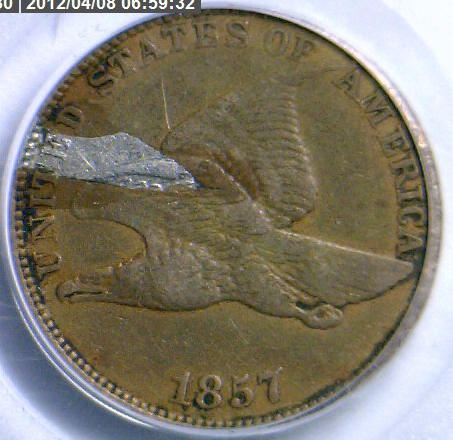
I can't wait to hear what caused the error for the 1857.
|
|
Pillar of the Community
United States
2760 Posts |
Yankee1227: the last two were $40 each.
|
|
Pillar of the Community
United States
2760 Posts |
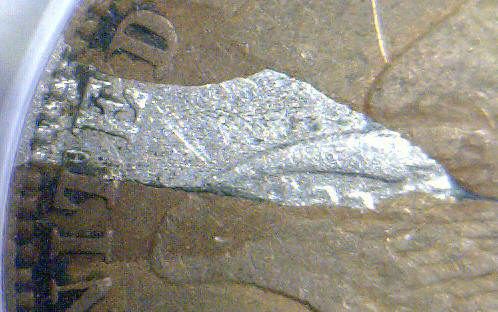
What are options for the 1857, Silver? Aluminum?
Edited by robbudo
04/08/2012 10:03 am
|
|
Pillar of the Community
United States
1796 Posts |
The 1857 is probably a counterfeit (perhaps a contemporary) as I'm also seeing lightening of the metal on the worn devices, which would suggest that it's plated. 'Might want to submit that one to The Black Cabinet.
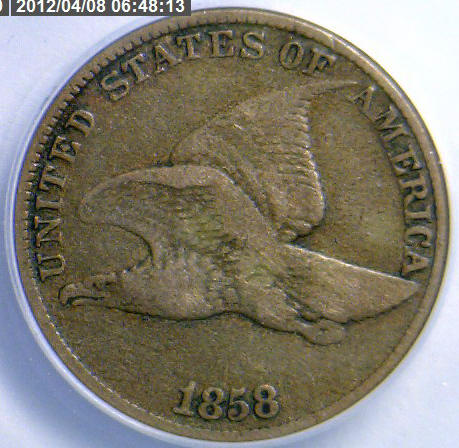
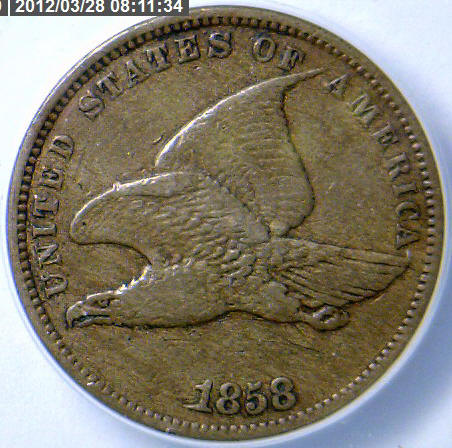
The legend on one of the 1958 obverses also looks funny to me, but for both of those, I'd need higher-resolution pictures.
|
|
Rest in Peace
United States
9104 Posts |
Quote:
What are options for the 1857, Silver? Aluminum? It looks like a splash of lead solder, but that should have oxidized. Aluminum was WAY too expensive back then, leaving silver. |
|
Moderator
 United States
23522 Posts |
Quote:
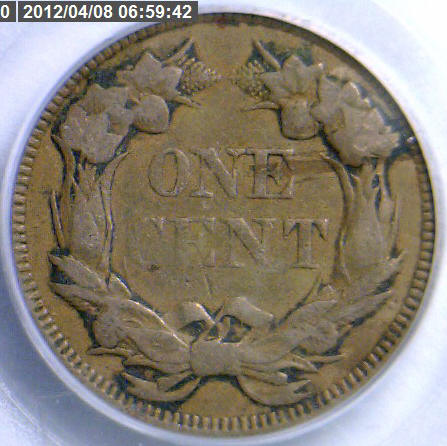
The 1857 is probably a counterfeit (perhaps a contemporary) as I'm also seeing lightening of the metal on the worn devices, which would suggest that it's plated. 'Might want to submit that one to The Black Cabinet. With all due respect, man, your specialty-oriented outlook might be coloring your judgments a bit.  I absolutely love the 1857. To me, there's no doubt that a scrap of silver somehow got caught in the system and struck through into the planchet. Note the area of softer strike on the reverse corresponding to the strikethrough, and the sharpness of the upper edge of the wing in the silver - silver is slightly softer than copper, and I think the silver took a sharper strike than the surrounding copper, effectively reducing the pressure on the reverse. Wouldn't be surprised if the coin was slightly bowed in this area. Keep in mind the context of this year's mintages. For 1857 only, the Philadelphia Mint was in simultaneous full production of the following: Half CentsLarge Cents Small Cents Three Cent Silver Half DimesDimes Quarters Halves Dollars Every gold denomination For some of these, it was one of the larger mintages in the series. These guys were busy. They struck 45,010,615 coins in 14 different denominations that year, using 5 different alloys. Yeah, IMO it's not only real but utterly fascinating. |
|
Bedrock of the Community
United States
10045 Posts |
The 1857 sure looks like a strike-through to my eyes--and really dramatic!  It looks as if the CuNi partially closed around the object on the right. |
|
Pillar of the Community
United States
2760 Posts |
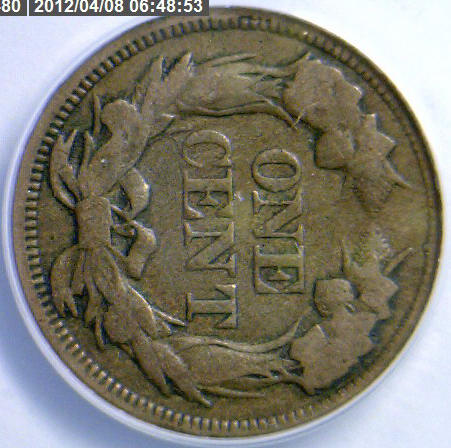
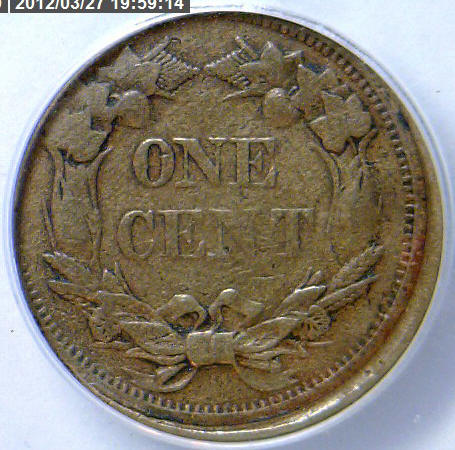
The 1857 is slabbed by PCGS and is not counterfeit.
And both the 1858's are slabbed by ANACS: again, not counterfeit.
Edited by robbudo
04/08/2012 1:32 pm
|
|
Pillar of the Community
United States
2760 Posts |
Thanks for the comments everyone! The 1857 is one of my top 10 favorite error coins. I've always 'thought' it was silver, but have no way of proving it. PCGS just says "XF45 Obv Stk through Forgn Obj." on the slab.
Edited by robbudo
04/08/2012 1:34 pm
|
|
Pillar of the Community
United States
5905 Posts |
All really nice errors.
That would be best counterfeit for the 1857 if it were a counterfeit, so is it nickel or silver determined from PCGS? Looks silver from the pictures.
|
|
Pillar of the Community
United States
2760 Posts |
just a 'foreign object' - no mention of the type of metal.
|
|
Pillar of the Community
United States
1796 Posts |
Hey I won't argue with PCGS. :-) Looking at pictures on a forum is one thing, but having it in hand to examine is another (and much more accurate). I've seen something that looked similar before where copper plating on a tin fake was eaten off by some exposure to acid, and the devices elsewhere (where they were worn) were lighter due to the tin shining through. PCGS is very thorough when it comes to unusual things and is hesitant to declare something genuine when there are irregularities, so kudos. That in mind, aye it could be silver or nickel. Aluminum is right out as until the electrolytic process to convert aluminude into aluminum metal, aluminum metal was more precious than silver and was not used in coinage. |
| |
Replies: 25 / Views: 4,127 |









 Posted 04/08/2012 08:16 am





