











 Posted 04/12/2012 8:52 pm


It's considerably older than the Krause catalogues cover. 
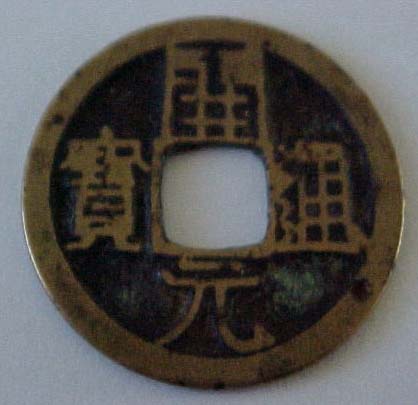
It's from the Tang dynasty (AD 618-907). The "Kai Yuan" inscription holds the record for the second-longest-running coinage design in the world, ever, having been introduced in AD 621 and in almost continuous use from then up until the end of the dynasty in 907 AD.
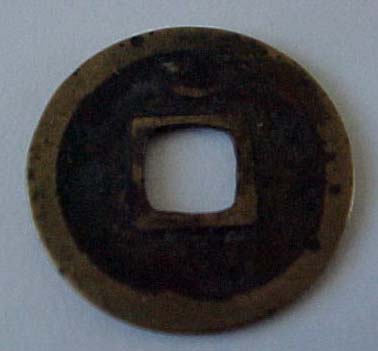
Having been issued over such a broad time period, they are surprisingly cheap for coins "that old" - only a few dollars. Narrowing down the date range to within a couple of decades is sometimes possible, but is the purview of those more experienced in cash coins than me. That being said, I think the ones with the little crescent on the reverse, like yours has, are late period (AD 845-907).
It's from the Tang dynasty (AD 618-907). The "Kai Yuan" inscription holds the record for the second-longest-running coinage design in the world, ever, having been introduced in AD 621 and in almost continuous use from then up until the end of the dynasty in 907 AD.
Having been issued over such a broad time period, they are surprisingly cheap for coins "that old" - only a few dollars. Narrowing down the date range to within a couple of decades is sometimes possible, but is the purview of those more experienced in cash coins than me. That being said, I think the ones with the little crescent on the reverse, like yours has, are late period (AD 845-907).
Don't say "infinitely" when you mean "very"; otherwise, you'll have no word left when you want to talk about something really infinite. - C. S. Lewis


