| Author |
 Replies: 25 / Views: 3,536 Replies: 25 / Views: 3,536 |
|
Bedrock of the Community
United States
10045 Posts |
I thought a few of you might enjoy seeing an art form similar to ancient die-making. As you can see, a few of these works surpass the detail found on contemporary Roman coins, and a few look very similar. All the stones/impressions below depict Roman emperors or ruling families--perhaps you can guess who is who?  #1  #2  #3  #4  #5  #6  #7  |
|
|
|
Moderator
 United States
23731 Posts |
Beautiful works of art, I would love to own some of these.
I give it a shot with the ID's.
1. Septimius Severus, Julia Domna, Caracalla, Geta.
2. I think is Titus?
3. Nero.
4. Nerva?
5. Alexander the Great as Poseidon
6. Caracalla
7. Julia Domna
|
|
Pillar of the Community
United States
1549 Posts |
#4 strikes me as Tiberius and all strike me as modern manufacture. No?
|
|
Bedrock of the Community
 United States
10045 Posts |
Good guesses--and they really shows the skill the of the engravers, before power tools! Many of the ancient Greek signets are just as nice. The photos come from the NY Met and the British Musuem, and all date from imperial Rome.
I wish I could own a few too--but I'm sure most of these are very valuable. I'll post the answers later.
Edited by DVCollector
05/05/2012 10:37 pm
|
|
Moderator
United States
23731 Posts |
Doug at first I thought #4 could of been Tiberius, but the nose looked more like Nerva.
|
|
Bedrock of the Community
Australia
21792 Posts |
I am not familiar with these at all.
Are these modern productions, or are they antiquities?
I need to be educated.
|
|
Bedrock of the Community
United States
10045 Posts |
I thought it would be interesting to see the similaries to portraits on Roman coins. And yes--they all date from the Roman Imperial period. Signet stones like these will wear in use, but when buried they basically are inert and don't change for millenia. The recessed design of the intaligos protects the details from wear and damage. Here is a "cameo" portrait of a Roman emperor, made in Imperial Rome. (This is the origin of the term used for proof coins) 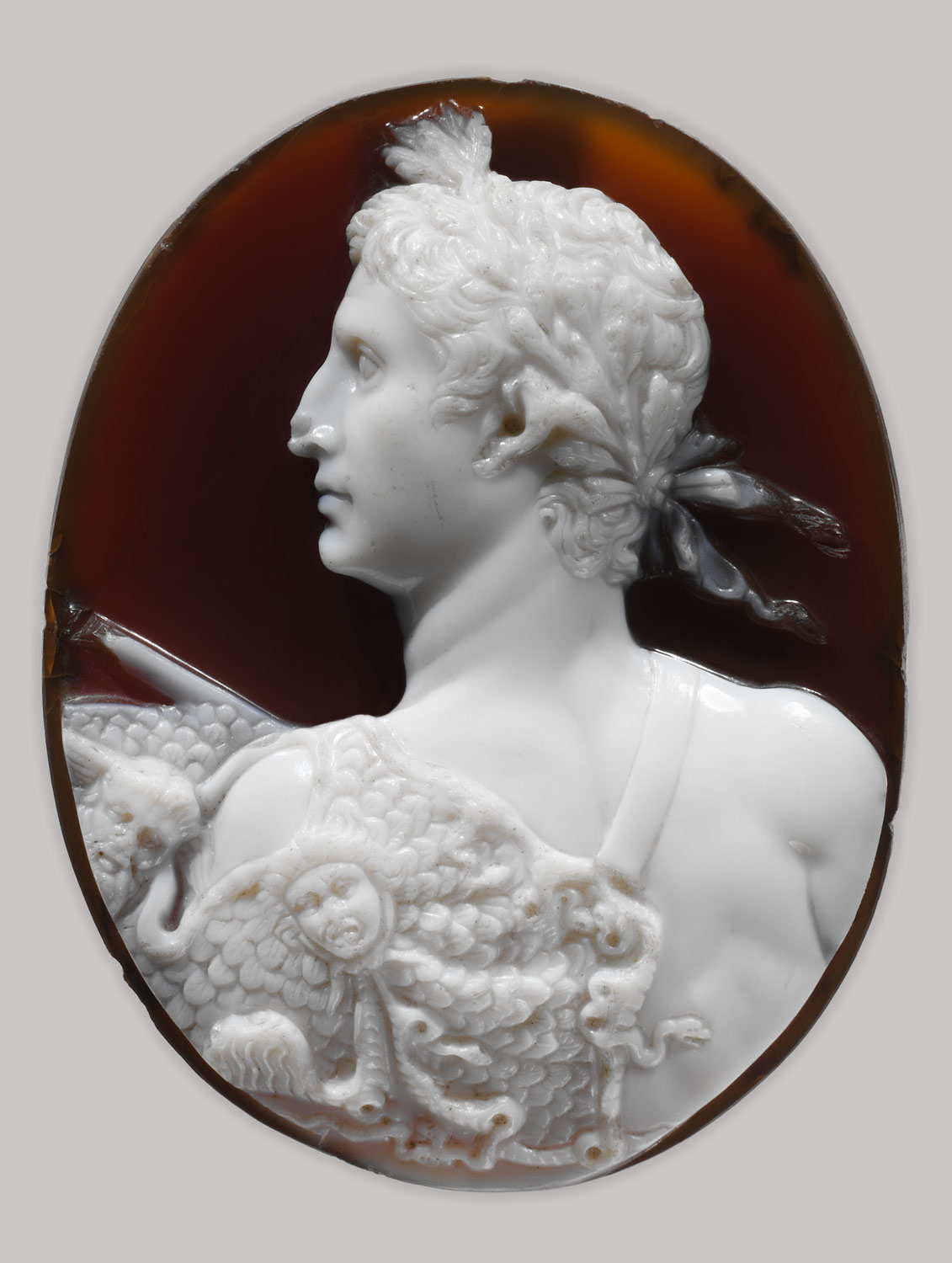 Edited by DVCollector
05/05/2012 11:00 pm
|
|
Pillar of the Community
United States
4253 Posts |
They are all beautiful. I agree with echizento re the identities except I don't see Julia Domna in the first.
|
|
Bedrock of the Community
Australia
21792 Posts |
These pieces, if they are from the Imperial period, with the much higher level of artwork than coins, and much greater rarity, means that they are considerably more valuable than coins.
You are indeed very fortunate, as their owner, to have custodianship over them.
|
|
Bedrock of the Community
United States
10045 Posts |
I only wish I had custodianship of these, but it's much better they are in the British Museum and the NYC Met--as more people can see them. Given the high quality, I suspect some of these were made for the emperor or his family and they are priceless. Here is the ID from the museum:
1. Portraits of Septimius Severus, Julia Domna, Caracalla and Geta
ca. A.D. 208--209
2. Emperor Vespasian, ca. A.D. 69--79
3. Nero, ca. A.D. 64--68
4. Emperor Tiberius, ca. A.D. 14--37
5. Augustus ,about 31-- 27 B.C.
Length: 2.1 cm (13/16 in.) --an amazing amount of detail in such a small object!
6. Caracalla, ca. 210 AD
7. Julia Domna, ca. A.D. 200-210
(The Augustus cameo dates from 41-54 AD)
|
|
Moderator
United States
23731 Posts |
Haven't a clue on this one.
|
|
Pillar of the Community
Canada
3692 Posts |
Unless my eyes are crooked, those are cameos, and not intaglios.
|
|
Bedrock of the Community
United States
10045 Posts |
It's true that #6 and the very last one are cameos--the rest are intaligos, most with a plaster impression.
|
|
Valued Member
United States
422 Posts |
Wow! They are beautiful DVC!
Do you have any images (or anyone for that matter) of actual ancient die's that were used to create coins? I have drawings in some books I have, but not the real McCoy. I think it would be interesting to see an actual one.
|
|
Bedrock of the Community
United States
10045 Posts |
Isn't it amazing what they could produce with hand tools?  I started this project wanting to see whether Roman coins reflected the best skill at the time--or whether the roughness on many coins is due to the pressures of production. Obviously, there were some extremely skilled engravers working in the Roman empire, who put a lot of care into their work, and who could have produced coin dies of similar quality. Looking at the style of some, such as the Severan example, makes me wonder whether celators also engraved gems?  Oxos, I have seen very few actual dies, but these stones help me appreciate what they may have looked like. A few pictures of dies have been posted here-- like this one. Just for fun, I'll post a few more engravings from the Roman empire: A Republican portrait:  Thought to be a young Gaius or Lucius Caesar:    This engraving of Serapis and Isis reminds me of the style and skill of Roman coin dies.  Edited by DVCollector
05/06/2012 12:15 pm
|
|
Pillar of the Community
United States
5010 Posts |
|
| |
Replies: 25 / Views: 3,536 |







 Posted 05/05/2012 10:13 pm





