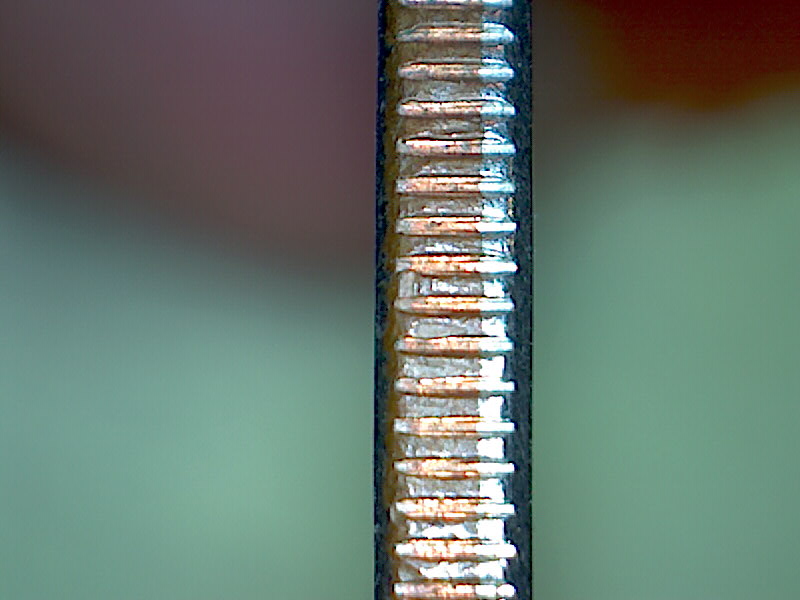
It is caused by a "smearing" of the metal during the punching out of the blank. The strip has the upper and lower layers of coppernickel the same thickness, but when the punch goes through the strip on the edge of the hole it "smears" the upper layer down over part of the copper and the copper down over the lower copperrnickel layer. On the edge of the blank the "smearing" goes in the opposite direction and the copper covers the upper layer of copper nickel. In any case the result is an edge that shows two of the three layers clearly and little if any of the third layer. (It is also another way of helping to verify genuine incomplete planchets on clad coins. The smearing on the "clipped" area will always be in the opposite direction than that of the edge of the coin.)












 Posted 05/14/2012 9:07 pm


 ..yes its normal..


