| Author |
 Replies: 10 / Views: 2,403 Replies: 10 / Views: 2,403 |
|
|
Valued Member
Canada
334 Posts |
Here is a nice double struck nickel from my collection. 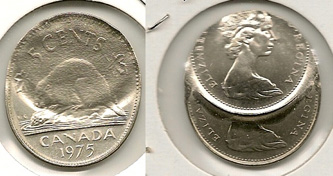 |
|
|
|
Bedrock of the Community
United States
10284 Posts |
I am thinking that this is unusual that there is a smashed down reverse and not the detail as shown on the obverse.
Is it possible that this is a double error? That there was a blank caught in between the coin and reverse die or capped die involved as well?
|
|
Pillar of the Community
United States
5903 Posts |
I was thinking about the same thing NickelGuy, normally a double struck coin should show similar effect on both side.
Whoops! Great error!
Edited by macmercury
05/28/2012 12:14 pm
|
|
Valued Member
 Canada
334 Posts |
yes , there was something else on the upper die when it was struck the second time . If it was a blank it would have caused a partial brockage on the blank .
|
|
Rest in Peace
1988 Posts |
Hi errorone2012The picture on the right, the top Queen is higher then the bottom Queen and is at an angle upwards towards her neck....isn't it...? There is a reason why I asked and if it is true, maybe I can explain what really happened with your coin. Does it look like the picture below...? 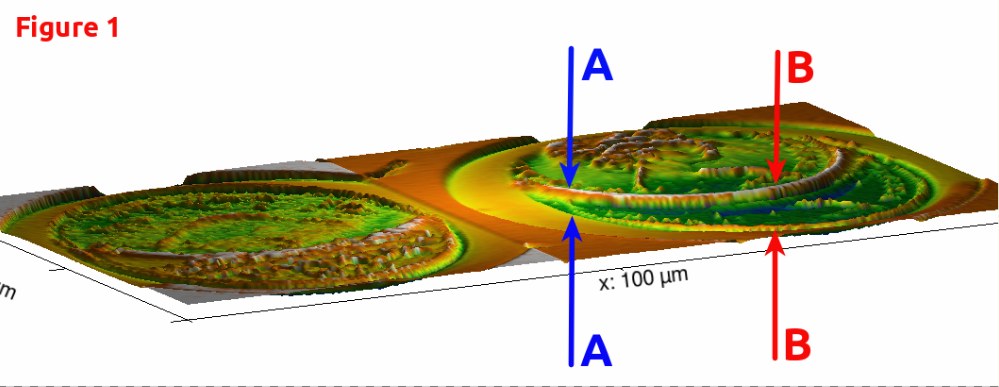 Edited by wert
05/28/2012 5:13 pm
|
|
Pillar of the Community
Canada
2303 Posts |
Dbl struck, second strike is a strike thru. Probably a capped die of mid life (no details present transferred from the cap) VERY NICE!!! The bend.....or spooning is expected.
|
|
Pillar of the Community
Canada
2303 Posts |
wert, the anvil die (the queen in this case) is not flush with the deck of the coin press. The second strike forces the coin down to the anvil die, spooning it.
|
|
Valued Member
Canada
334 Posts |
Most - not all , Canadian off centers and the like exhibit the cupping effect .
|
|
Valued Member
United States
462 Posts |
This is a typical example of the 2nd strike being struck through a blank nickel planchet that was already in the collar and ready for striking by the time your coin arrived for its second off center strike. Your coin was struck normally, then found its way into the striking chamber and laid over top the blank that was already fed in. If the blank were not present, your coin would have shown the off center image of both obverse and reverse dies. No capped die involved here, just a blank already in the chamber.
|
|
Valued Member
Canada
334 Posts |
Zimmy
There couldn't of been a blank in the collar as the lower die is the queen side in this case . The blank had to have been on top of this piece .
|
|
Valued Member
United States
462 Posts |
Thanks for keeping me straight. I always have trouble between US and Canadian die orientations. In the US, the dated area is always the obverse hammer die except on State Quarter coinage. This less frequent error type occurs on US coinage as well. The uniface area is almost always on the reverse. In this case I'll still go with a blank but with it laying on the planchet when the obverse die struck the coin. |
| |
Replies: 10 / Views: 2,403 |
|








 Posted 05/28/2012 12:14 pm


