| Author |
 Replies: 12 / Views: 1,694 Replies: 12 / Views: 1,694 |
|
|
Valued Member
Pakistan
207 Posts |
Hello all! When my knowledge of coin collecting hadn't quite matched up to my renewed interest in coin collecting, I bought this coin album/folderthing from a local stationery shop. Afterwards, on these forums, I heard about how careful you have to be, and how horrible PVC can be for coins. So I wanted to ask, how can you tell if an album is PVC as opposed to polythene or some other kind of plastic? Here are pictures of it: It is basically a two-ring binder, with several of the sheets in it: 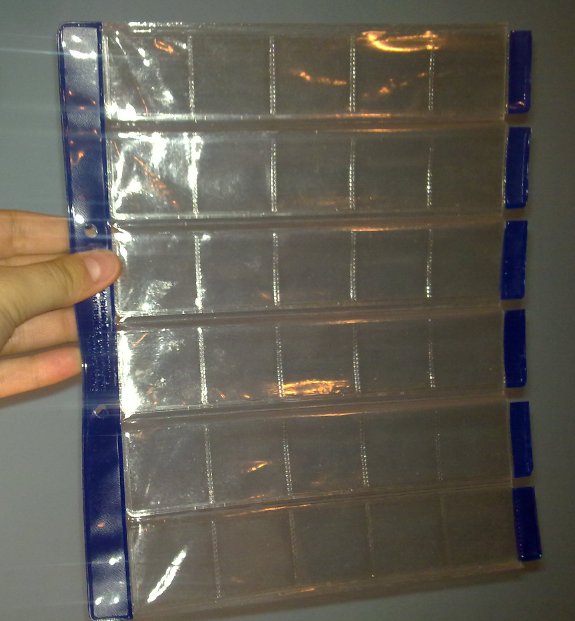 Each sheet has several tabbed strips that can be pulled out of the side: 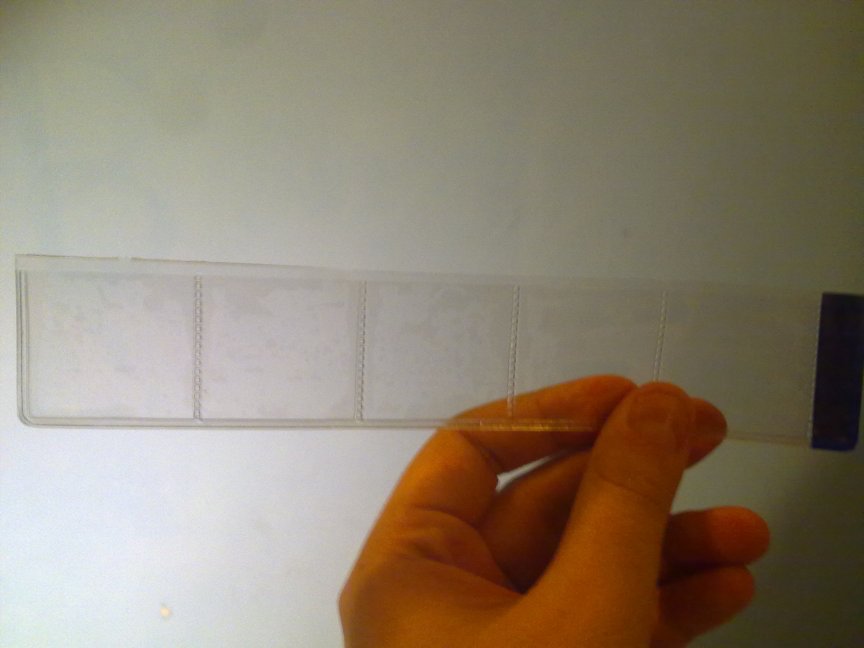 Each strip has 5 slots for coins: 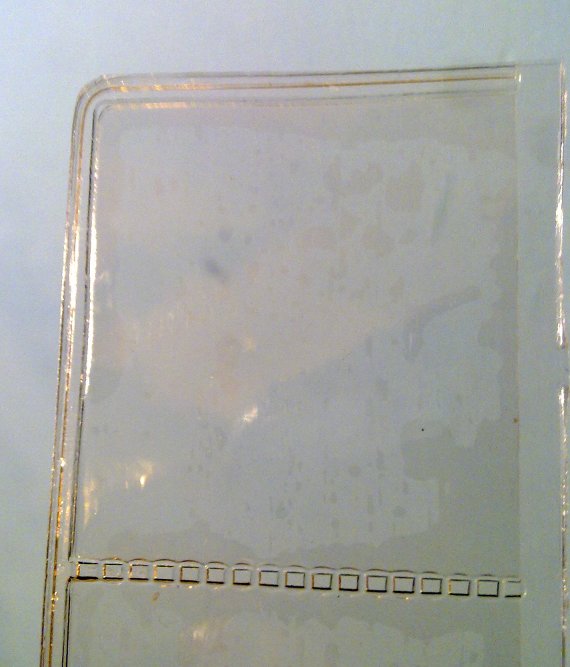 And that is where the coins go in: 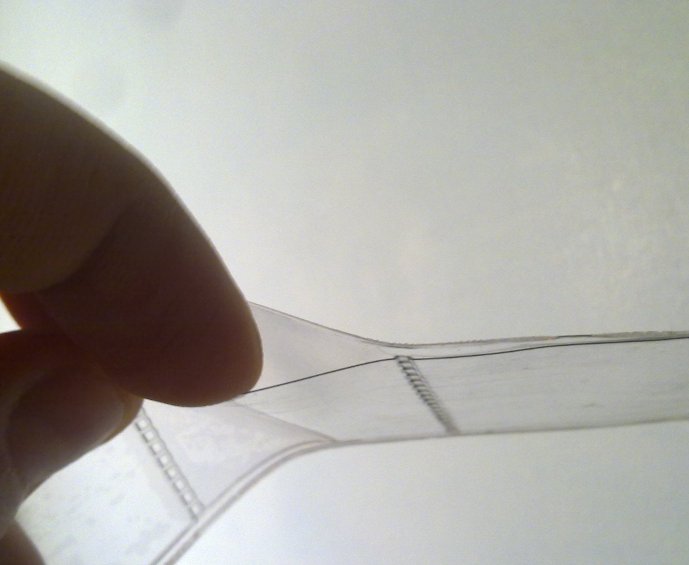 The plastic is pretty bendy and flexible: 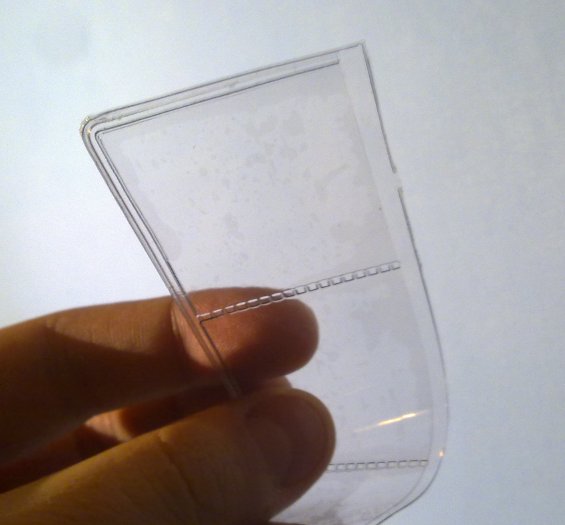 I've probably ruined it already with all my touching and finger-poking, but how would I tell otherwise what kind of plastic it is? Edited by Babar
06/22/2012 02:06 am
|
|
|
|
Bedrock of the Community
United States
14454 Posts |
if its bendy and flexible it probably contains PVC. Non PVC plastic feels kind of rigid and almost feels like its going to snap into two when you bend it. It is flexible but nothing real flexible like it looks yours is
|
|
Valued Member
 Pakistan
207 Posts |
But isn't polythene (the other kind of plastic this could be made of) the same stuff used in plastic bags? That is pretty flexible and bendy!
|
|
Valued Member
United States
227 Posts |
I'm guessing if it is old at all that it has PVC in it. I mean its just so likely I wouldn't bother. I was using some plastic sleeves meant for baseball cards to hold my coins for just 2 weeks and one of the clad SBA's now has PVC residue on it. Actually, two of them do. I would say just dont risk it. I have heard you can burn the plastic and it will turn a certain color, according to this reference yellow-green means it has PVC: http://www.plasticweldingandtools.c...ication.html |
|
Valued Member
Pakistan
207 Posts |
Thanks for the list, donkrx, but it has only confused me more  According to it, "High Density Polyethylene" is identified by being called PVC (or "3" in a triangle), and "Vinyl or Polyvinyl Chloride" is identified as PE (or "4" in a triangle). They both have plasticiser in it, though, which I guess is the bad thing? I guess I'll try hunting around the album today for any of those symbols... |
|
Valued Member
United States
227 Posts |
No no not the symbols... I didn't link it for the list of symbols, I linked it to show you the chart that describes how each plastic burns (scroll down more). You set it on fire, it burns a certain color or has a certain appearance afterwards. This helps you identify it. All those recycling symbols are useless because you wont find them on your coin storage folder or whatever you want to call it.
Apparently plastic with PVC in it will burn yellow-green. I know its not that useful it was just an idea. I still say don't even consider it because its so cheap to replace.
Edited by donkrx
06/22/2012 05:32 am
|
|
Moderator
 Australia
17031 Posts |
You've misread the list, Babar; the paragraphs go with the symbols above them, not the symbols below them. Plastic #3 is PVC.
And as others have stated before, though not in this thread, PVC by itself is harmless. But "pure" PVC is hard, brittle and non-transparent; to make it "more suitable" for coin album pages, they load it up with plasticizer, and it's the PVC plasticizer that degrades into acid over time. Anything highly plasticized is also likely to contain compounds that will degrade over time.
Unfortunately, if it doesn't have any markings telling you what it's made of, it's often impossible to be sure what a plastic is made of, without doing expensive chemical testing.
Don't say "infinitely" when you mean "very"; otherwise, you'll have no word left when you want to talk about something really infinite. - C. S. Lewis
|
|
Bedrock of the Community
Australia
21794 Posts |
I would not put coins into PVC album pages directly, but into Mylar 2x2's first.
With such a system, long term storage is OK for copper nickel coins of low value. In the medium term. (2 to 3 years for silver coins, and less than that for copper or bronze coins) PVC pages would be OK as well.
Silver and bronze coins even in Mylar 2xs's in PVC album pages, will darken over the long term. That is my experience.
Over the longer term it is advisable to use archival quality non PVC album pages, which may cost twice as much as PVC album pages. Small extra cost to pay, when 20 coins per page may have a value of $200 or more.
|
|
Valued Member
Pakistan
207 Posts |
Oh...that explains it. Yeah, maybe it is my firefox, but the formatting really seemed messed up in my browser. I found the name of the company that makes it on the back...it is a local company, but called "China Plastics". They didn't have any website, but after hunting around the web, I was able to find a phone number. They really weren't helpful at all.... Me: "Could you tell me, the albums you make, the plastic, is it PVC, or polythene or something else?" Them: "Yes" Me: "Uh...I don't understand, is it PVC or polythene?" Them: "PVCR Polythene. Yes" Me: "I don't think that is a thing. I am asking if the plastic is made from PVC, or is it made from polythene, or from something else?" Them: "The first one. Yes. PVC." <hangs up> So yeah, really not helpful. I doubt they knew it themselves. This was my 2nd call to them, the first one that guy asked me to call them later, because the guy who knew this stuff wasn't there. I guess the guy who "knew this stuff" didn't even know this stuff... I guess I'll take a little snip of it, see what colour it burns, and find out if it smells off Hydrochloric Acid  , and whether it stops burning on removal of the flame. But I think it is probably PVC.... |
|
Bedrock of the Community
United States
20753 Posts |
Rather than attempting to figure out what it is, just look it over carefully for a manufacturers name. Address too if possible. If non are apparent, I'd just discard those. Regardless of who says what about all the possibilities of a product, I always attempt to contact the mamufacturer. Today so many are afraid of law suites they are real carefull of anything they tell people. Via the internet anyone can tell you anything and if wrong, not much you c an do about that.
If you can not find out who made them, it is just best to discard them. Always better to be safe than sorry.
|
|
Bedrock of the Community
United States
37237 Posts |
They did say it has Polyvinyl Chloride (PVC) in it. PVC usually has a stronger plastic odor and feels oily. You want to stick with Mylar as that will not out gas.
|
|
Valued Member
Pakistan
207 Posts |
You're probably right. But this means that even with the stuff I've ordered (around 300 2x2s), I'm still going to run out of storage for them . What does PVC or plasticiser do to coins anyhow? |
|
Bedrock of the Community
United States
37237 Posts |
PVC creates a green slimy substance on the surface of the coin that will eventually damage the coins surface. You can use Acetone to remove it before the damage happens. Best to use archival coin holders made out of mylar and acetate which do not contain PVC.
|
| |
Replies: 12 / Views: 1,694 |
|




 Posted 06/22/2012 02:57 am





