| Author |
 Replies: 14 / Views: 1,374 Replies: 14 / Views: 1,374 |
|
|
Pillar of the Community
United States
4253 Posts |
This is why I generally don't bother with unclean lots. In this particular case, I saw what appeared to be and what turned out to be a Crispina coin among the other coins. I didn't own a Crispina, so for the price thought I'd try one more time with the unclean lot. Well, most of the coins are worthless culls and have already gone into the junk bag. These two coins showed some promise, but with just a simple soaking in distilled water, they now look worse then before. I was right about the Crispina, but this other is unknown to me. The reverse is a bull standing right. Upon arrival: 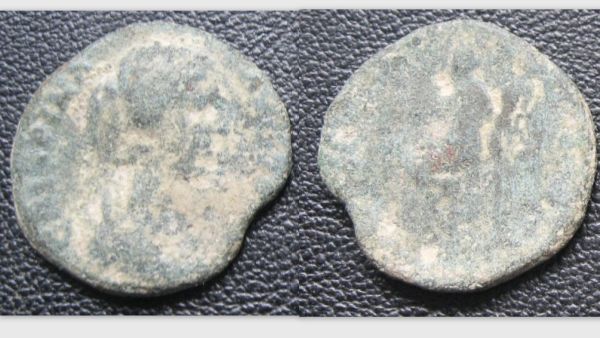 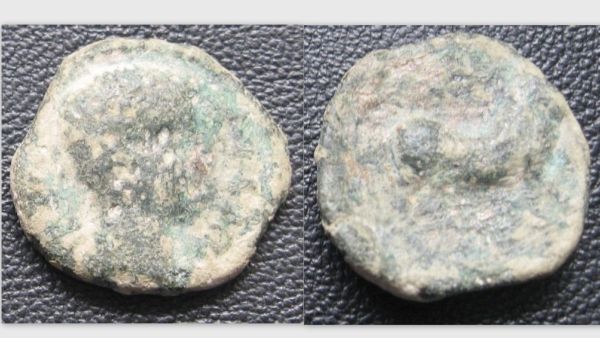 After 24 hours of soaking in distilled water: 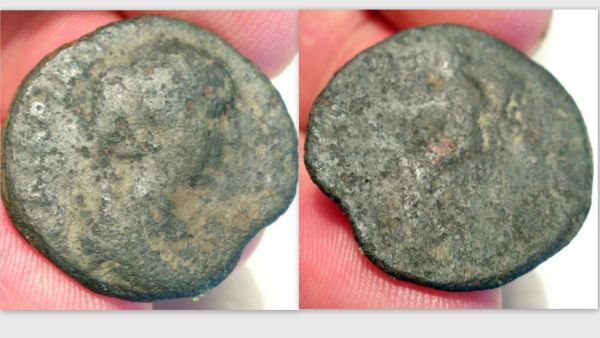 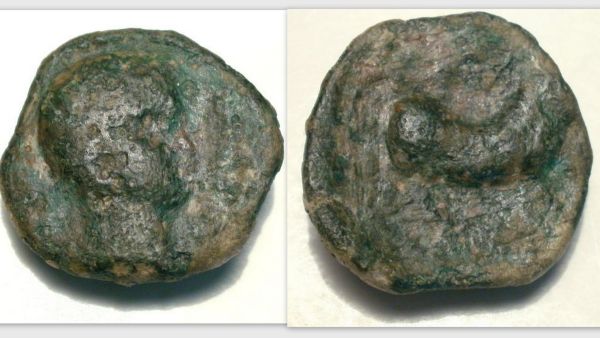 |
|
|
|
Pillar of the Community
United States
1315 Posts |
I've had pretty much the same experience with uncleaned.
I don't think these two look worse than before although the if you would of left a little more of the sand on the Crispina it might of brought the detail out better.
The other coin looks better I think. It could be from Castulo.
|
|
Pillar of the Community
 United States
4253 Posts |
Quote:
if you would of left a little more of the sand on the Crispina it might of brought the detail out better I didn't do anything to remove it. All I did was soak the coins in distilled water for 24 hours. Once removed and dried, the images are what I have left. This is the second time in the past year I have bought an unclean lot only to be disappointed. I swore off then and I'm swearing off now. I did not pay much for these coins, so I guess I got what I paid for, eh? I'm sticking to cleaned coins! I'll pay the extra. |
|
Pillar of the Community
3352 Posts |
Hey Bing ... the "bull" on your unknown coin looks very similar to the bull on my unknown coin (remember this thread?) https://goccf.com/t/120242 |
|
Pillar of the Community
United States
1316 Posts |
jw, I think your second coin looks better. the first my be no help... Hey steve, Happy Canadian day, feeling OK!! sounds like you had a busy weekend.....  |
|
Pillar of the Community
3352 Posts |
|
|
Pillar of the Community
United States
1316 Posts |
steve,  ..... what in your ear........ |
|
Pillar of the Community
United States
4253 Posts |
Quote:
the "bull" on your unknown coin looks very similar to the bull on my unknown coin (remember this thread? Jerry: Happy Canada Day my friend. Yes, I recall that thread. And as I recall, there was no definitive answer, was there? Personally, I think it may be a Roman Republic or early Empire coin from Iberia (Spain). But there is so little left of the coin, we may never know. One thing that remains and does stand out, at least in hand and perhaps not in the image, is the rolls of fat around the bull's neck. Great art detail in these coins. |
|
Valued Member
United States
275 Posts |
Ah the salad days are upon us.
|
|
Pillar of the Community
3352 Posts |
yupper => The good ol' "Dog Days of Summer" have arrived!!
|
|
Pillar of the Community
3352 Posts |
Quote:
Dog Days were popularly believed to be an evil time "the Sea boiled, the Wine turned sour, Dogs grew mad, and all other creatures became languid; causing to man, among other diseases, burning fevers, hysterics, and phrensies." Quote:
Everyone knows that the "dog days of summer" occur during the hottest and muggiest part of the season. Webster defines "dog days" as...
1 : the period between early July and early September when the hot sultry weather of summer usually occurs in the northern hemisphere
2 : a period of stagnation or inactivity
But where does the term come from? Why do we call the hot, sultry days of summer "dog days?"
In ancient times, when the night sky was unobscured by artificial lights and smog different groups of peoples in different parts of the world drew images in the sky by "connecting the dots" of stars. The images drawn were dependent upon the culture: The Chinese saw different images than the Native Americans, who saw different pictures than the Europeans. These star pictures are now called constellations, and the constellations that are now mapped out in the sky come from our European ancestors.
They saw images of bears, (Ursa Major and Ursa Minor), twins, (Gemini), a bull, (Taurus), and others, including dogs, (Canis Major and Canis Minor).
The brightest of the stars in Canis Major (the big dog) is Sirius, which also happens to be the brightest star in the night sky. In fact, it is so bright that the ancient Romans thought that the earth received heat from it. Look for it in the southern sky (viewed from northern latitudes) during January.
In the summer, however, Sirius, the "dog star," rises and sets with the sun. During late July Sirius is in conjunction with the sun, and the ancients believed that its heat added to the heat of the sun, creating a stretch of hot and sultry weather. They named this period of time, from 20 days before the conjunction to 20 days after, "dog days" after the dog star.
The conjunction of Sirius with the sun varies somewhat with latitude. And the "precession of the equinoxes" (a gradual drifting of the constellations over time) means that the constellations today are not in exactly the same place in the sky as they were in ancient Rome. Today, dog days occur during the period between July 3 and August 11. Although it is certainly the warmest period of the summer, the heat is not due to the added radiation from a far-away star, regardless of its brightness. No, the heat of summer is a direct result of the earth's tilt. |
|
Valued Member
United States
422 Posts |
Is it summer?  I've read that summer consists of sunshine, warm to hot temps, brown grass and lots of liquids to keep you hydrated. When summer comes it might be fall here in the Pacific Northwest.  |
|
Pillar of the Community
United States
4253 Posts |
Back on topic, I was looking through some coins from Castulo, and think perhaps you are correct Doucet. Although you cannot see it on the images I posted, under extreme magnification of 50x, it looks like there may be a crescent above the bull and a palm frond to the right on the obverse. I wonder if it could possible be CNH pg. 336, 42, Burgos 717, SNG BM Spain 1345. What is the opinion of the crowd? 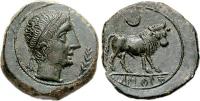 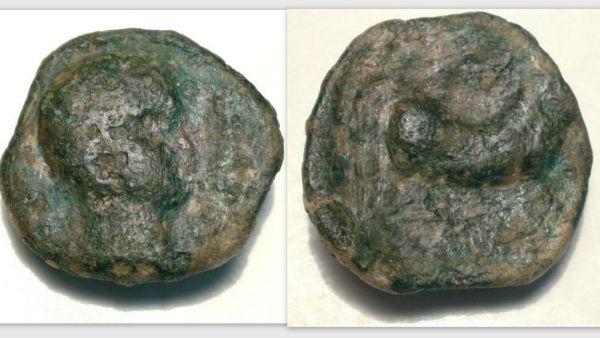 |
|
Pillar of the Community
United States
1315 Posts |
I made my guess from the 'cresent' shape of the bulls' back. It seems to be a style used at Castulo. If you could see a pointed nose on your coin it would even be more convincing. Yours could be from wear or perhaps the original strike. Some seem to have less point that others.
I've been looking for one of these to go with my Sphinx rev. coin from Castulo for awhile now, they're all kinda pricey.
Can you make out any of the letters below the bull?
|
|
Pillar of the Community
United States
4253 Posts |
Quote:
Can you make out any of the letters below the bull? Again, perhaps I'm seeing thing because I want to see them, but the remnants of what ever is there seems to correspond with the last two letters of the Castulo coin example. I can't be certain, though. |
| |
Replies: 14 / Views: 1,374 |
|









 Posted 07/02/2012 7:13 pm