| Author |
 Replies: 18 / Views: 3,464 Replies: 18 / Views: 3,464 |
|
New Member
United States
2 Posts |
Hey guys, I just started collecting old silver coinage, I've research a lot and personally have only been interested in 90 percent coins. Thus, those are what I've researched mostly. With that said, I knew that the 42-45 Nickel, the " War Nickel", was 35 percent silver and saw a large lot of them on sale. It wasn't until after I made my purchase and spent a lot of money, that I learned that only some of the 1942 Nickels were 35 percent silver. The man I purchased them from was advertising them as "Silver War Nickels". So I have a few questions. First, is the non-silver 1942 coin still even considered a War Nickel? If not I might be able to get my money back due to false advertising, if I could see a link to something talking about this it would be great. Second, how can I tell the difference between a 42 silver and a 42 with nickel and cooper? I assume it has to do with a scale, so what are the correct weights? |
|
|
|
Pillar of the Community
United States
561 Posts |
First,  to the Community. Look for the large mint mark on the reverse of the nickel. If it is there it is a silver " War Nickel". The non-silver 42 nickels do not have the large mint mark on the reverse. Edited by Merc Man
07/03/2012 11:11 am
|
|
Valued Member
United States
234 Posts |
|
|
Moderator
 United States
56855 Posts |
to CCF. On the left of page you can click on US Coin Facts and a lot of other helpful links,just so you know. John1  |
|
New Member
 United States
2 Posts |
Thanks for the replies guys. :) I'm going to through the coins after work today or tomorrow :)
|
|
Pillar of the Community
United States
2295 Posts |
and good luck with searching. |
|
Pillar of the Community
Canada
1411 Posts |
to CCF! |
|
Bedrock of the Community
13014 Posts |
|
|
Pillar of the Community
United States
3283 Posts |
It's a large and easily recognized mint mark, Could be P,D,or S depending on the year. 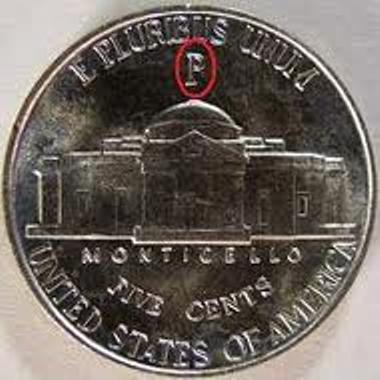 |
|
Moderator
United States
191235 Posts |
to the Community! Some (or many) will disagree, but you can call a regular 1942 nickel a " War Nickel" if you like; since they were minted during our involvement in World War II. By the same logic, any coin minted from 1942 to 1945 could be called as such; war quarter, war dime, etc. There are people who build war sets and they may also include other wars as well. It is a matter of personal taste, but since this is a place where people can disagree on terminology, it is best to fully qualify the description. For example, I prefer to say "silver wartime alloy nickels" myself, just to be clear. (Yes, I prefer wartime to war; as does the Red Book; but then I am also one who prefers to call Eisenhower dollars by their full name, so your mileage may vary.) So, in my opinion, a 1942 or 1942-D (1942-P and 1942-S were the only silver that year) can be called a non-silver wartime nickel without being misleading. |
|
Bedrock of the Community
United States
20753 Posts |
A great book for starting out is that thing called the Red Book by Whitman Publishing. Usually available in many book stores, on line dealers, coin stores, etc. |
|
Pillar of the Community
United States
594 Posts |
|
|
Bedrock of the Community
United States
36916 Posts |
"Wartime nickels" are only those that used the "war time" emergency composition of 56% copper, 35% silver, and 9% manganese.
|
|
Pillar of the Community
614 Posts |
Quote:
any coin minted from 1942 to 1945 could be called as such; war quarter, war dime, etc. 1939-1945 you mean  |
|
Pillar of the Community
United States
592 Posts |
Quote:
1939-1945 you mean Not if you're looking at American involvement in the war. |
|
Moderator
United States
191235 Posts |
Quote:
Not if you're looking at American involvement in the war. That is correct. From 1939 to 1941 (well, the last weeks of 1941), it was "someone else's war" and not ours (at least officially, because it would have been foolish to ignore it). |
| |
Replies: 18 / Views: 3,464 |







 Posted 07/03/2012 11:12 am





