| Author |
 Replies: 38 / Views: 8,065 Replies: 38 / Views: 8,065 |
|
New Member
United States
7 Posts |
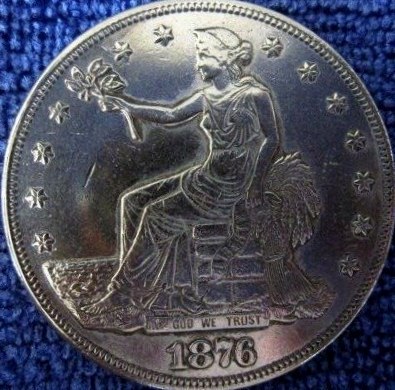 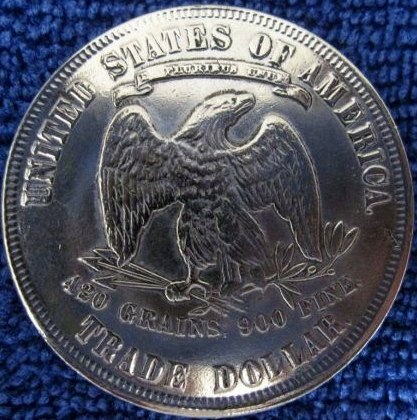 Hi, I'm new here and starting to build a collection. I found these Trade dollars for sale, and am thinking about buying, but after reading the discussions about the fakes out there, I thought I would ask some experts for opinions
|
|
|
|
New Member
 United States
7 Posts |
I posted in wrong section. darn newbies
|
|
New Member
United States
30 Posts |
|
|
Pillar of the Community
United States
1699 Posts |
It's a really bad fake. I would recommend getting a slabbed example for your first coin if you are unfamiliar with the series.
|
|
New Member
United States
7 Posts |
seller says it weighs 27.2, and is 38.1mm diameter
|
|
Moderator
 United States
23522 Posts |
Fake or not, it's so heavily polished that any numismatic value is pretty much destroyed. Walk away.
|
|
Moderator
United States
16694 Posts |
Agreed. It doesn't look silver and diagnostics are not correct.
swcoin.ecrater.com
|
|
Pillar of the Community
United States
1372 Posts |
Looks to me like it was made on dies that were soft. On a genuine, US minted coin, the edges of the devices and legends are much sharper in relationship to the fields. Even the dentiled edge on this coin is poorly formed. An overall "mushy" look is the first thing I notice in all of these modern counterfeits. Put that image right next to an image of a genuine US minted Trade dollar and you'll see what I mean. Once you recognize the difference in the quality, you'll be able to spot most of these from 5 feet. Chance Edited by Chancellor Sutler
08/25/2012 2:25 pm
|
|
Pillar of the Community
United States
3184 Posts |
buy slabbed and save yourself the trouble
|
|
Pillar of the Community
United States
1372 Posts |
That's the lazy path, and it's becoming disturbingly common. If you don't want to learn about the minting process and learn to really appreciate the fine points of coinage ... then why are you collecting coins?
If you educate yourself ... you won't have to pay for someone else's knowledge.
And ... There are counterfeit slabs, so that's really not the answer anyway.
Chance
Edited by Chancellor Sutler
08/25/2012 2:56 pm
|
|
New Member
United States
7 Posts |
I am here to learn. If weight and diameter are correct. and it's not magnetic? Are any of these fakes actually made of silver and the seller is trying to profit from the numistic premium? What scares me about these is the price $100 for 5 all 1876. I know too good to be true, but are there fakes made of silver out there?
|
|
Pillar of the Community
United States
620 Posts |
been polished so much details are hard to see.
I would steer clear of this one.
|
|
Pillar of the Community
United States
1372 Posts |
Most of these are made of copper, and "washed" with a silver colored metal that's not even silver. The cheapest plating you can do, and do very easily, is zinc.
Copper is lighter than silver, and doesn't stick to a magnet.
I have heard of some modern counterfeits made of silver, but why bother to knock off a coin and sell it for melt? A silver dollar contains about 20 dollars worth of silver.
Chance
Edited by Chancellor Sutler
08/25/2012 3:43 pm
|
|
Pillar of the Community
United States
5896 Posts |
I agree that you need to learn the series, but my approach maybe differ than some here. I would go to local coin shows and look at genuine Trade dollars, pick up a book or two if available, buy a common year high quality slab that one can afford, study it further, buy a few cheap raw ones afterward and hold it in your bare hands, feel the weight and tap/drop it lightly and listen to the different sounds of genuine coins vs fakes. If you're going to buy, make certain is real and buy from reputable dealers and collectors. |
|
Bedrock of the Community
13014 Posts |
Quote:
That's the lazy path, and it's becoming disturbingly common. If you don't want to learn about the minting process and learn to really appreciate the fine points of coinage ... then why are you collecting coins?
If you educate yourself ... you won't have to pay for someone else's knowledge. With all due respect I couldnt disagree more. Theres nothing lazy about having an added layer of protection nor does being a collector that prefers slabbed coins make you a lazy collector. You collect coins because you enjoy them. You shouldnt have to spend years studying and researching them to know everything about them and avoid fakes before youve earned the right to collect them. Its no different than anything else in life, some people enjoy cars yet they couldnt take them apart and build them from scratch or tell you everything in their fine wine or scotch. Is it smart to learn about coins yes, should have to do all the learning before a purchase absolutely not. Part of learning is from experience, without getting the experience you cant learn. With the quality of fakes now slabs will play an ever increasing role in collecting in the future especially with the younger collecting generations having known them from the start. Yes some fakes have fooled TPGs, but the percentage of those that fool TPGs is much smaller than the ones that fool dealers or collectors. Fake slabs are also much easier to spot than fake coins. To me a TPG is asking for an expert opinion and a great resource for a new collector. I am not going to try and rebuild my transmission by hand, Ill take it to an expert. A coin is no different. If I see a coin I really like but know that I am not very knowledgeable in that are I will look for help with it. Once you are unwilling to listen to help and think you know it all is when you are setting yourself up to get burned imo. |
|
Pillar of the Community
United States
1796 Posts |
Just to add my opinion to the consensus: The strike has all of the details that most of the fakes don't have, but the surface is very problematic. And I mean *very*. Even if it is genuine, it has been severely polished which has diminished most of its value. Your best bet is to buy from a reputable dealer. For rarities such as this, I do recommend graded ('slabbed') specimens, as the authenticity tests they conduct are good enough to detect the majority of fakes out on the market. (And there are a lot of fake Trade dollars out there http://fakes.numismetrica.com/categ...ade-dollars/.) However: Quote:
Fake slabs are also much easier to spot than fake coins. As a counterfeit collector I can say that in recent months, not so. Counterfeiters are finding plastic and holograms are easier to replicate than the coins themselves.... and that a large number of people are willing to trust the *plastic* rather than the coin it contains. Quote:To me a TPG is asking for an expert opinion and a great resource for a new collector. TPGs are one of the more curious forms of expert opinions. When you take a piece into a dealer and ask them face-to-face what something is worth, you're talking to a living, breathing human being. If you take it to multiple dealers, you have established a consensus with names you can revisit. With a graded slab, you're trusting a label from a company with no individual person to fall back on or bounce further questions off of. It may be a reputable company. They may be fairly good at what they do, but if there's a mistake, you're on your own. Also remember that TPGs are not your average hobbyists: They're in the business of selling their *services*, many of which are... for lack of a more tactful term... absolutely ridiculous. (FirstStrike® anyone?) Education is the only surefire way to keep yourself away from trouble (but I admit, it won't necessarily keep you *out* of it :-) ). If you're a new collector, trust *people* not labels. Join a coin club. Go regularly. Ask questions. Ask to come along with the friends you make on their next trip to a coin shop. Learn from experience *that* way as it's very much hands-on, and worth every minute you spend. :-) Edited by SteveCaruso
08/25/2012 5:51 pm
|
| |
Replies: 38 / Views: 8,065 |







 Posted 08/25/2012 1:36 pm





