Martin and I have in common that we are interested in Septimius Severus. In my case, 90% of the interest is in the Eastern mints (Syria, Alexandria). 9.9% is in the Rome mint coins of 193 AD which includes the legionary series and a very few other types. That leaves .1% for Rome of 194 to 211. I'm not fully sure why but those are the facts.
Some time ago I became aware of another fact. That is that IMPII coins from Rome are something that should be picked up whenever they are seen. I now own one or two. I had a third but traded it to a collector smarter than I before I realized what I was doing.
First is a Liberalitas type interesting in comparison to Martin's Victory.
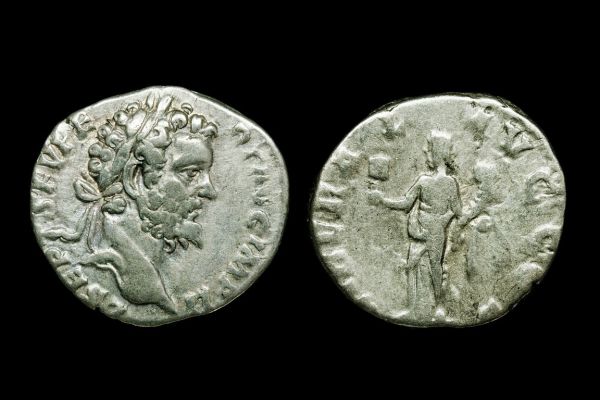
Reverse dated COS rather than COSII suggests it was issued before New Year's Day 194 but after the late year assumption of IMP II. There are not many of these as you might expect since that date pairing lasted a couple weeks.
The reason I said "1 or 2" is that my #2 may not be IMP II. Coins of this period are often on ragged flans and other flaws of manufacture are common. The area where IMPII should be has a metal flaw so it could be IMPIII. Both exist in the catalogs (but I have to wonder how many coins cataloged were precisely read as opposed to 'hopefully' read like mine).
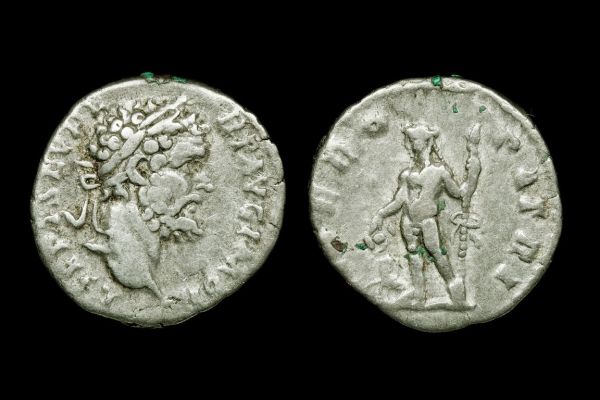
The reverse is Libero Patri which has no date elements and is catalogued with either IMPII or IMPIII. This is the sort of coin that might make you appreciate just how special one like the OP coin really is. Rare is one thing but, when a series is frequently poorly made, rare and beautiful is something really special.
Please understand that most IMPII coins you will see are what we call 'Laodicea, Old Style' from the Syrian mint that used IMP dating for its coins. While many of them are nice and even rare, they are not what this thread was about.







 Posted 09/01/2012 07:03 am





