| Author |
 Replies: 8 / Views: 1,781 Replies: 8 / Views: 1,781 |
|
|
Valued Member
United States
255 Posts |
Okay, so I'm trying to learn photography by reading etc. I have some borrowed cameras that I may use for a long time... One is a Canon Eos 10d that has two lenses: a Sigma 24-70 mm, 1:2.8 zoom; other is 62mm Tameron 3.8-5.6. I have no idea what that means!! The only reason I'm interested is to enlarge photos for Vamming purposes. If neither of those lens work, I have a bunch of old lenses that I'll need to purchase a fd to eos converter for. These lenses are: Vivitar 24mm 1:2.8 Canon Lens Fd 50mm 1:1.8 Albinar ADG 80-200mm 1:3.9 macro zoom Albinar auto 2x tele converter c/fd (I have 2 for some reason.) and a Samigon MC auto Lens extender 2x Would any of these work for coin photography? So far, I really dislike photography!! I'm pretty spoiled in that most things come easy for me; however, this is not the case with coin photography!!  Any advice GREATLY appreciated! Thanks, kelly |
|
|
|
Moderator
 United States
23522 Posts |
Kelly, I will be more than happy to help get you started over this rather large (as you've obviously discerned) lump in the road. However, I'm about to leave for possibly the entire weekend. If other haven't chimed in (and even if they do) by the time I'm back - probably Sunday - I'll address your needs at length.
In the meantime, try to find out what threads/connectors are on the teleconverters you already own. They will figure prominently in the answer we come up with.
|
|
Pillar of the Community
United States
4132 Posts |
None of those lenses is really a macro lens. I know the 80-200 says "macro zoom" but it's not. To use one of those lenses would require an extension tube or bellows. But, you can always give them a try, see if they let you focus close enough to work for what you're trying to do.
|
|
Pillar of the Community
United States
4051 Posts |
Kelly,
Since you're interested in varieties, you probably want to set up your system for at least 1:1 magnification, if not higher. You have quite a selection of lenses available, and as the Cap'n says none are really going to work well as macro lenses on their own. I see what SD is alluding to with the teleconverter approach, and I'll leave that path to him to describe. I have a potential alternative that might work for you...
The technique I think will work best for you is called "lens stacking". Basically, you mount one lens normally to the camera, and then mount the other one _backwards_ to the first one. They connect together with a "reversing adapter" that screws into both of their filter threads. For now, until you can identify a pair of lenses that work well for you, you can just tape the lenses together with masking or other tape.
Now, to pick the lenses you can use for this. The lens that mounts to the camera is called the "tube lens", while the one that mounts reversed on front of tube lens is called the "objective lens". For reasons I'll explain in a bit, the tube lens is usually a telephoto, while the objective is a wide angle. The tube lens is _always_ focused at infinity, and set to its widest aperture setting. Always. The tube lens can be a zoom, as long as it has a fairly "stiff" zoom function. The objective is usually a fixed focal length lens with wide aperture. So from the list you gave us, here is what you might try:
Tube Lenses
24-70
62
80-200
Objectives
24
50
Which to choose, and why? It all comes down to magnification. The simple formula is:
M = FL(tube)/FL(objective)
So with the 50 objective and 62 tube, the magnification will be 62/50=1.24. The working distance from lens to coin will be approximately the focal length of the objective lens. So for 50 lens you will be about 2 inches from the coin.
If you use the 24 objective with 62 tube, magnification will be 2.58, and you will only be able to get about 1 inch from the coin. This is pretty high magnification, and will be difficult to control depth of field for.
Using a zoom as tube lens will give you variable magnification. The problem with zooms is they often don't play well with heavy objective lenses attached. You can see if either zoom is suitable by grabbing the filter ring and pulling on it. It will likely extend to its max length, and that will be where it stays using it as a tube lens. If the 24-70 settles on 70 when you pull it out, that might make a good tube lens. The magnification will be just a bit higher than with the 62. The 80-200 will probably fall to the 200 side, which will give you very high magnification (M=4 with the 50 objective) which may be hard to work with.
So, I'd recommend mounting the 62 on the camera, and kludging the 50 onto the 62 in reverse. Then try some shots with aperture at each setting and see what gives the best picture. My second choice would be the 24-70 as tube lens with 50 objective.
Ray
|
|
Valued Member
 United States
255 Posts |
Thanks Ray, Cap'n and SSDD,
After writing my above text, I left to go play with camera outside. First , I stopped by thrift store to see if tripod was waiting for me. No luck; however, I did purchase a old negative enlarger complete with bellows. I set it aside for now.
I tried the lens approaches and I think they will work... The 62 and 50 combo I can locate the coin through camera. I'm new to photography and have been on a steep learning curve. I have gone through posts and cut and paste to create photography for beginners. So on this set up...should I shoot in macro (which would be automatic for camera) or manual with ISO set at ? , etc. I do have spot meter set and am getting clearer pictures with just the 62. But when I switch for 62/50 combo... Fuzzy. Also , have clf, tungsten and ott lights. Any preference?
Finally I also have great optical magnifiers....very high quality. Stand mag at 3x, 4x and 2" handheld 10x mag. Have plenty of toys just don't know how to use them!
Oh yeah. Tape is my friend! I have rolls and rolls of surgical tape that I can use to put stuff together!
Thanks again for any and all help. If you think it's wiser to focus on bellows, mags or 62/50 lens, please suggest and I'll focus there. I just have limited knowledge of what I'm doing!
|
|
Pillar of the Community
Canada
535 Posts |
how close are you trying to get. I took this pic of a Canada 1957 hanging 7 cent using just a standard 18-55mm lens 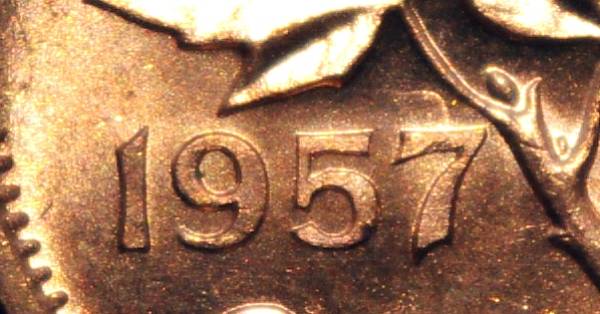 |
|
Valued Member
United States
255 Posts |
Success! Wish I had another camera to take picture of my contraption! So I stripped off most of the "stuff " on the enlarger. Then mounted camera with Ray's adapted lenses taped together. Next I taped the camera to the enlarger (securely!) threw up a prayer and shot a picture. It is beautiful, crisp and in focus picture of mm.
This is the encouragement I have needed! Thanks again. Now off to have more fun!
|
|
Valued Member
United States
255 Posts |
Timnic44 I am close enough to get only 2 full numbers and part of a third without cropping on silver dollars. I just found one of my 1880s is a 8/7 ! How fun is that? I'm currently looking at mint marks and dates.
Ray, how would I get a larger field with this level of magnification? Or is this the trade-off? I'll try playing more to see if I can keep it in focus and have a larger area. I am open to any suggestions and am grateful for all the help.
|
|
Pillar of the Community
United States
4051 Posts |
Quote:
Ray, how would I get a larger field with this level of magnification? Or is this the trade-off? I'll try playing more to see if I can keep it in focus and have a larger area. I am open to any suggestions and am grateful for all the help. This is a tradeoff. Higher magnification means smaller field of view. If you want a wider field of view, you might try using the 24-70 as the tube lens. That will allow you to vary the magnification from a little higher than you are getting with the 62 (62/50=1.24...70/50=1.4) to a lot less than you are getting (24/50=0.48), so you can more than double your FOV with the 24-70 set at 24. Glad it's working for you! ...Ray Contact me for photographic equipment or visit my home page at: http://macrocoins.com |
| |
Replies: 8 / Views: 1,781 |
|










 Posted 09/21/2012 10:18 pm


