











 Posted 11/05/2012 04:17 am


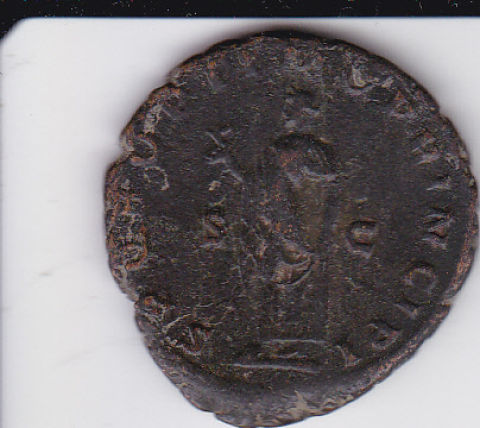
I think the reverse type is Spes holding flower and lifting skirt, like on this dupondius.
As for the OP's questions...
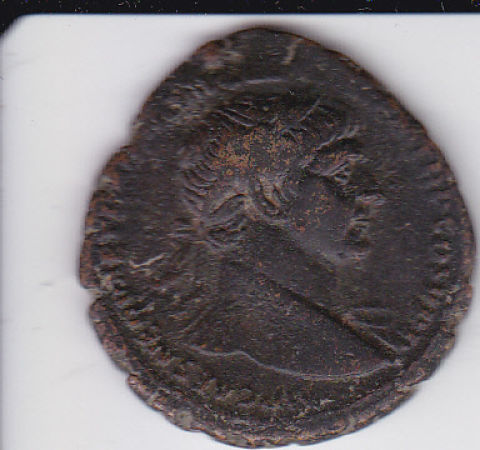
Emperor Trajan is on the obverse. If I'm correct about the reverse figure, that's Spes, goddess of hope.
The obverse inscription is the Emperor's titles; typically including famous predecessors and several of the lands the emperor has conquered. The example I linked to earlier says "IMP CAES NERVAE TRAIANO AVG GER DAC P M TR P COS V P P". This expands and translates to:
- IMPERATOR - commander of the army; emperor.
- CAESAR - family name of the Julius Caesar, claimed by all subsequent emperors.
- NERVAE - name of Trajan's predecessor and adoptive father.
- TRAIANO - Trajan's own name.
- AVGVUSTVS - titular name of the first emperor, claimed by all subsequent emperors.
- GERMANICVS - conqueror of Germany.
- DACIVS - conqueror of Dacia.
- PONTIFEX MAXIMVS - High Priest, chief official of the Roman state religion.
- TRIBVNI PLEBIS - Tribune of the Plebs, an office of the old Roman Republic with considerable powers.
- COS V - Consul (the highest public office of the old Republic) for the fifth time. This is the closest thing this coin has to a date; the COS V period dates from 103 to 112 AD.
- PATER PATRIAE - Father of the Country.
On the reverse, SPQR was the motto of the Roman Empire: SENATVS POPVLVS QUE ROMANVS, "The Senate and People of Rome". OPTIMO PRINCIPI translates to "The Best First Citizen", a title granted by the Senate to the emperor himself.
The coin has no date and mintmark on it, but we know from archaeological studies of coin hoards that this coin was struck in Rome in the year AD 107. The type is listed in the most recent Sear catalogue (2002 edition) as number 3222, and is valued at $150 in VF, $60 in Fine; I'd grade it somewhere between those two grades.
As for the OP's questions...
Quote:
...who is on it...
...who is on it...
Emperor Trajan is on the obverse. If I'm correct about the reverse figure, that's Spes, goddess of hope.
Quote:
...what it means...
...what it means...
The obverse inscription is the Emperor's titles; typically including famous predecessors and several of the lands the emperor has conquered. The example I linked to earlier says "IMP CAES NERVAE TRAIANO AVG GER DAC P M TR P COS V P P". This expands and translates to:
- IMPERATOR - commander of the army; emperor.
- CAESAR - family name of the Julius Caesar, claimed by all subsequent emperors.
- NERVAE - name of Trajan's predecessor and adoptive father.
- TRAIANO - Trajan's own name.
- AVGVUSTVS - titular name of the first emperor, claimed by all subsequent emperors.
- GERMANICVS - conqueror of Germany.
- DACIVS - conqueror of Dacia.
- PONTIFEX MAXIMVS - High Priest, chief official of the Roman state religion.
- TRIBVNI PLEBIS - Tribune of the Plebs, an office of the old Roman Republic with considerable powers.
- COS V - Consul (the highest public office of the old Republic) for the fifth time. This is the closest thing this coin has to a date; the COS V period dates from 103 to 112 AD.
- PATER PATRIAE - Father of the Country.
On the reverse, SPQR was the motto of the Roman Empire: SENATVS POPVLVS QUE ROMANVS, "The Senate and People of Rome". OPTIMO PRINCIPI translates to "The Best First Citizen", a title granted by the Senate to the emperor himself.
Quote:
...where and when it was minted, and a value, if possible.
...where and when it was minted, and a value, if possible.
The coin has no date and mintmark on it, but we know from archaeological studies of coin hoards that this coin was struck in Rome in the year AD 107. The type is listed in the most recent Sear catalogue (2002 edition) as number 3222, and is valued at $150 in VF, $60 in Fine; I'd grade it somewhere between those two grades.
Don't say "infinitely" when you mean "very"; otherwise, you'll have no word left when you want to talk about something really infinite. - C. S. Lewis


