Coin Community Family of Web Sites Join Thousands of Coin, Bullion, & Money Collectors
Vancouvers #1 Coin and Paper Money Dealer Coin, Banknote and Medal Collectors's Online Mall 300,000 items to help build your collection! Royal Estate Auctions - $1 Coin AuctionsSpecializing in Modern Numismatics Join Thousands of Coin, Bullion, & Money Collectors Royal Canadian Mint products, Canadian, Polish, American, and world coins and banknotes.


Username:
Password:
Save Password
Forgot your Password?


This page may contain links that result in small commissions to keep this free site up and running.

Welcome Guest! Registering and/or logging in will remove the anchor (bottom) ads. It's Free!

Confirm Double Strike

To participate in the forum you must log in or register.
Author Previous TopicReplies: 2 / Views: 1,038Next Topic  
Pillar of the Community
TJsCoins's Avatar
United States
3229 Posts
 Posted 11/11/2012  11:50 pm Show Profile   Bookmark this topic Add TJsCoins to your friends list Get a Link to this Message Number of Subscribers
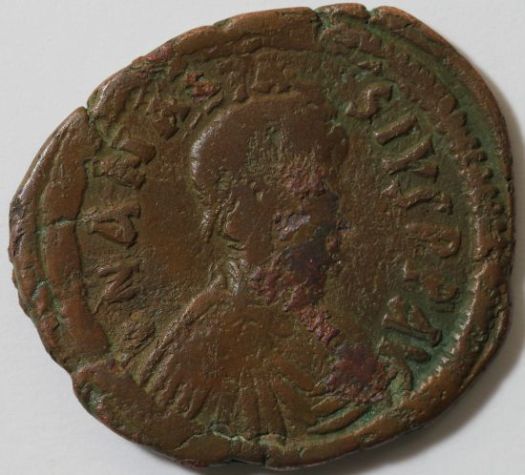
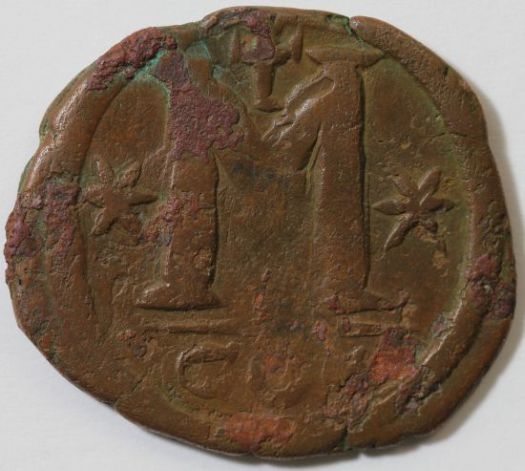
Here is my Anastasius I from the smackdown.(Please excuse my double post if you consider it so.) To me it looks like a classic double strike. Can anyone confirm for my cataloging?

Also, I have included some hopefully interesting quotes below.

Confirm-Double-Strike


Quote:
The introduction of the large copper follis, worth 40 nummi, had been the
great innovation of Anastasius I in 498. The coin was marked with the
Greek letter M, which as a numeral stood for "40,"... a half-follis (was) marked with K


Quote:
The Constantinian subsidiary coinage...collapsed in the early fifth
century, at the time of the barbarian invasions. All that survived at the accession
of the emperor Anastasius I in 491 was the gold solidus and its two fractions,
the half (semissis) and the third (tremissis), and a tiny copper coin known as a
nummus, worth, in the mid-fifth century, 1/7200 of the solidus and weighing
less than 1 gram. In order to provide a stable subsidiary coinage, in 498
Anastasius introduced a series of multiples of the nummus, the chief of them
being a copper coin worth 40 nummi and known as a follis. This denomination
was to be one of the most conspicuous features of Byzantine coinage
for the next six centuries, and since only the solidus and its fractions are
earlier in date, it is with the creation of the follis that a history of Byzantine
coinage can most conveniently be begun.

Pillar of the Community
United States
1549 Posts
 Posted 11/12/2012  08:22 am  Show Profile   Bookmark this reply Add dougsmit to your friends list Get a Link to this Reply
Yes, but the offset between the two is hardly enough to list it. Certainly it is not an error coin but just very slightly less distinct than it would have been if the dies did not shift.
Pillar of the Community
TJsCoins's Avatar
United States
3229 Posts
 Posted 11/12/2012  09:20 am  Show Profile   Bookmark this reply Add TJsCoins to your friends list Get a Link to this Reply
Thank you doug:)
  Previous TopicReplies: 2 / Views: 1,038Next Topic  

To participate in the forum you must log in or register.


Disclaimer: While a tremendous amount of effort goes into ensuring the accuracy of the information contained in this site, Coin Community assumes no liability for errors. Copyright 2005 - 2026 Coin Community Family- all rights reserved worldwide. Use of any images or content on this website without prior written permission of Coin Community or the original lender is strictly prohibited.
Contact Us  |  Advertise Here  |  Privacy Policy / Terms of Use

Coin Community Forum © 2005 - 2026 Coin Community Forums
It took 0.23 seconds to rattle this change. Forums