| Author |
 Replies: 11 / Views: 1,804 Replies: 11 / Views: 1,804 |
|
|
Pillar of the Community
Australia
7096 Posts |
This is my best 1951 florin. I have been all over this coin with a usb gizmo and cant find a single ding or scratch on ether the lettering ,design or the fields. The lustre on the obverse has some minor contact marks. High res scans 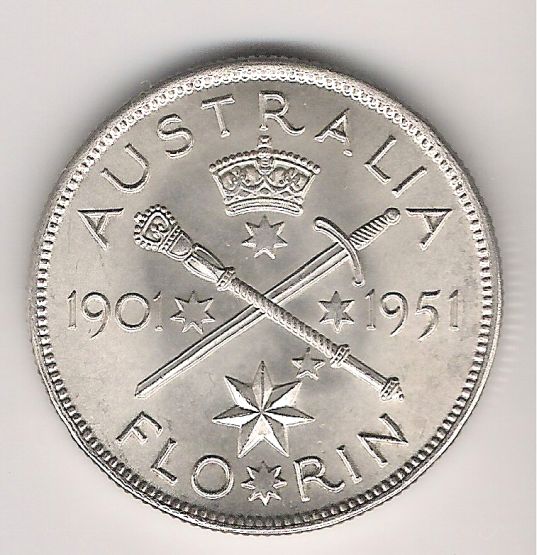 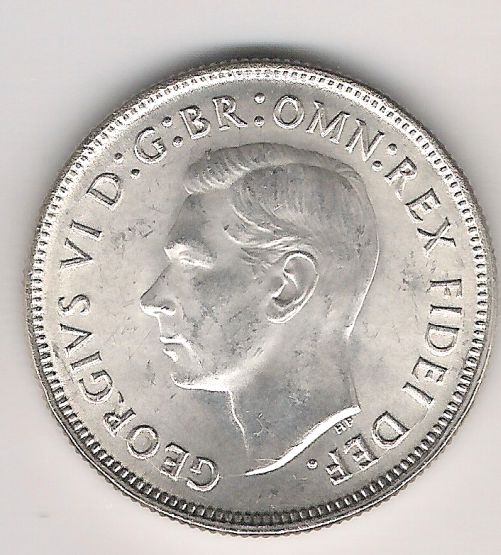 Pic's 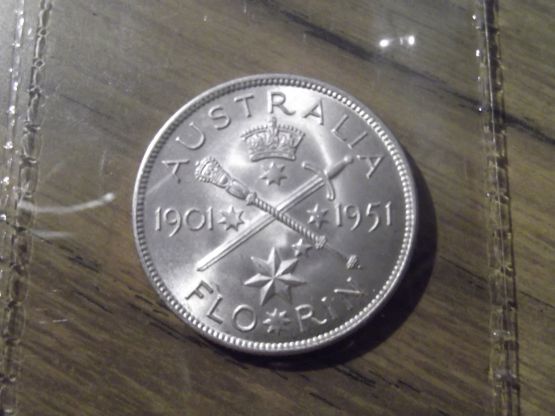 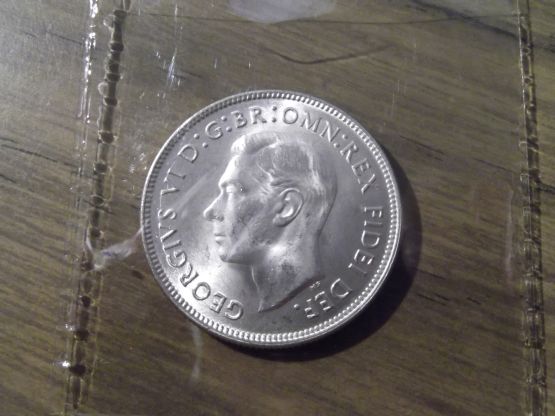 |
|
|
|
Pillar of the Community
Australia
4411 Posts |
Its a nice one CH.UNC at least.
|
|
Pillar of the Community
Australia
908 Posts |
Reverse MS64 but Obverse? Dont know how the mark would affect the grading but it is a very nice example  |
|
Pillar of the Community
Australia
674 Posts |
Great example of a lovely coin.! Simple yet meaningful design.! Very tough to get a great photo of one of these. Scans show great detail though.!  |
|
Pillar of the Community
 Australia
7096 Posts |
Quote:
Very tough to get a great photo of one of these Most people could take great pics of this coin. However me and my camera aren't mates,bloody thing is probably quite capable of taking a great pic but the bugger won't tell me how to do it  |
|
New Member
New Zealand
6 Posts |
Ok so I know I am new here, but what on earth is a "usb gizmo"  Sweet coin by the way! |
|
Pillar of the Community
Australia
7096 Posts |
Quote:
Ok so I know I am new here, but what on earth is a "usb gizmo"
It is a device that allows you to take magnified images of a coin. It plugs into a usb port thats why I call it a usb gizmo  |
|
Bedrock of the Community
Australia
21792 Posts |
It was this coin, in 1954 as an eight year old, during the Royal Visit to that attracted me to a lifelong interest in coin collecting.
I already the 1954 commemorative, but THIS was something different and MUCH harder to find in my dad's change at the time!
The 1951 Jubilee being a commemorative, always seems to be found in EF or so, but this one although not quite perfect, ranks amongst the best I have seen.
Australian silver coins were made with quaternary metal after 1946, The blanks were blanched with acid and rinsed before striking. This had the effect enriching the silver in the surface of the coin. It also left microscopic pits in the surface where the copper and zinc was leached out. These pits were partially filled in when the coin was struck, thus achieving a silver surface enrichment. However these pits were not completely erased on striking.
This explains why the surface of post 1945 coins uncirculated coins look a little different compared with the pre '46 coins. With worn coins, the poorer metal shows through rather obviously, having a slightly grey colour underneath. The obverse of the coin pictured shows a slight hint of this characteristic.
|
|
Pillar of the Community
Australia
4411 Posts |
|
|
Pillar of the Community
Australia
7096 Posts |
Thanks Sel, that explains why there is no sign of wear but the lustre is damaged on the obverse. Sneaky buggers |
|
Pillar of the Community
Australia
908 Posts |
This is the only 1951 comm florin I have but I dont think the the obverse is as good as the reverse 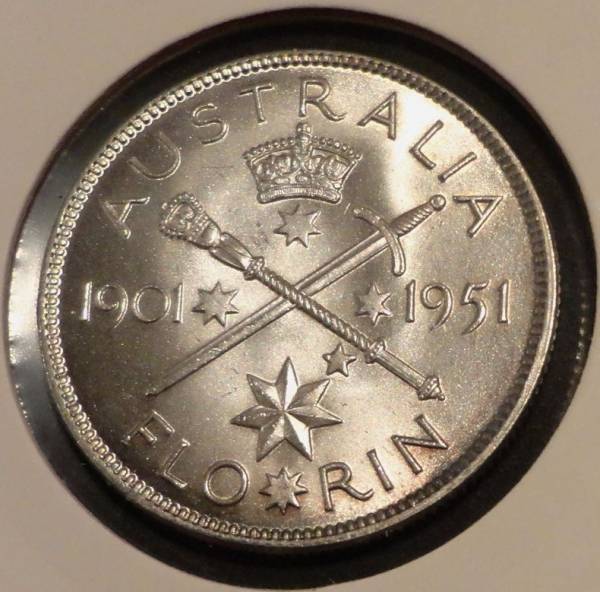 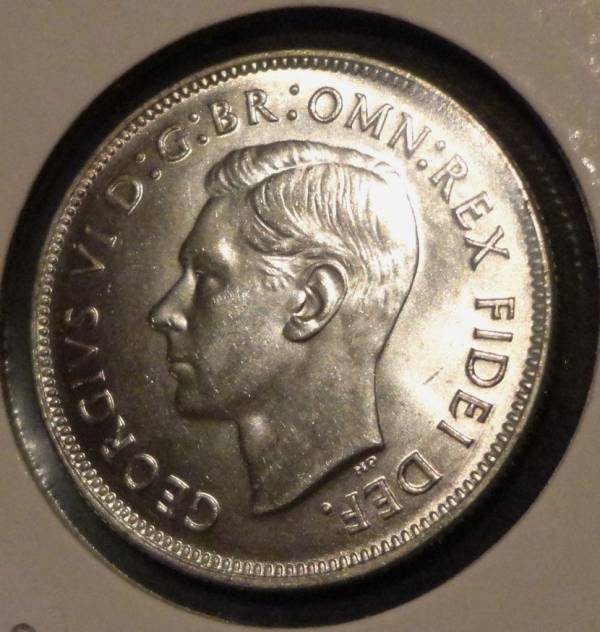 Edited by stevo1962
11/26/2012 04:39 am
|
|
Pillar of the Community
Australia
7096 Posts |
[quote][This is the only 1951 comm florin I have but I dont think the the obverse is as good as the reverse /quote] Nice coin stevo, the dings and marks on sword and star (high points) and on other places on the coin will bring this down to MS62-63 or maybe even AU58 ( quite hard to tell by the pic's) a high res scan will show every blemish in a coin and makes grading more accurate  |
| |
Replies: 11 / Views: 1,804 |
|







 Posted 11/26/2012 12:19 am





