| Author |
 Replies: 11 / Views: 1,532 Replies: 11 / Views: 1,532 |
|
|
Bedrock of the Community
United States
37154 Posts |
Added a new Roman piece to my collection today. I liked this one because much of the silver surface still remains. This is the sellers description and photos. 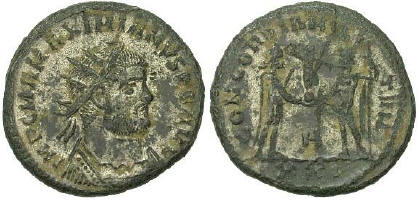 Silvered antoninianus, RIC V 607 corr. (IMP C M A VAL...), VF, 3.876g, 21.3mm, 0o, Cyzicus mint, 293 A.D.; obverse IMP C M A MAXIMIANVS AVG, radiate, draped and cuirassed bust right, from behind; reverse CONCORDIA MILITVM, Maximianus standing right, holding scepter and receiving Victory on globe from Jupiter standing left, holding scepter, H between them, XXI in ex; much silvering remaining. On 1 March 293, Diocletian and Maximian appointed Constantius Chlorus and Galerius as Caesars. This is considered the beginning of the Tetrarchy, known as the Quattuor Principes Mundi ("Four Rulers of the World"). The four Tetrarchs established their capitals close to the Roman frontier: Diocletian at Nicomedia, Maximian at Mediolanum (Milan), Constantius at Augusta Treverorum (Trier), and Galerius at Sirmium (in modern Serbia). Edited by IndianGoldEagle
01/02/2013 2:24 pm
|
|
|
|
Pillar of the Community
United States
2044 Posts |
Nice coin. Coins with silvering remaining are somewhat uncommon.
As a learning experience. I suggest learning how to read those Roman legends. Up to you, of course. I will show a few legends of this coin.
IMP is short for Imperator. Emperor
AVG is short for Augustus
On the reverse is CONCORDIA MILITVM. Concord of the Soliders, Unity of the soldiers, etc.
|
|
Moderator
 United States
23731 Posts |
|
|
Pillar of the Community
United Kingdom
2838 Posts |
Good to see you buying IGE.
The sellers info is, I believe incorrect though - this is not uncommon.
I think your coin is:
RIC V-2 621, Minted Antioch.
not, as the seller stated:
RIC V 607 corr, Minted Cyzicus.
The date of 293 is probably about right, its 'pre-reform' and therefore pre 294AD.
Diocletian reformed the currency at this time and we see a number of changes to the way things are done.
This can be a confusing series of coins to pin down in RIC and most of us on here will have a CONCORDIA MILITVM that we are not 100% happy with its attribution.
|
|
Pillar of the Community
United States
2044 Posts |
Forgot to mention XXI in exergue means 20 (XX) parts bronze to 1 (I) part silver.
|
|
Bedrock of the Community
 United States
37154 Posts |
Thanks guys for the response. Bobby, once the coin is in hand I am going to dig a bit deeper on the attribution. How are the mint marks denoted on these coins?
|
|
Pillar of the Community
United States
2044 Posts |
It's difficult to determine the mints for these coins. The officina workshop letter (H) between the emperor and god can help with attribution. Usually Jupiter with Victory is on these Concordia Militum coins.
|
|
Pillar of the Community
United Kingdom
2838 Posts |
https://goccf.com/t/99550&whichpage...=bust,stylesThis thread discusses a little about the problems fully nailing these coins down. Quote:
How are the mint marks denoted on these coins? As Gil says with this coin its just the workshop mark between the two people, Anitoch produced this in 'Z', 'H', theta and 'I' workshops. At some point in the past when this series was studied it was decided that (without a definitive mark showing the mint) the bust style mostly fitted those known to be coming from Antioch. Perhaps frequency distribution of finds and hoards in the area were also studied to confirm this. Were the writers of RIC correct the assign to Antioch? Probably but these waters can get muddy from time to time 
Edited by bobbyhelmet
01/02/2013 2:13 pm
|
|
Pillar of the Community
Canada
1411 Posts |
Very Nice and Silvered!  |
|
Bedrock of the Community
United States
37154 Posts |
Thanks for the link Bobby, very interesting thread.
|
|
Pillar of the Community
United States
1549 Posts |
Quote:
As Gil says with this coin its just the workshop mark between the two people, Anitoch produced this in 'Z', 'H', theta and 'I' workshops. There is never a theta. The number was unlucky and avoided like the plague until Christianity changed the superstitions and allowed theta coins. http://www.forumancientcoins.com/do...ac73xxi.html Relatively few mints used city letters until after the currency reform but workshop letters were common. One can tell which series a coin belongs to by comparing the styles to coins of other workshops. Antioch always seemed to use more shops than any other mint (ten now but 15 later). |
|
Pillar of the Community
United Kingdom
2838 Posts |
Yes, the ninth officina uses 'EDelta' in place of theta.
|
| |
Replies: 11 / Views: 1,532 |
|







 Posted 01/02/2013 1:28 pm





