| Author |
 Replies: 10 / Views: 1,698 Replies: 10 / Views: 1,698 |
|
|
Pillar of the Community
United Kingdom
946 Posts |
After learning that he was the son of the famous Queen Zenobia,  I had to get a coin of his. http://en.wikipedia.org/wiki/VabalathusVabalathus (Aramaic: Wahb Allat or "gift of the Goddess") As "Consul Rex Imperator Dux Romanorum", 267 - 271 A D Coin: AE Antoninianus Obverse: VABALATHVS V.C.R.IM. D.R., laureate, draped bust of Vabalathus facing to the right. Reverse: IMP C AVRELIANVS AVG, radiate, cuirassed bust of Aurelian facing to the right. Officina letter A below. Weight: 2.60 grams Dimensions: 19.5 x 21.5 x 1 mm Die axis: 320 degrees Mint: Antioch, struck in 271 A D References: R.I.C. V 381, Sear R.C.T.V. 3292 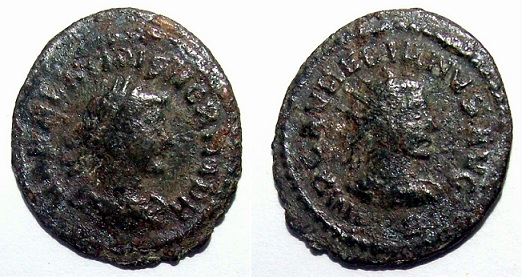 |
|
|
|
Pillar of the Community
United States
4253 Posts |
Very interesting. I didn't know that's what the letters stood for. Thanks for posting it.  |
|
Pillar of the Community
 United Kingdom
946 Posts |
You are welcome Bing!  First I checked out Sear's: "There have been many theories as to the exact meaning of the letters VCRIMDR in the obverse legend..."He has it in his reference as " V.C.R.IM.D.R." Seeing the official title Vabalathus had, in the Wiki: " Consul Rex Imperator Dux Romanorum" then " C.R.IM.D.R." would only make sense if it refers to this, the "V" might be his name, Vabalathus, again or...  |
|
Pillar of the Community
United States
2044 Posts |
Very nice coin. I've been wanting one of these but haven't gotten around to it yet.
|
|
Moderator
 United States
23731 Posts |
Nice coin, I also been wanting one of these for some time. Interesting to find out what the letters in the legend mean.
|
|
Pillar of the Community
Canada
1411 Posts |
Cool Coin with a Very Interesting Story!  |
|
Pillar of the Community
United States
5010 Posts |
i don't know if two heads are always better than one, but I know I like that coin...nice pick up masis! |
|
Valued Member
Spain
319 Posts |
I have one of these...is a good coin and better history... Vabalathus (sometimes called Athenodorus) was the son of the ambitious Zenobia. He became joint ruler of Palmyra with his mother following the assassination of Odenathus. Gallienus refused to grant him the titles which had been conferred upon Odenathus, and Claudius Gothicus maintained the same policy. Nonetheless, neither Gallienus nor Claudius were able to challenge the power of Zenobia in Palmyra. The Emperor Aurelian, however, did grant Vabalathus the titles he sought. The coinage produced between 270 and late 271 AD proudly displayed the portraits of Aurelian and Vabalathis. In 271 AD, Vabalathis was proclaimed Augustus and Aurelian had little choice but to march against the rival Emperor and his mother. In the battle that followed, the Palmyrene Empire fell to Aurelian. Zenobia and Vabalathus were taken as captives to Rome.Vabalathus died on route to Rome. 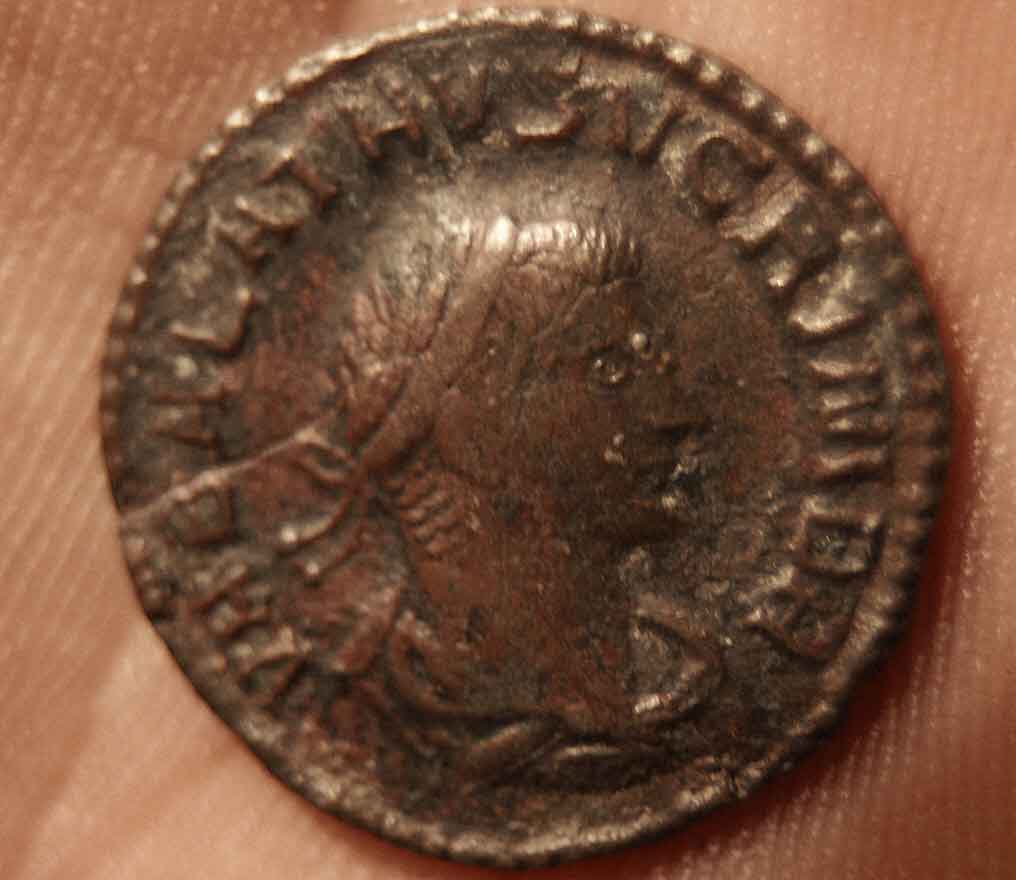 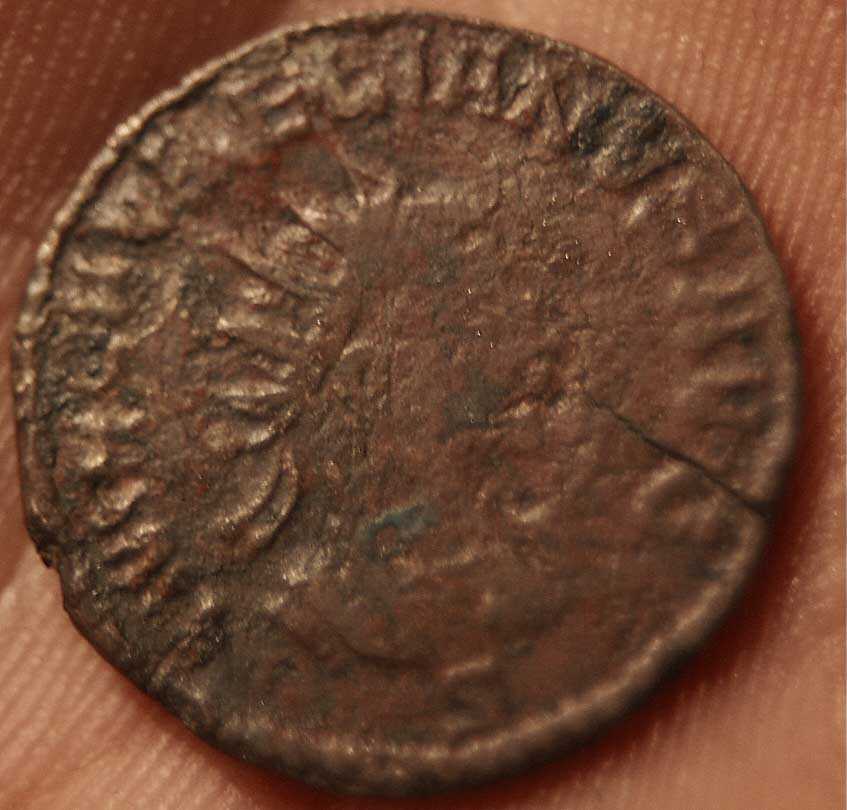 |
|
Pillar of the Community
United Kingdom
946 Posts |
Quote:
better history...
Gallienus refused to grant him the titles which had been conferred upon Odenathus, and Claudius Gothicus maintained the same policy. Whilst it may be better to know about the previous relationships between Vabalathus and the emperors, Gallienus and Claudius II, as collectors of the AE coins of Vabalathus it is useful for us to know the meaning of the obverse legend V.C.R.IM. D.R = Vabalathus Consul Rex Imperator Dux Romanorum. Quote:
In the battle that followed Rather than a single battle, Aurelian attacked the city of Palmyra twice. According to Edward Gibbon (The Decline And Fall Of The Roman Empire, chapter XI, part III): "Returning from the conquest of the East, Aurelian had already crossed the Straits which divided Europe from Asia, when he was provoked by the intelligence that the Palmyrenians had massacred the governor and garrison which he had left among them, and again erected the standard of revolt. Without a moment's deliberation, he once more turned his face towards Syria.
Antioch was alarmed by his rapid approach, and the helpless city of Palmyra felt the irresistible weight of his resentment.
We have a letter of Aurelian himself, in which he acknowledges, that old men, women, children, and peasants, had been involved in that dreadful execution, which should have been confined to armed rebellion; and although his principal concern seems directed to the reestablishment of a temple of the Sun, he discovers some pity for the remnant of the Palmyrenians, to whom he grants the permission of rebuilding and inhabiting their city.
But it is easier to destroy than to restore. The seat of commerce, of arts, and of Zenobia, gradually sunk into an obscure town, a trifling fortress, and at length a miserable village.
The present citizens of Palmyra, consisting of thirty or forty families, have erected their mud cottages within the spacious court of a magnificent temple."Which may be interesting, but Gibbon never mentions Zenobia's son, Vabalathus. Gibbon was a very learned man, yet why does he not seem to be aware of Vabalathus? That is why coins can often be more valuable to historians, than texts. For example, the Gallic emperor, Domitianus II, was thought to be a myth, despite the existance of an AE Antoninianus of his in the Bibliothèque Nationale, Paris. When another Antoninianus of him was found amidst a hoard here in England, did his myth become a reality. http://www.dirtyoldcoins.com/roman/...itian-II.htmAs coin collectors, we can contribute just as much to the understanding of the past as a historian who relies only on books. Edited by Masis
01/20/2013 5:03 pm
|
|
Pillar of the Community
United States
3229 Posts |
|
|
Pillar of the Community
United States
5155 Posts |
Me too I'm sold! Great coins of those "other" guys.
|
| |
Replies: 10 / Views: 1,698 |
|










 Posted 01/19/2013 7:24 pm