That's a neat bunch of notes you've got there, guys!

From the looks of it, it was mostly collected by someone in the 1950's and 1960's on a post-WWII Asian tour of duty in the military, in Japan, Taiwan, Malaya and Vietnam.
There doesn't seem to be anything really valuable there, though they're not totally worthless, either. You's probably have to pay 50¢ or $1 if you were to buy them from a dealer. The Canadian $5 is worth at least $5 in Canada, and the $2 is probably worth at least double face value, even if it isn't a "Devil's Hair" note.
The Military Payment Certificates (known as "MPC"s) are series 641, which were used from 1965 to 1968. Soldiers overseas were paid in this money, rather than ordinary US money or local money.
Your Russian one is from the Russian Revolutionary period, dated 1921, when the country went by the unwieldy name of the Russian Socialist Federated Soviet Republic, often abbreviated to RSFSR. Very few people at the time thought the Communists would actually win, and nobody trusted their "promises to pay" written on their notes - so they suffered from serious inflation. While your note is extremely interesting from a historical perspective, it isn't all that rare or valuable. My catalogue only values it at 50¢ (but it's a very old catalogue! 1986!

)
The brownish-purple one, with Asian writing and a fellow with a forked beard, is Japanese, from the 1950's.
The two "sideways" ones are from China-Taiwan, also from the 1950's - they should have an AD date on the back. The red one is five yuan, the blue is 10 yuan.
The green Vietnamese note is from South Vietnam, issued 1964-1969.
Your Malaya & British Borneo $1 note of 1953 appears to have been written on, presumably by the serviceman's buddies as a souvenir of his tour of duty. Such a "vandalised" note is known as a "short snorter", and can make an otherwise common note more interesting and desirable to militaria collectors. It seems your serviceman went by the nickname "The Yank" - perhaps he was touring mainly with British, Australian or other allied personnel.
Don't say "infinitely" when you mean "very"; otherwise, you'll have no word left when you want to talk about something really infinite. - C. S. Lewis







 The first three are actually US Military script. I wish I had a book on World currency Sorry I believe most are common, also keep in mind that it is hard to see the dates on the photo's and some other details that would tell us what they are one way or another. It is hard to tell But the 2 dollar Canadian note looks like the devils hair variety and if so is worth a little more, also if you can scan or photograph the notes flat so we can see them better that will help I am sorry this can be so complicated but I am sure some one will be able to help you
 Posted 04/16/2007 9:13 pm



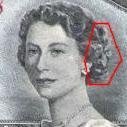 200715742_DevilsFace[1].jpg


