| Author |
 Replies: 17 / Views: 3,262 Replies: 17 / Views: 3,262 |
|
Pillar of the Community
Australia
1041 Posts |
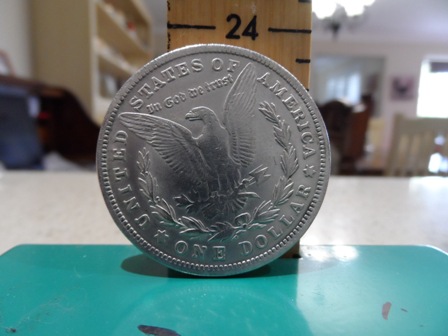
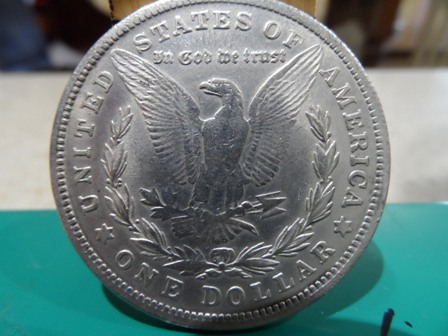
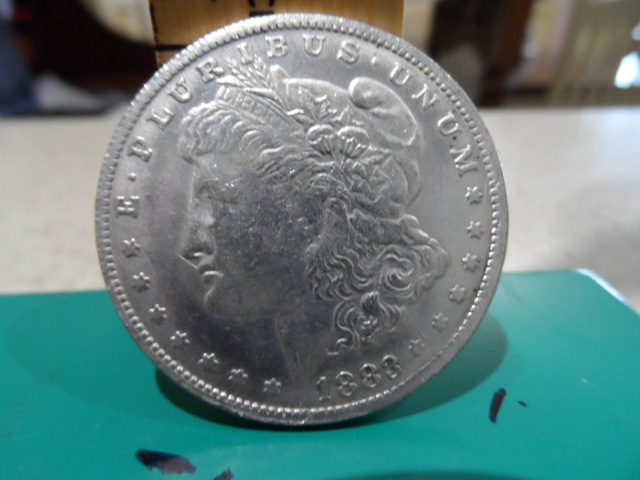
this probly a stupid question I have 2 dollars the 1883 is about 17 grams and the 1921 is about 27 grams and a lot wider and insites on then remember I'm in australia so don have coins to copare and rough grading for me please shane 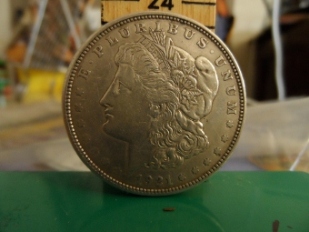 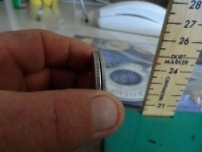 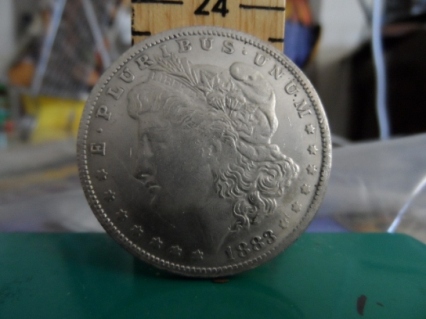 Edited by shanew
02/12/2013 10:00 pm
|
|
|
|
Rest in Peace
United States
10625 Posts |
Your 1883 tips the scale about 10 grams light. I would check to see if a magnet is attracted to it.
|
|
Pillar of the Community
 Australia
1041 Posts |
noagnet sticks to it it silver were are the mint mark I cant see any mint marks on it
|
|
Pillar of the Community
Australia
1041 Posts |
|
|
Pillar of the Community
United States
1796 Posts |
The strike is mushy and the denticles are off in places. 10 grams too light means it's not silver.
That 1883 is a very nice counterfeit. :-)
|
|
Pillar of the Community
Australia
1041 Posts |
|
|
Pillar of the Community
United States
1796 Posts |
Silver plate, maybe.
Or did they do a density test?
|
|
Pillar of the Community
Canada
3692 Posts |
On the fourth post, the eagle doesn't look correct. The coin should not be thinner than others. It doesn't look die-struck, and doesn't have a cartwheel luster.
|
|
Pillar of the Community
Australia
1041 Posts |
90% silver they used a water test well they put it in water what ever that means
|
|
Pillar of the Community
United States
1796 Posts |
Ok, putting it in water to get its volume and then checking the weight is a density test, so whatever it's made of has the same density as silver. If they did a surface test and a ring test to see if it's silver, then ok perhaps it is silver.
This leaves us with 2 possibilities:
1) This is a thin planchet error where the coin was struck on a planchet that was rolled too thin or intended for another coin (as the Philly mint struck coins for other countries, too). This is known to happen but is exceedingly rare.
2) It's a counterfeit, potentially contemporary, purposefully struck on a thinner planchet as that's what they had.
Given the amount of detail on your coin from the pictures, I find #1 very unlikely, unless your coin was once cleaned to within an inch of its life, leaving us with #2.
In any case, we'll need higher resolution pictures (including the reeding again) to get a better idea. The ones you posted aren't quite large enough.
|
|
Pillar of the Community
Australia
1041 Posts |
still trying to get pic larger with out going over 100kb 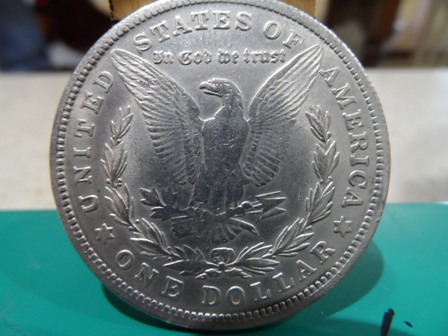 |
|
Pillar of the Community
Australia
1041 Posts |
have a usb camera if you need me to zero in on a area let me know what part you would like to see
|
|
Pillar of the Community
United States
2797 Posts |
Your 1883 is a Chinese Counterfeit. They mistakenly used the 1921 reverse on their earlier knock-offs. Look at the arrow feather configuration in the two examples below and compare to yours. The 1921 Reverse 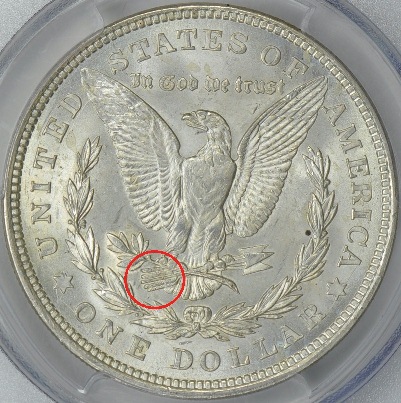 The 1883 Reverse 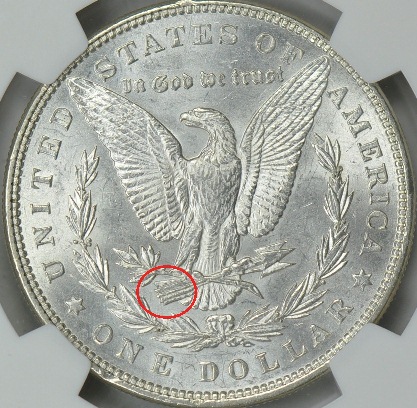 |
|
Pillar of the Community
Australia
1041 Posts |
still dont understand why you would make a forgery out of silver
|
|
Pillar of the Community
United States
1796 Posts |
Happens all the time, and when you short it by 10 grams, and a Morgan sells for $30-35+, there's a large profit margin per piece. Or like the Micro O Morgans ( http://fakes.numismetrica.com/categ...o-o-morgans/ ) , if it's a contemporary counterfeit, it was during the era where there was less than a dollar's worth of silver in a Morgan. It would be like someone taking 20 cents worth of copper and brass and turing it into a Sacagawea dollar. |
|
Pillar of the Community
Australia
1041 Posts |
one more question I have a 1921 d
now above the mint mark D above that there is a bow or a reath on the bow or reath on the left hand side in a letter m or a 3 can you tell me what is that for
shane
|
| |
Replies: 17 / Views: 3,262 |







 Posted 02/12/2013 9:17 pm