









 Posted 03/02/2013 08:42 am


Good eyes. Collar clashes are actually very common. I see them allot on dimes and halves.
Also I think the double rim you are referring to is not what is called a "railroad rim". A railroad rim is when The collar does not come completely up around the edge of the coin to form the reeded edge. So the result is the error known as a partial collar strike. In the casse of a dime, when the 2 dies strike the coin the planchet is pushed out on the sides into the ring shaped collar forming the reeding. If the collar is only partially raised up around the coin then the planchet will have 2 stepped diameters. A smaller diameter with reeding and a larger diameter without reeding where the planchet pushed out over the collar. The nickname railroad rim was given to this many years ago because if you look at the coin from it's side the 2 different diameters look like a railroad wheel. The term is misleading because it actually refers to the edge of the coin and not the rim of the coin.
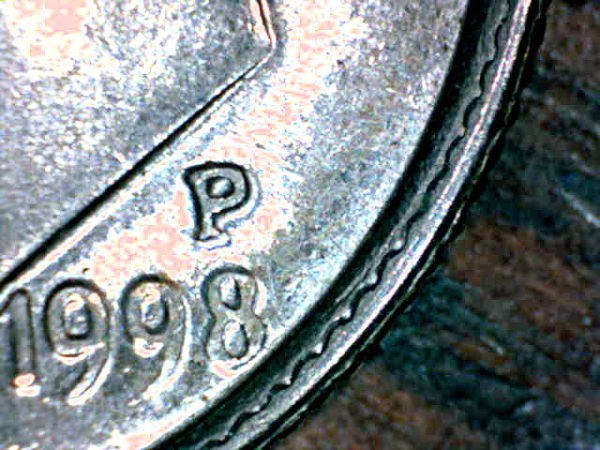
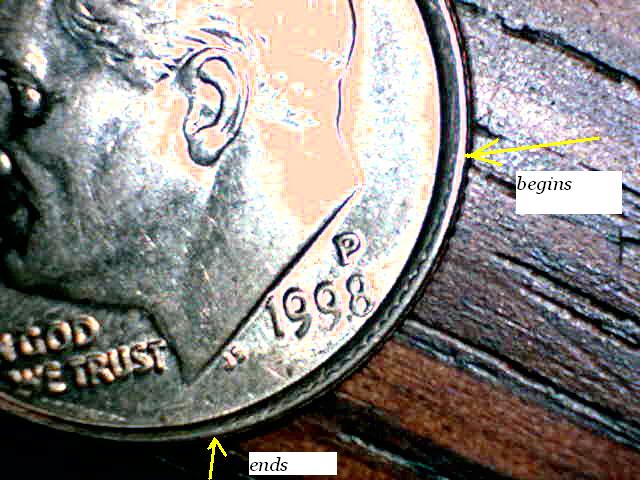
The effect I think you are referring to with the double rim is caused by the planchet flowing up between the die and the collar when the coin is struck. It can be caused by many things including a planchet that is not perfectly parallel so the striking pressure is stronger on one side or the die faces are not perfectly parrallel to each other also causing the striking pressure to be stronger on one side. When the striking pressure is stronger on one side the planchet flows out until it contacts the collar forming the edge then continues to flow. The only place left for the metal to flow is up. The result is the extra little line left by the edge of the die.
I see this nickname and the nickname Cud being misused all the time on ebay. I don't know if that is where you picked it up but be careful absorbing information if you look on ebay. I hope this helps to explain the railroad rim and what causes it.
Also I think the double rim you are referring to is not what is called a "railroad rim". A railroad rim is when The collar does not come completely up around the edge of the coin to form the reeded edge. So the result is the error known as a partial collar strike. In the casse of a dime, when the 2 dies strike the coin the planchet is pushed out on the sides into the ring shaped collar forming the reeding. If the collar is only partially raised up around the coin then the planchet will have 2 stepped diameters. A smaller diameter with reeding and a larger diameter without reeding where the planchet pushed out over the collar. The nickname railroad rim was given to this many years ago because if you look at the coin from it's side the 2 different diameters look like a railroad wheel. The term is misleading because it actually refers to the edge of the coin and not the rim of the coin.
The effect I think you are referring to with the double rim is caused by the planchet flowing up between the die and the collar when the coin is struck. It can be caused by many things including a planchet that is not perfectly parallel so the striking pressure is stronger on one side or the die faces are not perfectly parrallel to each other also causing the striking pressure to be stronger on one side. When the striking pressure is stronger on one side the planchet flows out until it contacts the collar forming the edge then continues to flow. The only place left for the metal to flow is up. The result is the extra little line left by the edge of the die.
I see this nickname and the nickname Cud being misused all the time on ebay. I don't know if that is where you picked it up but be careful absorbing information if you look on ebay. I hope this helps to explain the railroad rim and what causes it.


