| Author |
 Replies: 31 / Views: 5,595 Replies: 31 / Views: 5,595 |
|
|
|
Pillar of the Community
United Kingdom
1601 Posts |
Wire wool and paint stripper buddy........  ONLY KIDDING!! Olive oil is by far the best way to clean certain coins. Lemon juice is ok if you don't mind losing the true patina. Distilled water is very gentle and can take years (not a joke) to give you the affect you want. At the end of the day, if you are keeping the coins then its personal preference. Some oils have a dye in them, as I found to my cost, avoid these as they send the coins almost black. If after soaking in a good natural oil the coin has gone too dark, you need to dry the coin out totally, in the sun is best, and then soak it in ice cold distilled water. You will never soar like an eagle if you hang around with turkeys.....
|
|
Pillar of the Community
United Kingdom
946 Posts |
Quote:
Masis do you dilute the lemon juice at all? I tried straight lemon juice on one of the really poor quality coins I had gotten in an uncleaned lot and within 20 minutes the bronze was showing underneath. My hesitation with Olive oil is I don't want to tone the coin too dark accidentally so I have only been using distilled water so far. I don't really like the look of the really dark coins.-Whizb4ng Hello Dave  I cannot say unless I had the coin in hand to give a proper assessment. Certainly Lemon juice is not going to turn the coin into dust or goop, from what you state, if the bronze shows under the grime, perhaps this helps. If the soak in Distilled water did not reveal the bronze as the Lemon juice did, then this seems a better way. Go easy, short soak, then gentle with a Cotton-Bud (Q-Tip). Again, not seeing the actual coin, this is all I can recommend at the moment. Quote:
Lemon juice is ok if you don't mind losing the true patina.-MetDet71 Of course, if the coins patina is flakey, it best to leave it well alone, any acidic clean, olive oil or citric, will strip all that flakey patina off to leave a "shiny slug", which we often see such "casualties" for sale on ebay as well. If a coin is legible, there is no need at all to clean it. Seems obvious, but perhaps needs to be stated. But if it has crud on it, it cannot "loose its true patina" since it never had the crud on it when it was struck thousands of years ago in the Mint. Edited by Masis
03/12/2013 5:07 pm
|
|
Pillar of the Community
United Kingdom
2624 Posts |
I do agree with your "smoke and mirrors" assessment of the advice given on cleaning... it is true that some people are very anal about the process while others are just wreckless... its about finding a balance between and getting the coins clean and not damaging them.
For me the time taken is not the issue so I think I would stick to DW/olive oil and only use stronger substances in hard cases.
I take onboard your defense of lemon juice and couldn't claim I have had any negative effects from it (because I never tried it) but I was merely restating what I have been told about it in the past.
|
|
Pillar of the Community
United Kingdom
1601 Posts |
Here you go Chesterb... Coin 1... cleaned in lemon juice. Took just under 2 minutes total, that includes taking it out and giving it the toothbrush every 10 seconds... 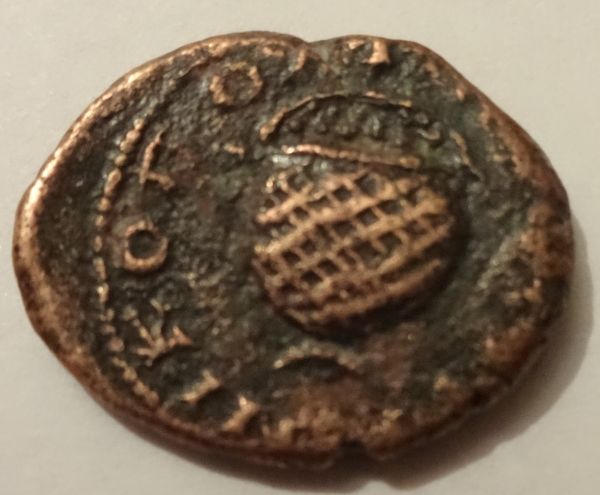 and coin 2... cleaned in olive oil, Took 2 weeks.... 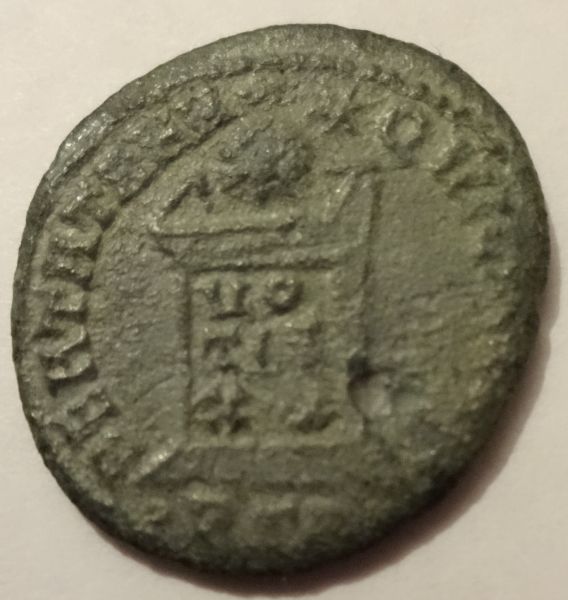 The difference is obvious. Now you just choose which result you want! On a side note, can someone tell me what that is on coin number 1? Both coins where from the same dig, same day, same soil & are both the same material. Both covered in loads of 'crud' Hope this helps you buddy.  You will never soar like an eagle if you hang around with turkeys.....
|
|
Pillar of the Community
Canada
805 Posts |
I'm fairly new to cleaning but just wanted to say something about the lemon juice... I tried it on a crusty slug with no real detail showing. I saw a bit of a dimple and figured I would try the lemon juice. Well, the lemon juice cleaned the slug down to bare metal but also exposed a nice mint mark. I won't use lemon juice again.
I've tried hydrogen peroxide lately for short soaks and it seems to work fine. It bubbles and fizzes away at the organic matter and loosens it quicker, but I wouldn't leave it for too long. It does seem though, that once the "power" of the peroxide is used up, it doesn't do anything else until replaced.
Does anyone else have any experience with peroxide?
Steve
|
|
Pillar of the Community
Canada
579 Posts |
Yeah, I figured it would be case by case use of lemon juice. I will probably experiment with some slugs more later. Last time I used juice and toothbrush I will have to test out the QTip thanks for the tip.
There is one coin I have that I believe is a candidate for olive oil for two reasons. There is a section of crud that just isn't moving after a month in distilled water and it is a very bright patina that isn't very attractive. I think a slight darkening would really make the bust pop out.
I am still learning everything but it is getting easier in some aspects. I move in 2 weeks to a new apartment. That is when the real fun begins.
|
|
Pillar of the Community
United Kingdom
1601 Posts |
The lemon juice is quite a good method when you have a really scuzzy coin, the trouble is when people start adding salt and other stuff. Never tried the bleaching method, does it not take the patina straight off?
You will never soar like an eagle if you hang around with turkeys.....
|
|
Pillar of the Community
United Kingdom
4208 Posts |
MetDet - that looks provincial! A Great coin.Looks almost like a pineapple, but its probably a basket. We would need the other side to ID it.
|
|
Pillar of the Community
United Kingdom
1601 Posts |
That would be nice. Here is the obverse 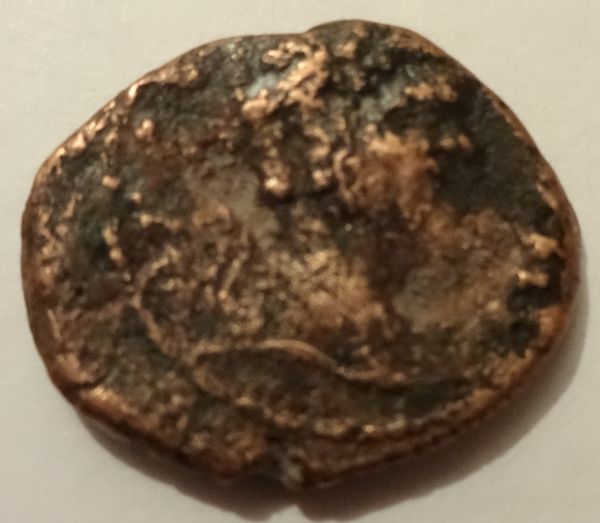 sorry about the pictures, having to use my phone for now. You will never soar like an eagle if you hang around with turkeys.....
|
|
Pillar of the Community
United Kingdom
4208 Posts |
First thoughts were Nicopolis - Basket of fruit reverse. Ill go check that out.
|
|
Pillar of the Community
United States
567 Posts |
I've baan having great luck lately with a brass brush. I use it to scrape off the crusties. Only had one fail so far, a fallen horseman which the patina came right off for some reason (but I still like the shininess). Usually with some care a brass brush will do the trick, follow up with a wash, bake and wax and you're there. The brass bristles are softer than the bronze of those marevedis.
|
|
Pillar of the Community
United Kingdom
2624 Posts |
Some of the pro's use a dentist drill with a brass brush head... rather than use it end on (which can damage the coin) they just tickle the coin with the spinning edge of the head and very light pressure so the bristles just flick across the surface... it removes the dirt and gives silver a shine.
Again though a technique to be really careful with so they claim.
|
|
Pillar of the Community
 United States
1261 Posts |
Thank you everyone for your great input. Since I'm a newbie at this and I have time I think I'll go slow with this process.
|
|
Pillar of the Community
United States
3499 Posts |
Coin #1 looks like it says Nikopolis. Possibly Septimius Severus
Edited by FVRIVS RVFVS
03/13/2013 12:54 pm
|
|
Pillar of the Community
United States
3499 Posts |
Found it in wildwinds .....
Septimius Severus, AE18 of Nicopolis ad Istrum, Moesia Inferior, 3.5g. AV K L [C CEVHPO]C, laureate head right / NIKOPO[LI PROC IC]TR, basket of fruit. Varbanov 2401.
|
| |
Replies: 31 / Views: 5,595 |





 First Page


 Posted 03/12/2013 4:57 pm


