Coin Community Family of Web Sites Join Thousands of Coin, Bullion, & Money Collectors
Royal Estate Auctions - $1 Coin AuctionsJoin Thousands of Coin, Bullion, & Money Collectors Coin, Banknote and Medal Collectors's Online Mall Vancouvers #1 Coin and Paper Money Dealer 300,000 items to help build your collection! Royal Canadian Mint products, Canadian, Polish, American, and world coins and banknotes. Specializing in Modern Numismatics


Username:
Password:
Save Password
Forgot your Password?


This page may contain links that result in small commissions to keep this free site up and running.

Welcome Guest! Registering and/or logging in will remove the anchor (bottom) ads. It's Free!

Question About Ancients And Cleaning

To participate in the forum you must log in or register.
Author Previous TopicReplies: 31 / Views: 5,524Next Topic
Page: of 3
Pillar of the Community
chesterb's Avatar
United States
1261 Posts
 Posted 03/10/2013  8:26 pm Show Profile   Bookmark this topic Add chesterb to your friends list Get a Link to this Message Number of Subscribers
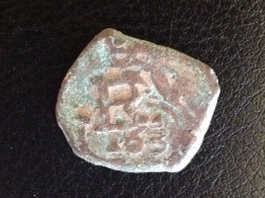
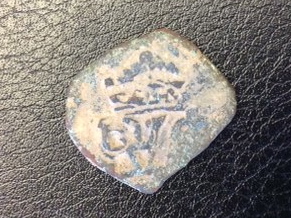
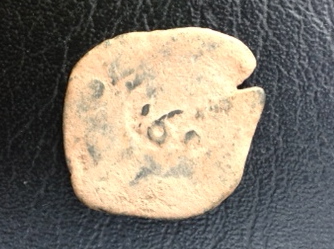
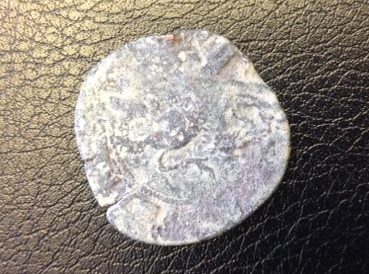
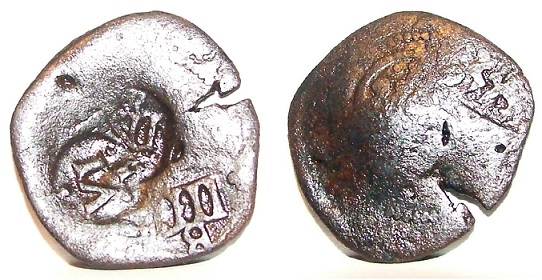
I normally hang out in the Classic US section on CCF but my family and I visited the DiscoverSea Shipwreck Museum in Delaware and picked up some neat coins that were found from a wreck. The guy there gave us a booklet on how to clean them but, being an avid coin collector, that has always been a dirty word in my book. Anyway, he recommended electrolysis. Before jumping into this, I thought I'd get all of your recommendations. Is it acceptable to clean these types of coins and what methods do you recommend? Here's the coins below. Any idea what they are or from when?

Here is coin #1:

Question-About-Ancients-And-Cleaning

Question-About-Ancients-And-Cleaning

Coin #2:

Question-About-Ancients-And-Cleaning

Coin #3:

Question-About-Ancients-And-Cleaning
Pillar of the Community
DavidUK's Avatar
United Kingdom
2624 Posts
 Posted 03/10/2013  8:49 pm  Show Profile   Bookmark this reply Add DavidUK to your friends list Get a Link to this Reply
Electrolysis is most peoples last resort after first trying distilled water (slowest but best way) or olive oil (slightly faster but still very gentle)

There are guides online, but Chrsmat is our resident pro when it comes to clean ups!
Pillar of the Community
Tim Stroud's Avatar
United States
2661 Posts
 Posted 03/10/2013  9:07 pm  Show Profile   Bookmark this reply Add Tim Stroud to your friends list Get a Link to this Reply
Lots of patience and olive oil!
Pillar of the Community
chesterb's Avatar
United States
1261 Posts
 Posted 03/10/2013  9:21 pm  Show Profile   Bookmark this reply Add chesterb to your friends list Get a Link to this Reply
Do they just soak in olive oil and, if so, how long?
Pillar of the Community
DavidUK's Avatar
United Kingdom
2624 Posts
 Posted 03/10/2013  9:47 pm  Show Profile   Bookmark this reply Add DavidUK to your friends list Get a Link to this Reply
2-3 days at a time, then remove and brush with a toothbrush or agitate the dirt with a toothpick, rinse and repeat as long as necessary.
Pillar of the Community
chrsmat71's Avatar
United States
4981 Posts
 Posted 03/10/2013  10:44 pm  Show Profile   Bookmark this reply Add chrsmat71 to your friends list Get a Link to this Reply
chesterb,
i'd just try distilled water first, but you can jump straight to olive oil....whatever you want to do, it will work. I just like to start with distilled water because it is less messy. here's what i'd do...


pre-scrub: water, drop of dish soap, soak and hour...toothbrush 'em and dig at dirt a little with a took pick just ot get the loose stuff off.

stick 'em in DISTILLED water for several days to a week (or more even), get 'em out....pick and brush.

is there crud in the water? change water

no crud? stick the coins back in....wash rinse and repeat until you are happy.

when you done, dry them (direct sunlight, hair dryer, whatever...i stick them in the oven for 20 minutes on 190 F.


as you get handy with the toothpick, you may want to switch to a needle or something metal...but carefull!...more likely to scratch teh coin (I've done it several times).

got a really crusty chunk that wont yeild? then I stick it in olive oil and just forget about for a couple months...then start creackin' again...don't know how much this works, just started doing it

good luck and keep us posted!


note: check out this thread for benbyfields direction for cleaning, he does a bunch of coin cleaing...more then me.

https://goccf.com/t/144426
Edited by chrsmat71
03/10/2013 11:01 pm
Pillar of the Community
chesterb's Avatar
United States
1261 Posts
 Posted 03/11/2013  10:01 am  Show Profile   Bookmark this reply Add chesterb to your friends list Get a Link to this Reply
Thank you everyone for your responses. I have a follow-up question on your recommended cleaning process. I was wondering why electrolysis is considered a last resort (keep in mind I know nothing about what it is doing to the coin, chemically or mechanically)? The toothpick or toothbrush seems like a harsh cleaning but, then again, I am not an expert with these coins.
Pillar of the Community
DavidUK's Avatar
United Kingdom
2624 Posts
 Posted 03/11/2013  11:18 am  Show Profile   Bookmark this reply Add DavidUK to your friends list Get a Link to this Reply
While "zapping" a coin can have good results it is a much riskier process.

A toothbrush is much softer than a coin and not likely to damage it, and the use of a toothpick on the dirt again is unlikely to damage a coin which is underneath that dirt (even using scalpels and pins can be OK if you know how to use them...making small circles at an acute angle and pushing the dirt away without applying any pressure to the coin itself) after these mechanical processes the patina should remain intact whereas with electrolysis I believe it's possible to strip the entire patina off the coin before you realise it; not that I ever tried it myself.


Moderator
Learn More...
echizento's Avatar
United States
23731 Posts
 Posted 03/11/2013  11:35 am  Show Profile   Bookmark this reply Add echizento to your friends list Get a Link to this Reply
Other than coin #2 they look pretty cleaned. For these a soft toothbrush and some warm water with mild diswashing soap should remove what little dirt that's left. On coin #2 a soaking in either distilled water or olive oil will work very well. I prefer olive oil over distilled water, I've had much better result from using that.
Pillar of the Community
Bacchus2's Avatar
United Kingdom
2896 Posts
 Posted 03/11/2013  11:54 am  Show Profile   Bookmark this reply Add Bacchus2 to your friends list Get a Link to this Reply
I don't really have the patience or skill to clean ancients - but I've often wondered why olive oil gets such a good press. Basicially it's used to penetrate the encrusted coin and remove the dirt. So why not just use a penetrating oil? It's less likely to need changed as often (won't go off) and it should do exactly what you want it to.

Happy for someone to chip in and tell me why olive oil is better though.
Moderator
Learn More...
echizento's Avatar
United States
23731 Posts
 Posted 03/11/2013  12:13 pm  Show Profile   Bookmark this reply Add echizento to your friends list Get a Link to this Reply
I'm not a chemist but from what I have heard Penetrating oil has chemicals and acids that will remove the patina on a coin. While olive oil which is natural does not have those chemicals and will not remove the patina. It does however have a tendency to darken the patina.
Pillar of the Community
Masis's Avatar
United Kingdom
946 Posts
 Posted 03/11/2013  12:39 pm  Show Profile   Bookmark this reply Add Masis to your friends list Get a Link to this Reply
Electrolysis is totally unnecessary to clean these Spanish Colonial Cobs.
They seem to date from the 17th Century.

A soak in Lemon juice will clean these well and good, and unlike Electrolysis, will not destroy them.

Below is a photo of a Cob I got two years ago, cleaned up the same way.

Question-About-Ancients-And-Cleaning
Edited by Masis
03/11/2013 12:50 pm
Pillar of the Community
Ben's Avatar
United Kingdom
4208 Posts
 Posted 03/11/2013  1:52 pm  Show Profile   Bookmark this reply Add Ben to your friends list Get a Link to this Reply
Olive oil is only slightly acidic - other oils contain all sorts of crazy chemicals which mess about with the coin.

The slight acidity is what darkens the patina and is also what loosens the dirt, I am lead to believe.

Personally, my first coin was cleaned entirely using a steel sewing needle and it cam out alright. Takes a bit of practice and I recommend pre blunting some needles.

Oh - and I may do more, but I'm not nearly patient enough and I have ruined coins in the past with foolish actions...These things have sat underground 2000 years, they can sit in olive oil a few more.
Pillar of the Community
DavidUK's Avatar
United Kingdom
2624 Posts
 Posted 03/11/2013  7:51 pm  Show Profile   Bookmark this reply Add DavidUK to your friends list Get a Link to this Reply
Lemon juice is like olive oil x 100.

It is basically a much stronger acid and isn't generally recommended (those without patience will use it but it is easier to do damage since its much stronger)
Pillar of the Community
Masis's Avatar
United Kingdom
946 Posts
 Posted 03/12/2013  4:15 pm  Show Profile   Bookmark this reply Add Masis to your friends list Get a Link to this Reply

Quote:
(those without patience will use it but it is easier to do damage since its much stronger)


The coins chesterb has shown are all 17th century Cobs.
These are not ancient coins, not even Medieval.
Their patina is unlikely to be delicate.

A soak for months in Olive Oil is fine if he is happy to wait that time.
If he would like to see more details some time this month, a clean with Lemon juice will not harm these, it did not "damage" mine.

It is not the same as Hydrochloric Acid or a synthetic cleaner.

In my case, this was purchased from Rasiel Suarez as an "uncleaned Byzantine trachy".
On cleaning it with Lemon juice, over a few days, it became apparent it was not Byzantine, but a Spanish Colonial Cob.
On sending the photo of it cleaned to Rasiel, he very kindly sent me a replacement, a real Trachy. Between the original purchase and receiving the replacement was less than two weeks (remember this is shipping to the UK)
He is great.

If I had plonked the coin into a jar of olive oil and put it away in a dark corner, I may well have forgotten about it.

These coins were never "High End" when issued, in my example it was overstruck a number of times.
Of course the real value is in their unique historical aspect, the colonial era of the Americas.

I recall over on another Forum, last June, a person asked if Lemon juice was suitable to use to clean coins, and all they got in reply was that "it is nice in cocktails".
I find that a lot of "Smoke & Mirrors" is given out by "experts" to beginners and such basic things as safe ways to clean coins seems to be deemed a "trade secret".

I stopped using Olive oil years ago to clean coins as I find it in itself can be corrosive, the oils seeping into the pores of the coin and continuine to corrode when the surface of the coin "seems clean of oil".

When I have sees Lots of AE Roman coins on ebay, that have obviously been cleaned by Olive Oil, I find it hard to make out the details. The coin is darkened and it seems the features get softened.

Also I find the way it darkens the tone of a coin to be irreversible, whilst when I had used Lemon juice to clean low grade AE Roman coins, after their initial "bright shine" they returned to their "original" tone after a week or so. In other words, the initial "bright" tone was "reversible".

Edited by Masis
03/12/2013 4:44 pm
Pillar of the Community
Canada
579 Posts
 Posted 03/12/2013  4:39 pm  Show Profile   Bookmark this reply Add Whizb4ng to your friends list Get a Link to this Reply
Masis do you dilute the lemon juice at all? I tried straight lemon juice on one of the really poor quality coins I had gotten in an uncleaned lot and within 20 minutes the bronze was showing underneath. My hesitation with Olive oil is I don't want to tone the coin too dark accidentally so I have only been using distilled water so far. I don't really like the look of the really dark coins.
  Previous TopicReplies: 31 / Views: 5,524Next Topic
Page: of 3

To participate in the forum you must log in or register.


Disclaimer: While a tremendous amount of effort goes into ensuring the accuracy of the information contained in this site, Coin Community assumes no liability for errors. Copyright 2005 - 2026 Coin Community Family- all rights reserved worldwide. Use of any images or content on this website without prior written permission of Coin Community or the original lender is strictly prohibited.
Contact Us  |  Advertise Here  |  Privacy Policy / Terms of Use

Coin Community Forum © 2005 - 2026 Coin Community Forums
It took 0.43 seconds to rattle this change. Forums