


Coin Community Family of Web Sites Join Thousands of Coin, Bullion, & Money Collectors
Specializing in Modern Numismatics Coin, Banknote and Medal Collectors's Online Mall Join Thousands of Coin, Bullion, & Money Collectors Royal Canadian Mint products, Canadian, Polish, American, and world coins and banknotes. Vancouvers #1 Coin and Paper Money Dealer Shop for APMEX Bullion on eBay!300,000 items to help build your collection!


Username:
Password:
Save Password
Forgot your Password?


This page may contain links that result in small commissions to keep this free site up and running.

Welcome Guest! Registering and/or logging in will remove the anchor (bottom) ads. It's Free!

Star Dates On Spanish Pesetas

To participate in the forum you must log in or register.
Author Previous TopicReplies: 5 / Views: 6,939Next Topic  
Pillar of the Community
Gwyde's Avatar
Belgium
506 Posts
 Posted 04/29/2013  6:03 pm Show Profile   Bookmark this topic Add Gwyde to your friends list Get a Link to this Message Number of Subscribers
Most spanish peseta coins between 1945 and 1985 have a peculiar date indication. All coins have the date of first mintage. The real year of mintage is hidden in a star and can only be viewed with a looking glass (unless your eye sight is exceptional). Often the star is at the reverse while the large date stamp is at the obverse.

You find an example for a 50 centimos coin first minted in 1949 with the 'star date' 56 on top of following thread.
https://goccf.com/t/139042

Some more star dates:
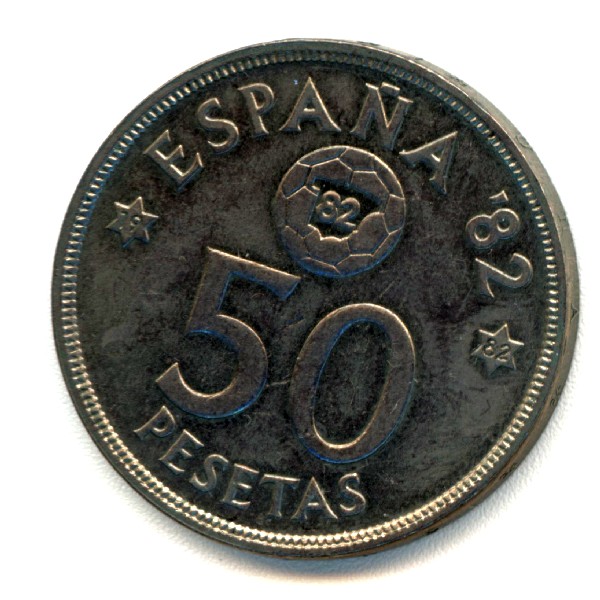
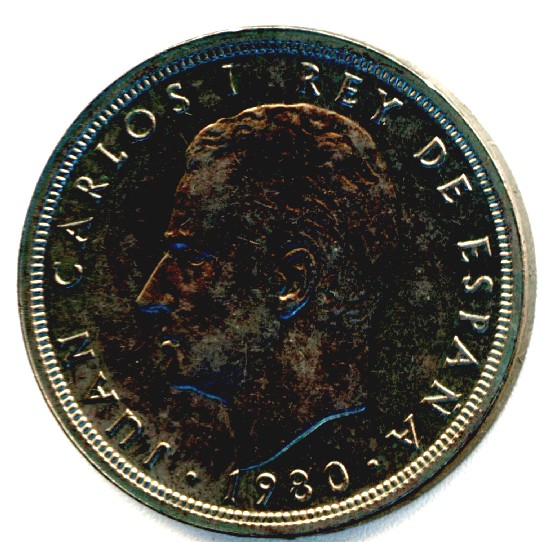
50 Ptas 1980 - Soccer world championship 82.

Reverse: star date 82
Star-Dates-On-Spanish-Pesetas

Obverse: date 1980
Star-Dates-On-Spanish-Pesetas

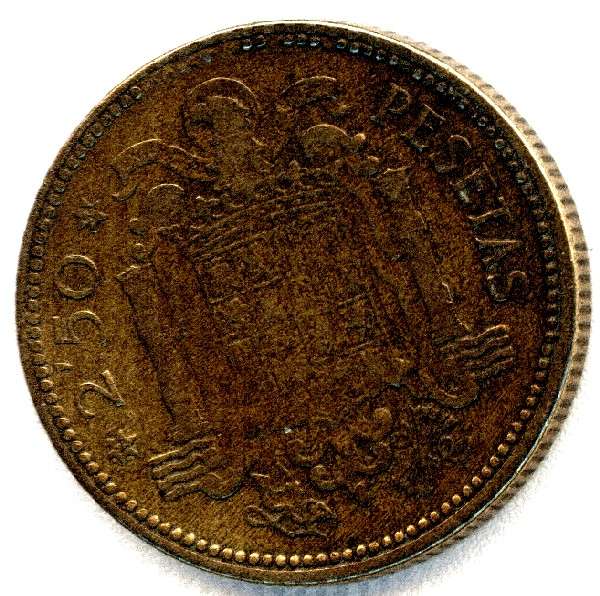
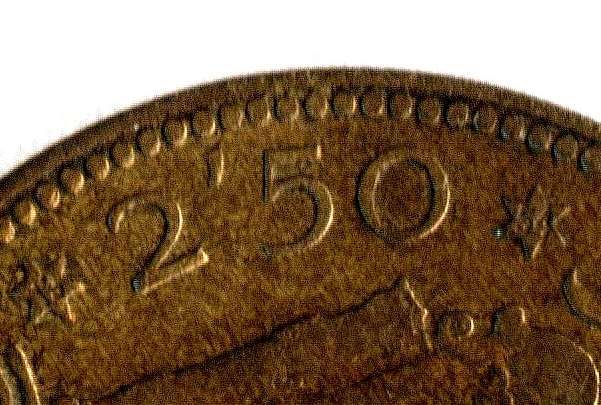
2.50 Pesetas 1953 reverse: Star date 1954 with 19 below and 54 above the value indication.

Star-Dates-On-Spanish-Pesetas

Detail:
Star-Dates-On-Spanish-Pesetas

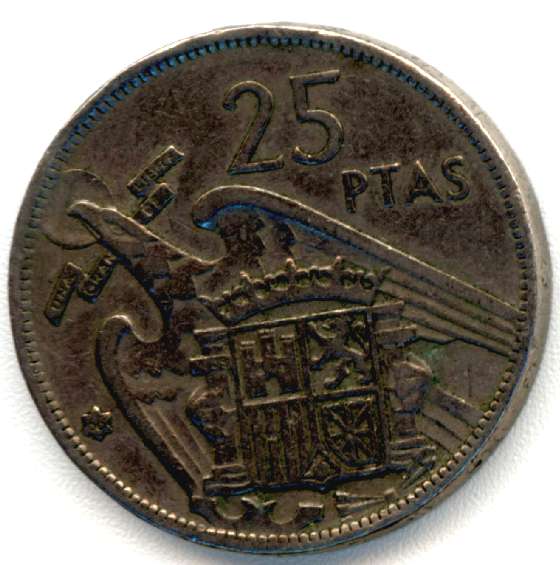
25 Pesetas 1957 reverse: Star date 66

Star-Dates-On-Spanish-Pesetas

Dictators (dictatures) have a tendency of coining official lies: Franco coined 'Una grande libre'. Una (United) by force it was; 'Great' only for the Franquistas and 'free' for none.

It 's a prerogative for Kings and Queens claiming their rule 'by the grace of God', and even then the latin 'Dei Gratia' most often is abbreviated to DG.
Franco however had the audacity to claim the same: "Caudillo de España por la G. de Dios."

For a picture see: http://en.numista.com/catalogue/pho...gne/g191.jpg
Edited by Gwyde
04/29/2013 6:18 pm
Pillar of the Community
fioti's Avatar
United States
4212 Posts
 Posted 04/29/2013  7:02 pm  Show Profile   Bookmark this reply Add fioti to your friends list Get a Link to this Reply
I felt like quite the sleuth when I discovered this. What intrigues me is, there are sellers w/thousands of sales
not indicating the star dates.
Valued Member
United Kingdom
152 Posts
 Posted 04/29/2013  7:33 pm  Show Profile   Bookmark this reply Add numismatic biz to your friends list Get a Link to this Reply
And some star dates are worth $$$

yours

michael

Moderator
Learn More...
Sap's Avatar
Australia
16829 Posts
 Posted 04/30/2013  01:40 am  Show Profile   Bookmark this reply Add Sap to your friends list Get a Link to this Reply

Quote:
All coins have the date of first mintage.

Actually, the "die-date" is either the date when the design was approved, or the date the master die was made. There are some die-dates which do not have a corresponding star-date. For example, the 50 centimo coins die-dated 1949: the earliest star-date is 51.

Quote:
It 's a prerogative for Kings and Queens claiming their rule 'by the grace of God', and even then the latin 'Dei Gratia' most often is abbreviated to DG.
Franco however had the audacity to claim the same: "Caudillo de España por la G. de Dios."

Franco inserted himself into pseudo-royalty by declaring Spain a Monarchy in 1947 and becoming Regent. There were several rival claimants to the Spanish throne, however, and Franco kept their supporters all in line by formally backing none of them. It wasn't until 1969 that he finally declared which claimant to the throne he was acting as Regent for. His choice of Juan Carlos I surprised and disappointed most of the monarchists within the Falange.
Don't say "infinitely" when you mean "very"; otherwise, you'll have no word left when you want to talk about something really infinite. - C. S. Lewis
Pillar of the Community
Gwyde's Avatar
Belgium
506 Posts
 Posted 04/30/2013  07:58 am  Show Profile   Bookmark this reply Add Gwyde to your friends list Get a Link to this Reply

Quote:
Actually, the "die-date" is either the date when the design was approved, or the date the master die was made. There are some die-dates which do not have a corresponding star-date. For example, the 50 centimo coins die-dated 1949: the earliest star-date is 51.


Right, the 2.50 peseta coin shown is another example. The 1954 star date was the first mintage year for this coin dated 1953.
New Member
LlacerSBD's Avatar
Spain
40 Posts
 Posted 04/30/2013  3:14 pm  Show Profile   Bookmark this reply Add LlacerSBD to your friends list Get a Link to this Reply
This system of star date begun at 1868 under queen Elizabeth II.
THe important for a coin is not the year of issue. What really important is the law that gave validity to a piece of metal as money (Currency ?), so it has preeminence the date of law.
  Previous TopicReplies: 5 / Views: 6,939Next Topic  

To participate in the forum you must log in or register.


Disclaimer: While a tremendous amount of effort goes into ensuring the accuracy of the information contained in this site, Coin Community assumes no liability for errors. Copyright 2005 - 2026 Coin Community Family- all rights reserved worldwide. Use of any images or content on this website without prior written permission of Coin Community or the original lender is strictly prohibited.
Contact Us  |  Advertise Here  |  Privacy Policy / Terms of Use

Coin Community Forum © 2005 - 2026 Coin Community Forums
It took 0.25 seconds to rattle this change. Forums