Recently I purchased a high grade Justinian I 40 Numis struck in AD 541. The coin in the auction pictures looked great but in hand I recognized a growing evil. Verdigris!! I nearly died. This was active light green powdery oxidation. This would surely be the end of the coin. Untreated this large coin would have gotten smaller and smaller and eventually turned into a flaky, green and indistinguishable piece of worthless metal.
As a chemist by trade and a hardcore ancient coin collector, I felt I understood enough of the process to successfully stop and reverse the process, without damaging the relic.
The coin flaunts a very even chocolate patina and a strong strike. It presents clear and defined fields over a large surface area. A lot of flat area that if damaged would hurt the coins appeal.
I felt as though spot treatment would not be enough considering concentration of the Verdigris along rim edge which covered a solid third of the coin. I have had the coin for a little over a week and have been able to measure the the growth of the Verdigris and it was a rapid growth increasing in surface area approx 20 percent in that time. A rate that I have never seen on any of my coins. I knew I would have to act fast, in order to conserve the relic.
I have several of the popular chemicals at my disposal. I have reagent grade Acetone, deionized water and Xylene at my disposal. So I had several options.None of these seemed appropriate. Water or Acetone would be unreactive in this case and I suspect that the Xylene would or could dissolve unknown organic components of the patina. I needed to preserve patina but I needed something tough acting.
This required some serious thought, at the risk of destroying a 1500 year old historical masterpiece. I used all the research tools available to me, here on the CCF and neighboring CoinTalk. I spoke to a collector friend of mine who is also a physicist, (really). He inspected my coin I explained to him the situation. Immediately he recommended Verdi-gone and Verdi-Care now called Verdi-chem with the ReAct2 sealer additive. It was actually pioneered by a member here.(He may step forward and make comment if he likes.)I thoroughly read his instructions and MSDS and was impressed with his "typical results" page.
In a nutshell I deviated from his instruction in that I did not use a toothpick (provided). I used a galvanized screw to abrade the afflicted areas, using very small light circular motions under magnification. The toothpick did nothing but take some "dust" off. I was very careful not to make contact between the screw and the "good" portions and only with the most deeply affected area, making sure to not touch the patina for fear of damage. I submerged in entire coin in a screw tight glass jar with slight sloshing for 1 hour. I removed the coin and blotted dry with a paper towel, and I applied some of the product to a cotton swab and "worked" the areas gently in a circular motion. I carefully used the screw again and repeated the process, 3 times.
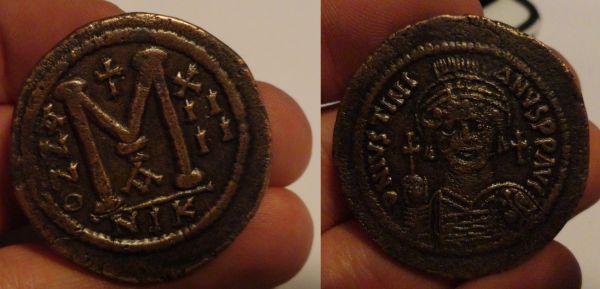
After 3 hours of air drying, I was presented with this handsome piece of Ancient Chocolate.
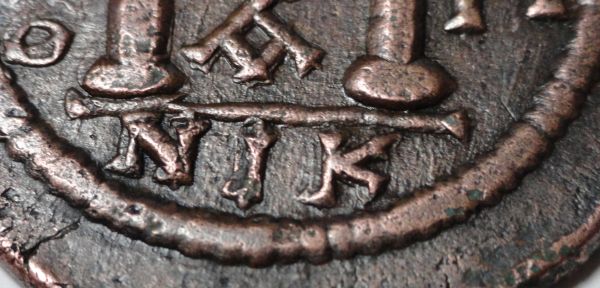
The mint mark - where the "I" was afflicted...
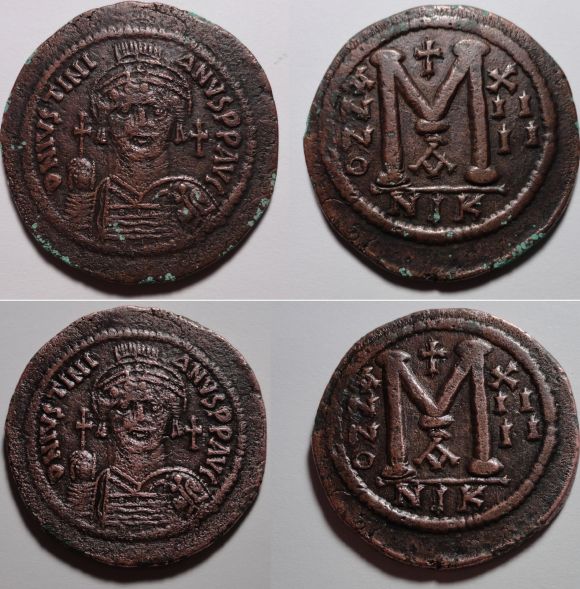
The before and after....the lighting is slightly different, there is no difference in the brightness of the coin.
This is the stuff you need to buy if you have Verdigris you need to get rid of. Soft and gentle on patinas really effective on Verdigris oxidation.
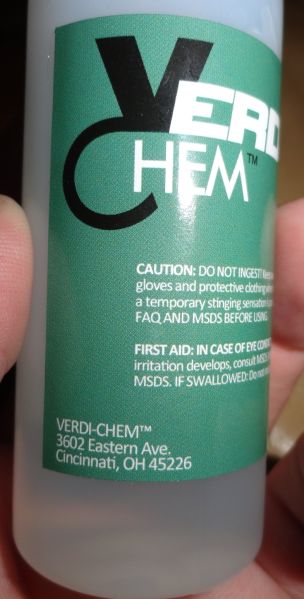
The guy who invented this deserves the Nobel prize.




 Posted 06/19/2013 8:57 pm





