| Author |
 Replies: 12 / Views: 2,327 Replies: 12 / Views: 2,327 |
|
|
Pillar of the Community
Canada
3692 Posts |
Does anyone here have any Electrum coins? Post and share any that you might have.
|
|
|
|
Pillar of the Community
United States
883 Posts |
Not quite the same thing, but I have a Japanese coin of debased gold, 298 fine, balance silver (Tempo-era 2 shu kin). It's a funny little rectangular thing.
|
|
Pillar of the Community
Norway
510 Posts |
This is an electrum coin minted under Alyattes of Lydia, around 2600 years ago: 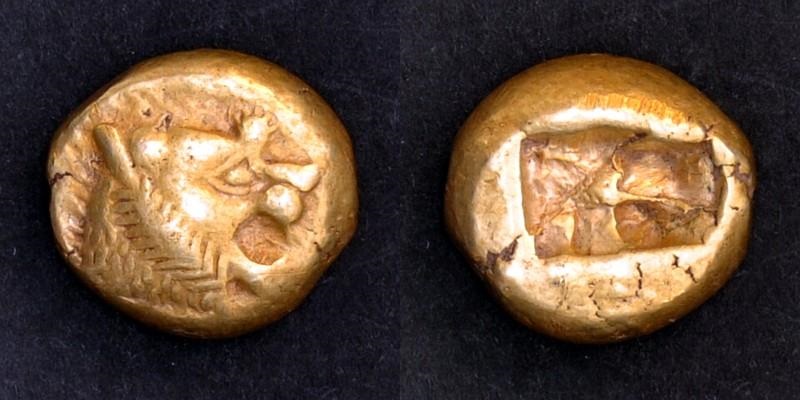 Belongs to my father, not me, but he's not a PC user so I'll show it for him. He's quite proud of it. Edited by Litotes
07/31/2013 12:59 am
|
|
Pillar of the Community
 Canada
9910 Posts |
Nice!Thanks to you your dad for sharing
"Dipping" is not considered cleaning...
-from PCGS website
|
|
Pillar of the Community
Mexico
1304 Posts |
wow, that nis a nice little coin!
|
|
Moderator
 United States
23731 Posts |
|
|
Pillar of the Community
United Kingdom
4208 Posts |
I dont, but I'm trying to get some. Seems like a great way to own a gold coin. Theres a lot listed as electrum (or other names for the alloy) which clearly arent though. Its a difficult field. I'm probing a couple of sellers on Vcoins to see if they are selling gold/silver or silver/bronze. It seems a lot of people use Electrum to mean billon.
|
|
Moderator
Australia
17025 Posts |
While "electrum" does not have a technical definition, the consensus seems to be that the word can be applied to any coin where the gold content is between 20% and 80%, and the primary diluting element is silver rather than copper. On that basis, coins like my Sydney Mint sovereign don't count (diluted with silver but gold content too high - 22k), but coins like my Byzantine hyperpyron of emperor Andronicus II (AD 1295 - 1320, at about 14k gold) do qualify: 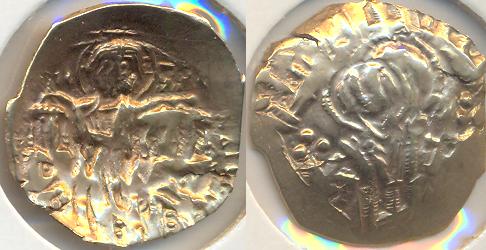 Don't say "infinitely" when you mean "very"; otherwise, you'll have no word left when you want to talk about something really infinite. - C. S. Lewis
|
|
Moderator
United States
197600 Posts |
Quote:
While "electrum" does not have a technical definition, the consensus seems to be that the word can be applied to any coin where the gold content is between 20% and 80%, and the primary diluting element is silver rather than copper. Interesting. I always thought the key was that it was a naturally occurring alloy of gold and silver. However, after referencing several sources, I see that this is not always the case. |
|
Bedrock of the Community
Australia
21794 Posts |
Debased Byzantine pale gold coinage is often referred to as 'electrum'. No doubt that this alloy was carefully controlled, and not naturally occurring.
Sydney Mint Sovereigns and Half Sovereigns 1855 to 1868 were alloyed with 2 carats of silver, not copper.
They look a richer and slightly paler yellow gold, than the 2 carats copper alloyed coins of later dates.
|
|
Pillar of the Community
Canada
2786 Posts |
I'm sure someone will correct me if I'm wrong, but isn't the dictionary definition of electrum "naturally occurring" with 'white gold' or 'green gold' being the man made alloy? regardless, the only electrum I've collected was in EverQuest  |
|
Moderator
Australia
17025 Posts |
If "naturally occurring" is a necessary qualifier for electrum, then no coins have ever been made of electrum. Metallurgical analysis of early Lydian coins reveals alloys fairly consistently around 55% gold; surviving Lydian placer nuggets of electrum, found in Turkey today, fairly consistently come up around 80% gold. Furthermore, as time progresses the gold content falls, to a low of 40%. This is strong circumstantial evidence that even the earliest "electrum" coins were deliberately diluted with silver. Coinage debasement. It's not just a modern problem.  Don't say "infinitely" when you mean "very"; otherwise, you'll have no word left when you want to talk about something really infinite. - C. S. Lewis
|
|
Moderator
United States
197600 Posts |
Nice.  |
| |
Replies: 12 / Views: 2,327 |
|







 Posted 07/31/2013 12:57 am


