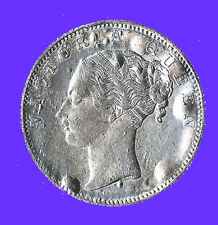
Such "blisters" are often caused by corrosion of the underlying metal. Especially for the more reactive metals: copper, bronze, aluminium zinc and steel. Such coins often form a protective oxide layer that prevents further corrosion; some more modern versions are made from plating an unreactive metal (such as nickel) over a reactive metal (such as steel). Either way, if the layer gets a pinhole flaw in it and the coin is then place din a moist, corrosive environment, the hole lets corrosive elements through the layer and a "bubble" of corrosion forms underneath, lifting up the surface.
The trouble is, in this particular case, I'm pretty sure the coin is supposed to be silver. So either we're looking at a plated fake, or something rather odd has happened to this coin.
Don't say "infinitely" when you mean "very"; otherwise, you'll have no word left when you want to talk about something really infinite. - C. S. Lewis












 Posted 08/16/2013 7:25 pm


