| Author |
 Replies: 15 / Views: 1,435 Replies: 15 / Views: 1,435 |
|
|
Pillar of the Community
United Kingdom
3626 Posts |
It looks rather like septimus severus, no idea of the reverse, opinions? 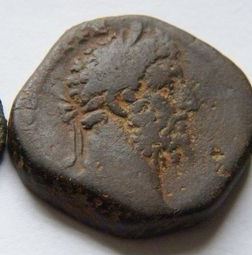 |
|
|
|
Pillar of the Community
United Kingdom
4208 Posts |
Wow, that is nice. I've had a couple square Commodus/Septimius Severus/Verus/Aurelius sesterces. I wouldnt hazard a guess, I'm afraid, but it doesn't look like classic Septiumius to me. Id learn further towards Marcus Aurelius.
Is there a picture of the reverse?
|
|
Pillar of the Community
 United Kingdom
3626 Posts |
No pic of reverse. I asked the seller for one but had no reply. It caught my eye because it looked so different.
|
|
Moderator
 United States
23731 Posts |
Interesting coin these square flan show up from time to time. Any idea what the weight is? It pretty think it could be a double sestertius.
|
|
Pillar of the Community
United Kingdom
4208 Posts |
Well, I depatinated one like this because the patina was falling apart. But I did it teeerrribly. I'm still a bit annoyed that I did that! That was like this - a thick chunky lump of copper. I dont believe it was a double sestertius and I dont believe this is either - no radiate crown. Did they mint double sestertii then? I thought postumus was the only one to try that.
|
|
Pillar of the Community
United Kingdom
2120 Posts |
Marcus Aurelius sestertius. Thick due to small square flan.
|
|
Pillar of the Community
United Kingdom
3626 Posts |
I googled ancient square coins and came up empty. No idea on weight or anything! I dont have a Marcus Aurelius.
|
|
Pillar of the Community
United States
3474 Posts |
Well big AE's are my area of choice. It looks fairly decent but the reverse is every bit as important on these big fellas as the the obverse. But I would bet you a sestertius that it is Commodus. At eleven o'clock I believe it says F E L. Not to be found on coins of Marcus. The portrait also looks too robust to be the older Marcus the philosopher. Commodus enjoyed acting the part of Hercules.
Edited by FVRIVS RVFVS
08/18/2013 6:44 pm
|
|
Pillar of the Community
United Kingdom
4208 Posts |
they must have been using scrap copper or cut sheet instead of poured round planchets. A lot of square shaped coins come from this period.
In other news, I've decided to try this smoothing thing thatd so popular on the continent. I'm fully depatinating the obverse and smoothing out the porousity.
|
|
Bedrock of the Community
Australia
21789 Posts |
There was a period of time during the Severan Dynasty and emperors following, where sestertius flans were cut from a strip of metal that was no wider than the coin. It seems that the strips may have had opposing lobes along their length, and the flans cut between the lobes.
In the case of the coin pictured, it seems that the strip at the point from which this flan was cut was just too narrow.
I surmise that such strips must have been poured rather than cut cold from a larger sheet, and that a constant thickness of strip could be maintained, unlike the Spanish cob pieces.
A lot of the flans of this period in fact exhibit slightly straight edges around the rounded ends of the coin. That suggests to me that the flans had small bits of metal chiselled off them, while the flan was still hot, to adjust them for weight.
I would also reason that the coins would have been struck immediately thereafter, while also still hot, because most of sestertii of this period show scant evidence of flan splitting.
|
|
Pillar of the Community
United States
3474 Posts |
From some of the reading I have done on the subject I have seen where as the time marched on the composition of the sestertius changed dramatically, especially from the time of Severus up till the 'end' under Gallienus. The proportions of copper zinc tin and lead were changed due to the over reliance on recalling the coins of past Emperors and reminting the metal without making the necessary adjustments to the alloy or by blending with enough 'fresh' alloy. Overtime this led to the loss of zinc content through evaporation and a marked rise in lead content. By the Reign of Philip the AE was almost exclusively Bronze rarely if ever yellow 'Orichalcum'. The splitting on the late sestertii is due to the increased brittleness which was building up in the alloy. Incidentally it probably led to the 'new' method of producing the blanks. Soft brass is difficult to cut. I have done it on forging presses and if the tools are not sharp and perfectly positioned the alloy can be like hard bubblegum. A bronze alloy with the brittleness caused by the loss of zinc and build up of other trace metals (tin lead etc.) will break cleanly if struck properly. Think of one as being like a soft oatmeal cookie and the other being like a hard cracker.
The sestertius was definitely a 'prestige' type of issue. We are impressed holding one in hand and I am sure the first person paid with the coin in my hand was equally impressed (maybe more so)But the Romans weren't dopes and if they could have produced the large Orichalcum coinage at a rate of production that was economical they would have done it. Instead they went the way of small sized bronze coinage which they surely banged out at an impressive hourly rate. First they debased the sestertius and then they abruptly stopped making them. They simply couldn't afford to produce it anymore.
Edited by FVRIVS RVFVS
08/18/2013 11:49 pm
|
|
Pillar of the Community
United States
3474 Posts |
Incidentally the recycling of old weapons ie swords lead to a similar type of change in the composition. By re smelting iron repeatedly in a coal fire they produced low grade steel. They could hardly have understood that Carbon was being slowly introduced and probably attributed the durability of the metal to supernatural agents.
|
|
Pillar of the Community
United Kingdom
3626 Posts |
Thanks for all the information guys, I will let you know how I got on.
|
|
Pillar of the Community
United Kingdom
3626 Posts |
I WON!
I hope there is something on the reverse!
|
|
Pillar of the Community
United Kingdom
3626 Posts |
It has arrived. Are we will going with Commodus? Weight 20.54g 4.5mm thick 29mm at widest 22mm at narrowest no legend to read 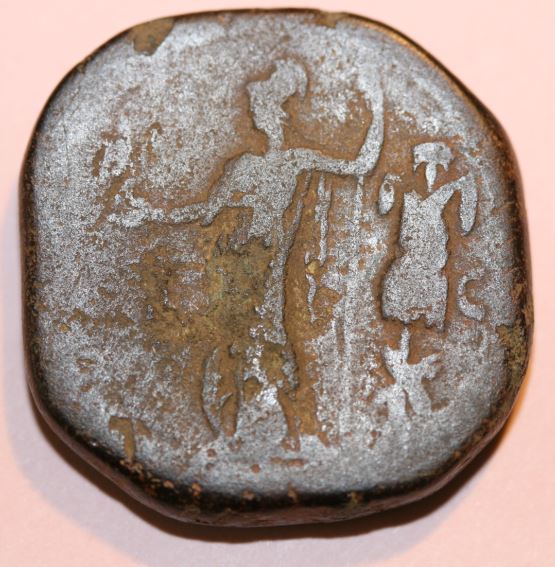 Feels great in the hand. |
|
Pillar of the Community
United Kingdom
3626 Posts |
I think found it on wildwinds COMMODUS. 177-192 AD. Æ Sestertius (29mm, 22.12 gm). Struck 189 AD. Laureate head right /Minerva standing left, holding Victory and reversed spear; shield leaning before against her leg; trophy behind. Cf. RIC III 546 (Dupondius); cf. MIR 18, 786-6/27 (Securitas); Banti 219; Cohen 372. VF, dark brown patina, worn at high points, slightly rough. From the Paul McIlroy Collection. 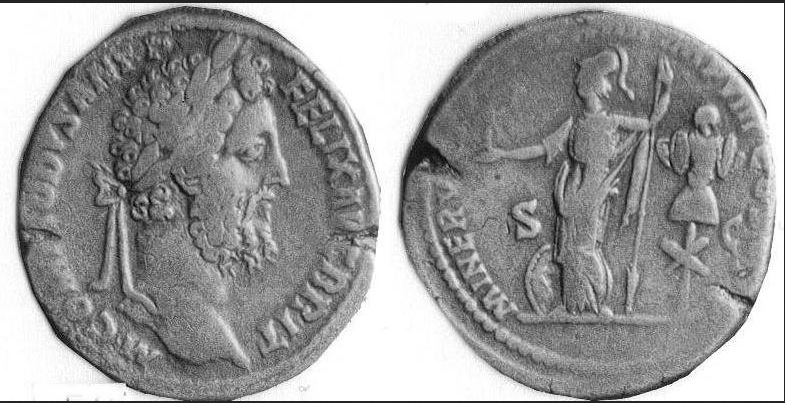 |
| |
Replies: 15 / Views: 1,435 |
|







 Posted 08/18/2013 5:33 pm





