












 Posted 09/24/2013 03:25 am


Hello,
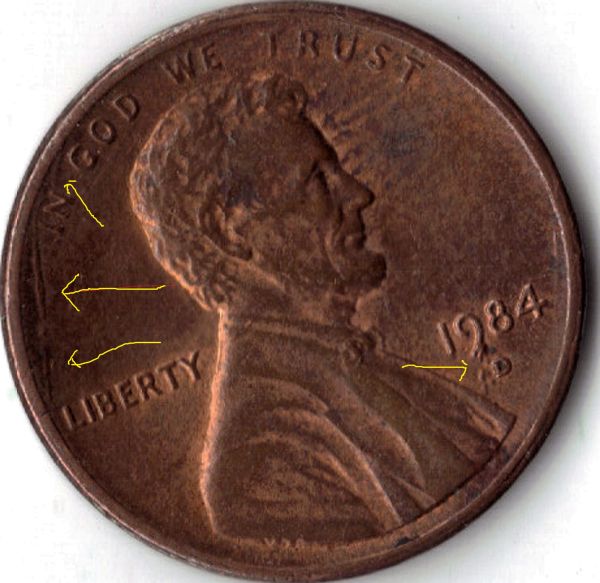
My guess is that you have a die break from 9 to 11 o'clock; this would assume, therefore, that some of the obverse field has been upended resulting in the shown elevated metal line resulting from a failing die.
More than likely this die break initially began as a die crack which evolved or widened into a die break which is the normal transition for this type of characteristic etc.
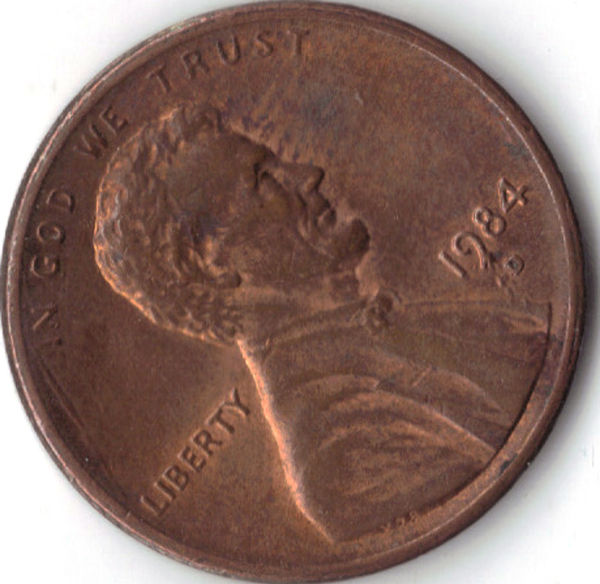
Insofar as the presence of clashing, a picture of the reverse could assist us also to shed some light on the occurrence of this possible phenomenon.
The other area near the date could be a series of ovaloids but I cannot ascertain this without higher magnification.
IMHO,
mdpmedia
My guess is that you have a die break from 9 to 11 o'clock; this would assume, therefore, that some of the obverse field has been upended resulting in the shown elevated metal line resulting from a failing die.
More than likely this die break initially began as a die crack which evolved or widened into a die break which is the normal transition for this type of characteristic etc.
Insofar as the presence of clashing, a picture of the reverse could assist us also to shed some light on the occurrence of this possible phenomenon.
The other area near the date could be a series of ovaloids but I cannot ascertain this without higher magnification.
IMHO,
mdpmedia


