|
This page may contain links that result in small commissions to keep this free site up and running.

Welcome Guest! Registering and/or logging in will remove the anchor (bottom) ads. It's Free!
To participate in the forum you must log in or register. | Author |
 Replies: 9 / Views: 2,814 Replies: 9 / Views: 2,814 |
|
|
New Member
United States
2 Posts |
Hi everyone, I am a new member and have a question about my 1944 Lincoln Wheat cent received back from PCGS. I sent this 1944 Lincoln Wheat cent to PCGS through a local coin dealer and when they called and said the coin was finally back, I was excited to go pick it up. I anticipated the coin to be slabbed as a "Foreign Planchet Cent" but it was not slabbed, and was returned in a flip with the following comments on label: "Counterfiet" "Man-made mint error." Very disappointed and worried that perhaps the coin was rejected out of hand by only one grader, but they assured me that the coin had been studied by at least 3 different graders. I am wondering how a coin can be considered counterfiet, while at the same time, be considered a man-made "mint error." After all, a counterfiet coin would be one produced outside of the mint. More to the point, from my phone conversation, all I could get out of them was that they felt the coin had been mechanically altered. I have a hard time believing that, because the cent is actually thinner than a modern dime and even slightly smaller than the diameter of a dime. How can a cent be mechanically altered to be thinner than dime, without the features being damaged or removed during the process? Does anyone think that there is any chance that this cent is a genuine foreign planchet error, and that perhaps PCGS could be wrong about this coin? I have seen images of foreign planchet cents online and this specimen looks very similar to those I have seen. I am just a casual collector of cents, so maybe PCGS got it right and perhaps I am missing something obvious about the coin...I just want to know for sure. I would greatly appreciate any and all input. Thanks! 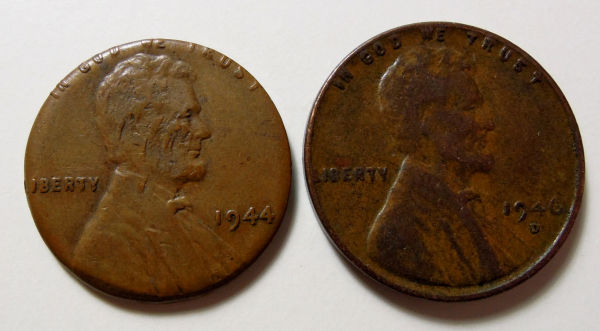 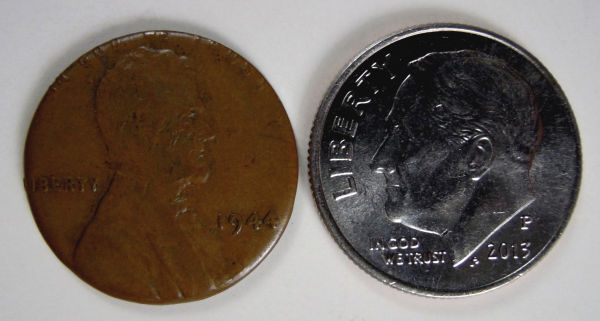 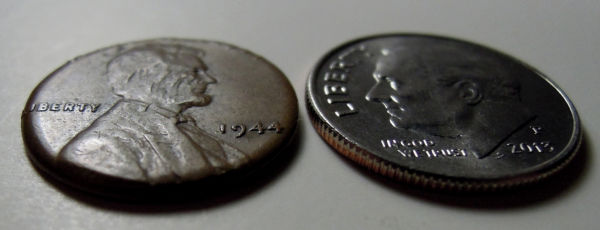 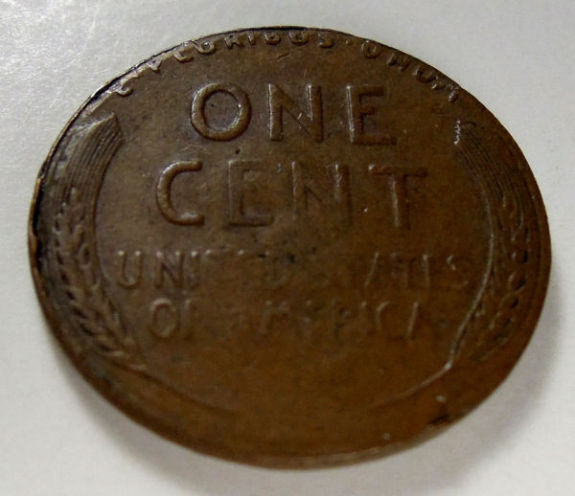  |
|
|
|
Pillar of the Community
 United States
4616 Posts |
If a smaller planchet had been struck, the metal would have expanded to fill the collar. What they are saying is that somebody - could have been a long time ago - spun it on a lathe or similar device to remove enough metal (including the rim) so it could pass as a dime.
-----Burton 50+ year / Life / Emeritus ANA member (joined 12/1/1973) Life member: Numismatics International, CONECA Member: TNA, FtWCC, NETCC, EveryCountry (online) coin club Owned by three cats and a wife of 40+ years (joined 1983) Author: 3rd Edition of the Sample Slabs book, https://www.sampleslabs.info/ |
|
Bedrock of the Community
United States
12437 Posts |
 The rim is the thickest part of a coin. The rim has been completely removed from your coin so it will naturally appear to be thinner than a normal coin. It is too bad that you did not find this forum before you handed a bunch of money to PCGS, there are a number of members here who would have instantly recognized it as an altered/damaged coin and not an error. |
|
Moderator
 United States
16694 Posts |
Definitely an altered coin.
Welcome to the CCF!
swcoin.ecrater.com
|
|
Bedrock of the Community
13014 Posts |
Quote:
How can a cent be mechanically altered to be thinner than dime, without the features being damaged or removed during the process? Like mentioned the rim is missing so you dont get the full size of the coin. If you cut the rim off another penny it would be about the same. You can see in the last picture theyre basically the same size. Also the rounded edges are a good sign that something was done to it. http://www.ebay.com/itm/like/370917505607?lpid=82Theres an example of a bigger coin being struck on a smaller plancet and you can see theres still some rim on it, but even where there isn't its not a rounded edge. http://www.ebay.com/itm/like/161125477461?lpid=82Theres another example too. Look through ebay and other sites though and you can see a decent number examples of coins struck on under sized plancets. |
|
New Member
 United States
2 Posts |
Wow! This must be the absolute best coin forum in the world. 3 helpful and courteous replies within an hour of my post, unbelievable. I am actually delighted to hear that everyone (so far) is in agreement with PCGS, just so I can move on and no longer concern myself with deeper investigation into the coin's authenticity. Of course, I am still disappointed that the coin was altered and not a foreign planchet, but I am so grateful be a new member here and I truly appreciate these helpful replies to my query.
|
|
Moderator
United States
15894 Posts |
Your final photo shows additional clues that support the man-made error finding by PCGS ... Note that the edge of your coin exhibits what appears to be a horizontal line ... this would not appear on coin properly struck within a standard collar. Wish that you could have found us earlier ... would have saved you a few $ for our CCF experts to say the same thing as PCGS. David Take a look at my other hobby ... http://www.jk-dk.art |
|
Moderator
Australia
16985 Posts |
Quote:
...spun it on a lathe or similar device to remove enough metal (including the rim)... A lathe grinding away at the edge would leave the obverse and reverse unaffected. The way the obverse rim has been bent downwards and the reverse rim has been bent upwards implies to me that this once perfectly normal coin was damaged by a ring die, punching through the coin from the obverse direction. The mint does not have ring dies, except in the planchet production facility. There is no way a normal, finished coin can end up under a planchet cutter. Therefore, it must have been done outside the mint. But BStrauss3 is probably correct in the assumption that it was made in an attempt to create a cent that would pass for a dime in vending machines. Don't say "infinitely" when you mean "very"; otherwise, you'll have no word left when you want to talk about something really infinite. - C. S. Lewis
|
|
Rest in Peace
United States
10625 Posts |
To me, it almost looks like it was sent through a punch and die with the obverse face down and the reverse taking the hit by the punch. The details near the rim appear to roll in that direction on the obverse. to CCF by the way! |
|
Pillar of the Community
United States
573 Posts |
There's a story on why someone would do this. Back in the day, a bottle of pop was $.10 from a vending machine. So if you could mill down a cent to the size of a dime, you just saved $.09 on your bottle of pop. That doesn't seem like much to us these days. But in 1944 minimum wage was $.30 an hour, so $.10 was about 20 minutes of labor.
|
| |
Replies: 9 / Views: 2,814 |
|
To participate in the forum you must log in or register.
 
- Help With Identification Please.
- 1969-S Lincoln Cent Machine Doubling Or Double Die Obverse
- 1999 Lincoln Cent - Die Clash
- 1809 Half Cent For Grading
- 1987 - D Lincoln Cent Grade Check
- 1987- D Lhc Possible RPM Or DDO In Date
- You Know What I Want That Final Number To Be
- Bronze Coin To Id. Greek Or Roman?
- A Ridiculously Badly Written Computer Aided Book, Coin Collecting Bible, 2024
- Liberty Head 10/11 Stars Obverse With A Sick Looking Eagle On The Reverse Holed 0.59g 13.06mm
- The Tyrant Collector - PCGS Youtube Interview
- Counterfeit Detection: ANA Video - Introduction, With Brian Silliman And Jim Robinson Ep. 1
- Counterfeit Detection: ANA Video - Mistakes, Risk Factors, And Counterfeits & Alterations, Ep. 2
- Counterfeit Detection: ANA Video - Pimples And Pits, Looking At Cast Counterfeits, Ep. 4
- Counterfeit Detection: ANA Video - What Year Is That Cent? Key Date Coins, Ep. 5
- Counterfeit Detection: ANA Video - Diagnostics Of The 3, 5, And 10 Cent Coins, Ep. 6
- Counterfeit Detection: ANA Video, Counterfeit Quarter Dollar Diagnostics, Ep. 7
- Counterfeit Detection: ANA Video, Counterfeit Classic Commemorative Coins Diagnostics, Ep. 8
- Counterfeit Detection: ANA Video, Counterfeit Silver Dollar Diagnostics, Ep. 9
- Counterfeit Detectection: ANA Video, Classic US Gold Coin Diagnostics, Ep. 10
Disclaimer: While a tremendous amount of effort goes into ensuring the accuracy of the information contained in this site, Coin Community assumes no liability for errors. Copyright 2005 - 2026 Coin Community Family- all rights reserved worldwide. Use of any images or content on this website without prior written permission of Coin Community or the original lender is strictly prohibited.
Contact Us | Advertise Here | Privacy Policy / Terms of Use
|
| Coin Community Forum |
© 2005 - 2026 Coin Community Forums |
| It took 0.3 seconds to rattle this change. |
 |
|
| |
| |







 Posted 10/14/2013 5:36 pm


