OK... took me a while to even formulate the ?...
Say I build the database with lookups for everything (i.e. do a proper job). What I am asking is how do I allow the user to define the coin/series itself, that is to select one value out of all the possible coin/series data when you enter a coin into the database?
The problem is we are potentially selecting among a VAST population of data, every single coin series across the entire world. For example, while Numista lists 11 entries just for Silver US Dollars, their entire world catalog has 44,000+ entries.
I want something that works well for the focused series collector as well as the typeset collector.
I'm not worried about the data itself, for reasons I'll go into elsewhere/elsewhen you would probably get an empty list and have to populate it yourself, so there wouldn't be a lot of noise, but even with an include/exclude flag, the type collector could have 100s of choices, while the focused series collector might just have three choices, call them US, 5c, Buffalo, Type 1 (and Type 2 and Type 3). So for him/her pretty much anything works â€" the use case focuses on the typeset collector with a lot to choose from.
Traditionally you have a few choices of what are called "controls", a single dropdown, a series of related dropdowns (or buttons and dropdowns) or a tree.
A dropdown is the familiar text box + arrow â€" like the "font" selector on the CoinCommunity Topic Reply screen:

.
A tree is the folder selector you see in Microsoft's (File) Explorer:
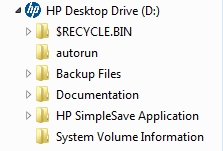
.
The related dropdowns look the same as a row of regular dropdowns (

) but when you make a selection in the 1st item the choices in the second change.
In our case the series of selections would work like this:
- Country (US, CDN, GB, etc.)
- Composition (Sliver, Gold, CN, Nickel, Bronze, etc.)
- Denomination (based on selection US and Nickel, it would offer just the 3c and 5c)
- Series (US; Nickel; 5c; Shield or Liberty or Buffalo or Jefferson)
- Type (US; Nickel; 5c; Shield; Type 2, No Rays (1867-1883))
You can see how each step has a limited # of choices to pick through the vast possible set (the whole Nickel category has 10 choices itself â€" see
http://www.pcgs.com/Prices/PriceGui...il.aspx?c=-8 ), but requires a lot of selections to get to the ultimate choices. Still, as you get familiar, it becomes you tab N tab S tab down-arrow enter.
The tree is the best way to present the data for the untrained user, but usually requires using the mouse.
The 4 or 5 level version borders on nuts (maybe we compress a couple levels â€" gives us more choices at a given level than strictly desirable, but less pick pick pick). Basic human factors design says limit each dropdown to no more than 10 entries, 4 or 5 is better - but doing that requires a more levels, which is itself unwieldy.
So, you typeset people out there which seems easier?
Then the second question is how to order the selections... For example, for US Silver Dollars we could have:
Or this set which works better for selection by keyboard:
- Draped Bust (small eagle) (1795-1798) - US, 1Dollar, Silver, KM# 18
- Draped Bust (Heraldic eagle) (1798-1800)- US, 1Dollar, Silver, KM# 32
- Flowing Hair (1794-1795) - US, 1Dollar, Silver, KM# 17
- Gobrecht (1836) - US, 1Dollar, Silver, KM# 59
- Gobrecht (1836-1838) - US, 1Dollar, Silver, KM# 59a
- Lafayette (1900) - US, 1Dollar, Silver, KM# 118
- Peace (1921-1935) - US, 1Dollar, Silver, KM# 150
- Morgan Dollar (1878-1921) - US, 1Dollar, Silver, KM# 110
- Seated Liberty (1840-1866) - US, 1Dollar, Silver, KM# 71
- Seated Liberty (1866-1873 - US, 1Dollar, Silver, KM# 100
- Trade (1873-1885) - US, 1Dollar, Silver, KM# 108
Which I think I've just argued myself into since you can tab into the field and then do the select based on 1 letter or 1 letter + a down arrow...
Any (other) thoughts?
-----Burton
50+ year / Life / Emeritus
ANA member (joined 12/1/1973)
Life member: Numismatics International, CONECA
Member: TNA, FtWCC, NETCC, EveryCountry (online) coin club
Owned by three cats and a wife of 40+ years (joined 1983)
Author: 3rd Edition of the Sample Slabs book,
https://www.sampleslabs.info/



 First Page


 Posted 10/24/2013 7:09 pm





