| Author |
 Replies: 81 / Views: 12,262 Replies: 81 / Views: 12,262 |
|
|
|
Pillar of the Community
United States
582 Posts |
I'm going to go with the adoptive emperors theme. None of these coins are particularly great in quality, and is a reminder of the many I need to upgrade. In order of succession... Nerva. 96 - 98 AD. Silver Denarius. Rome Mint. 17.14mm, 3.19g. Rx./ Aequitas standing left 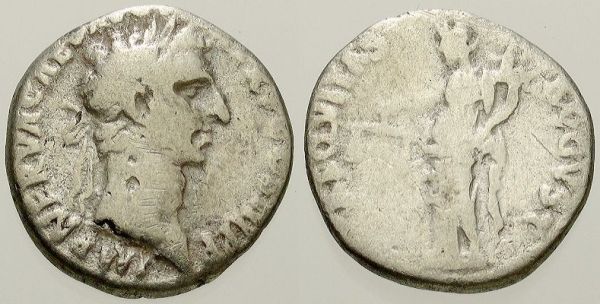 Trajan 114-117 AD. IMP CAES TRAIAN AVG GERM, diademed bust of Hercules right with lion-skin on neck / Boar walking right, SC in exergue, 17mm, 2.35g. 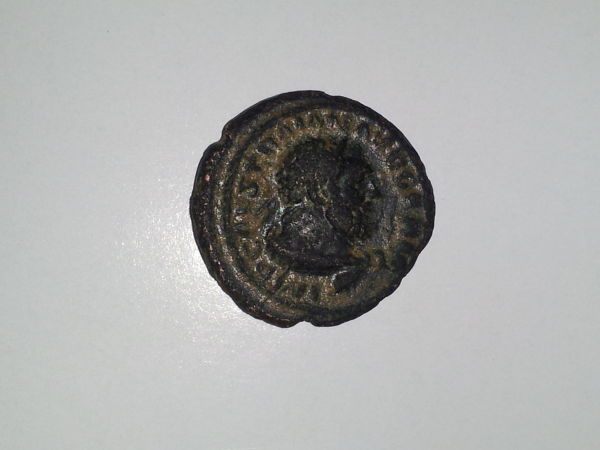 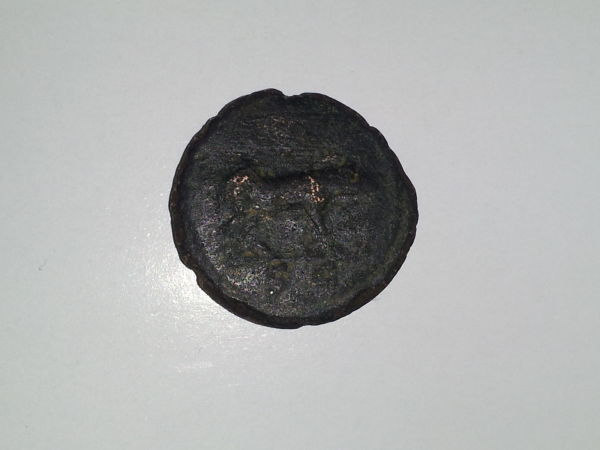 Hadrian 125-128AD. Obverse : HADRIANVS AVGVSTVS / Hadrian laureate bust right Reverse : COS III / Janus holding scepter; SC, 10.4gm 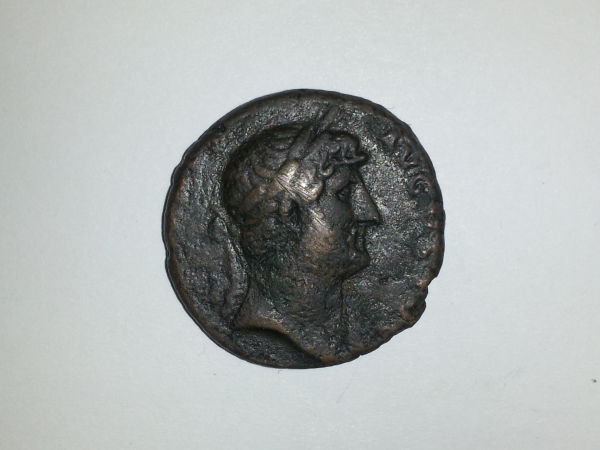 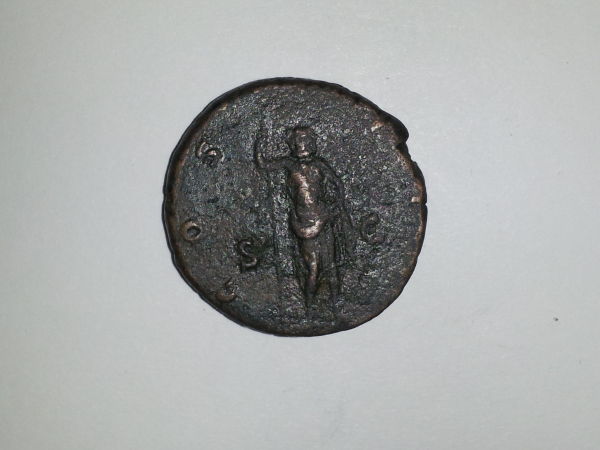 |
|
Moderator
 United States
23731 Posts |
I only have two coins to enter, but they are related to each other in time and events. They have both been posted here before but I think fit this smackdown. 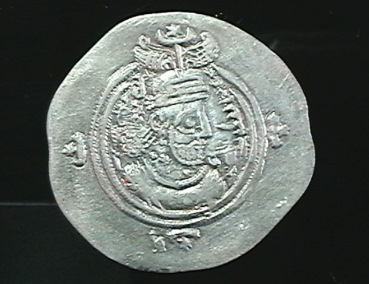 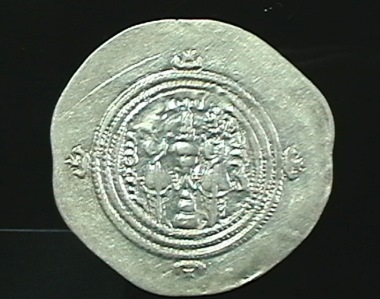 Sasanian Kingdom AR Drachm Khusro II 591-628 AD 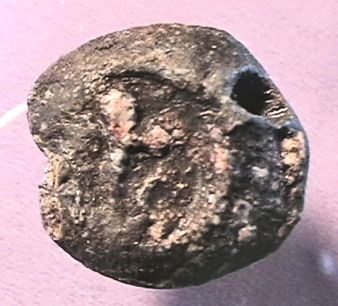 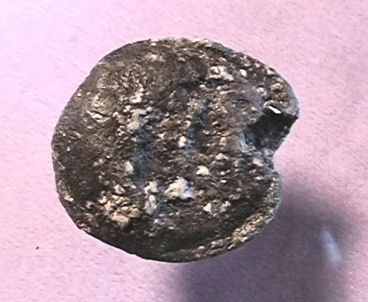 True Cross Token struck circa 610 AD under Heraclius These coins are related that the Byzantine emperor Heraclius defeated Khusro II and won back Jerusalem and the True Cross that were taken by the Sasanians. The token was made to commemorate that event. |
|
Pillar of the Community
United States
4778 Posts |
The 6th century AD (500s AD), aka the beginning of the Middle Ages, which followed the twilight of Roman power in the west, and was a time of devastating conflict between the Romans of the east and the Germanic conquerors of Western Europe and North Africa. Eastern Roman Empire (Byzantine Empire) - Justinian IReigned 527-565 AD AE Follis, struck 541 AD Constantinople mint  Vandal Kingdom of North Africa - under Thrasamund, Hilderic, or Gelimer Vandal Kingdom of North Africa - under Thrasamund, Hilderic, or GelimerThrasamund: reigned 496-523 AD, Hilderic: reigned 523-530 AD, Gelimer: reigned 530-534 AD AE 4 Nummi, struck 498-534 AD Carthage mint  Ostrogothic Kingdom of Italy - Under Theodoric or Athalaric Ostrogothic Kingdom of Italy - Under Theodoric or AthalaricTheodoric: reigned 493-526 AD, Athalaric: reigned 526-534 AD AE Half-Follis, struck 498-534 AD Rome mint  Edited by VisigothKing
11/12/2013 8:16 pm
|
|
Pillar of the Community
United Kingdom
3626 Posts |
OK mine might not be as pretty as some but I should pick up 5 points for the timeline: Caracella 198 - 217 AD. Silver Denarius. Rome 215. Laur. bust rt. Rev. Fides Militum stg. left holding a legionary standard in each hand. Sear 6840. Very Fine. 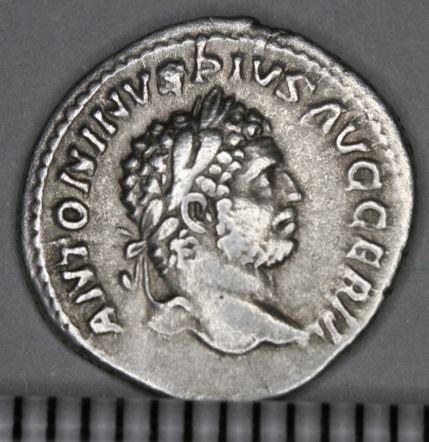 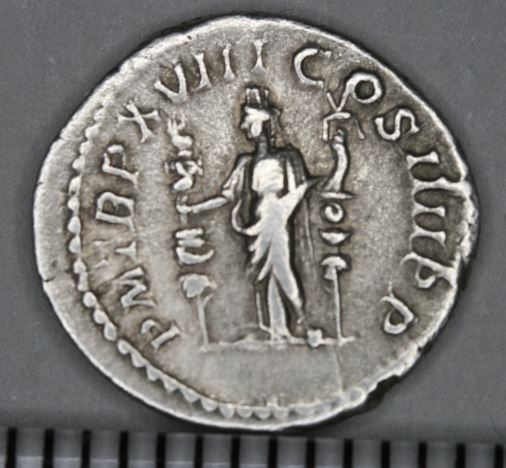 Macrinus: Province Thrace City Deultum Size (mm) 23 Weight (g) 9.25 Ob. Leg. IMP C M OPE SEV MACRINVS PI Ob. Desc. Radiate head right â€" seen from behind Rev. Leg. COL F L PAC DEVLT Rev. Desc. Priest veiled, driving two oxen References; Collection; Moushmov 3544; SNG Bulgaria 121-122; Jurvkova 44; Notes: This act was part of the city founding ceremony. Reverse die match with Moushmov Plate XXII (3) 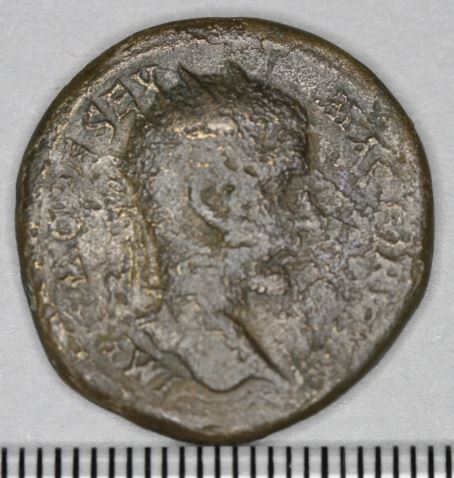 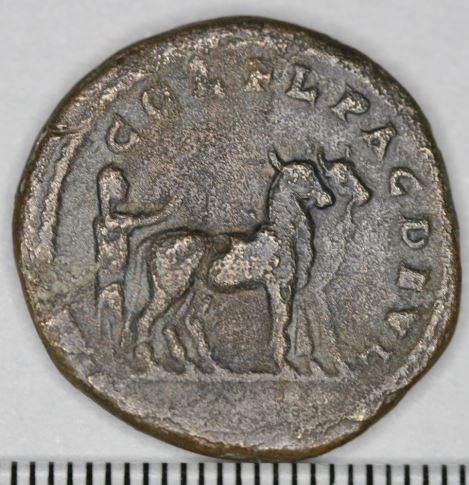 Diadumenian.: Thrace, Deultum. 217-218 AD. Æ 20mm (5.71 gm). Bare-headed, draped and cuirassed bust right / Cupid riding on dolphin right. Unpublished in the major references. 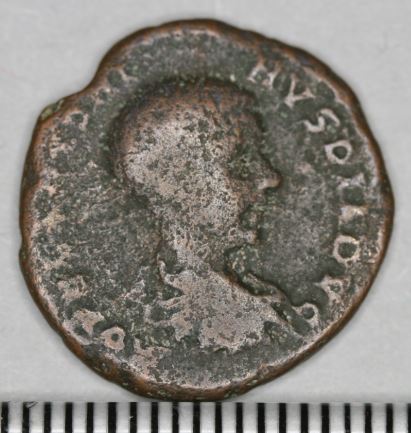 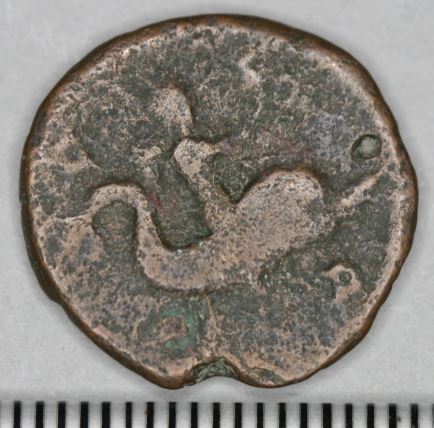 |
|
Pillar of the Community
 United States
5155 Posts |
Oh wow Great choices all! Keep them coming. Ya'll had me worried there for a second. I knew you guys wouldn't let me down.
|
|
Pillar of the Community
United States
2480 Posts |
Debating about what to enter, I have a basic idea for my two entries of three coins each.
If I post something and change my mind before the entry, can I change it before the deadline?
|
|
Pillar of the Community
United States
5155 Posts |
|
|
Pillar of the Community
United States
2480 Posts |
Still debating, seeing which coins form the best sets. I don't have things very organized so I have to dig through bookmarks.
One of my entries may involve some coins that are still in transit. I'll have to use the seller's photos.
Some others haven't been photographed yet.
|
|
Pillar of the Community
United States
870 Posts |
I'm rather fond of 3rd century coins myself. I suppose maybe becuase you can get some spectacular examples for pretty affordable prices. Here are a few. Macrinus (A.D. 217-218) AR Denarius, A.D. 217-218, Rome, 19.2mm, 3.82g, 0°, RIC IVii, 59 Obv: IMP C M OPEL SEV MACRINVS AVG. Laureate, cuirassed bust right. Rev: FELICITAS TEMPORVM. Felicitas standing left, holding caduceus and cornucopia.  Severus Alexander AE Sestertius, A.D. 231-235, Rome, 30mm, 22.80g, 0°, RIC IVii 648c. Obv: IMP ALEXANDER PIVS AVG. Laureate, draped bust right. Rev: SPES PVBLICA. Spes advancing left, holding flower and raising skirt; S C in field.  Aurelian (AD 270-275) Silvered Antoninianus, A.D. 272-273, Unknown mint, 23.2mm, 4.25g, 0°, RIC V 394; scarce. Obv: IMP AVRELIANVS AVG. Radiate and cuirassed bust right. Rev: IOVI CONSER. Aurelian standing right with scepter in left, receiving globe from Jupiter with scepter; B in ex.  |
|
Pillar of the Community
United States
5155 Posts |
I wake up this morning and see some fabulous coins posted for this smackdown. We have tons of great coins... We have DUK with the 4th century BC Dwayne with the sencond century AD Numisrob- out on a limb with the 15th century AD (well played) Pish and Marti battling for 3rd century supremacy (what a crisis  ) Echizento holding on to the 7th century with 2 strong entries. Eng- with the beautiful second 2nd century BC coins. I also have to mention the VK, with tons of extra points - different empires, all within a decade and is currently standing alone in the 6th century AD. Holy Smokes guys, this one is going to be a wild ride. |
|
Pillar of the Community
United States
5010 Posts |
ok, I got dibs on the first century bc...  celtic durotriges tribe, I think a quarter stater. I lost my reverse pic...but there isn't anything to see any...just a bit convex.   parthian kingdon ordones i, drachm   scythian, spalaphores (with spalagadmes, hemiobol Edited by chrsmat71
11/13/2013 8:23 pm
|
|
Pillar of the Community
United Kingdom
2624 Posts |
Wow Chris, very impressed with the first two of your coins... the Parthian coin sure has some eye appeal and is that Durotriges silver or base metal because their silver supply got cut off from them and they quickly debased the coinage making their silver coinage much rarer. I only have a base metal one (bought off the bay described as "possibly silver" but it turned out not to be sadly.)
|
|
Pillar of the Community
United States
5010 Posts |
duk, I'm pretty sure it's billon, but not 100%. I would be pleasantly surprised if it were silver.
is there a quick and easy way the tell the difference?
|
|
Valued Member
United Kingdom
201 Posts |
Great coins so far everyone ... My first entry is for the 1st Century BC. In order of date: Coin1 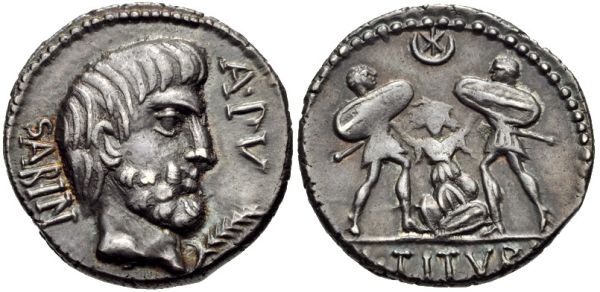 L. Titurius L.f. Sabinus. 89 BC. AR Denarius (17mm, 3.31 g, 3h). Rome mint. Head of Tatius right; palm below chin / Tarpeia buried to her waist in shields, fending off two soldiers about to throw their shields on her. Crawford 344/2c; Sydenham 699a; Tituria 5 Ex Jörg Müller Collection Coin2 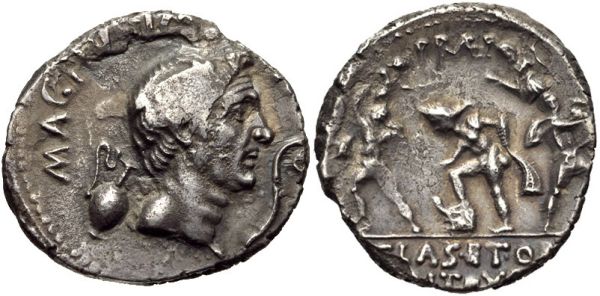 Sextus Pompey. 42-40 BC. AR Denarius (18mm, 3.48 g, 3h). Uncertain Sicilian mint, possibly Catana. Bare head of Pompey the Great right; capis behind, lituus before / Neptune standing left, holding aplustre and resting foot on prow between the Catanaean brothers Anapias and Amphinomus running in opposite directions, bearing their parents on their shoulders. Crawford 511/3a; CRI 334; Sydenham 1344; RSC 17 Ex J.P. Righetti Collection Coin3 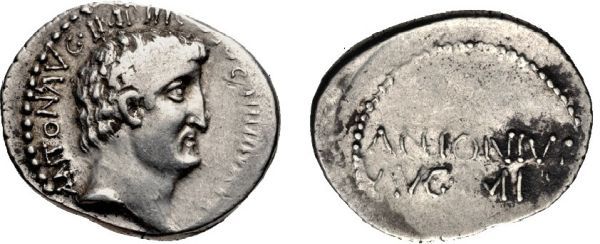 Mark Antony. Summer 32 BC. AR Denarius (21mm, 3.80 g, 12h). Athens mint. Bare head right; small P (signature) in hair below ear / Legend in two lines across field. Crawford 542/2; CRI 347; Sydenham 1209; RSC 2 |
|
Pillar of the Community
United Kingdom
2624 Posts |
@Chrismat71 - Other than by Aristotle's techniques for measuring density (weight in comparison to water displaced and/or difference between weight in water and weight out of water) you would have to mark the coin with an acid test; though I am sure some people by virtue of experience could tell just by looking carefully at it.
|
| |
Replies: 81 / Views: 12,262 |








 First Page


 Posted 11/12/2013 7:29 pm


