| Author |
 Replies: 11 / Views: 2,298 Replies: 11 / Views: 2,298 |
|
|
Pillar of the Community
Australia
1041 Posts |
|
|
|
|
Pillar of the Community
Australia
1006 Posts |
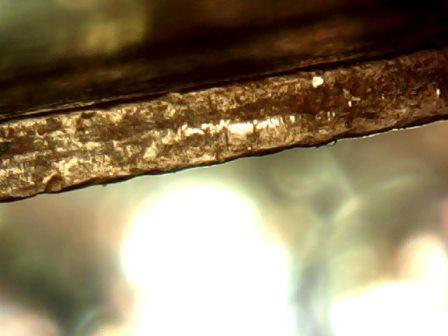
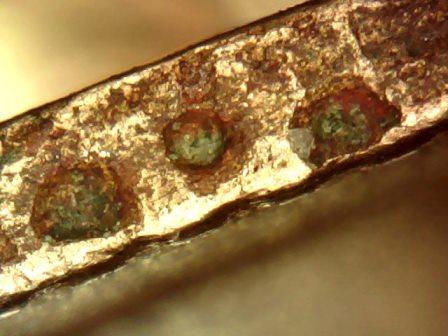
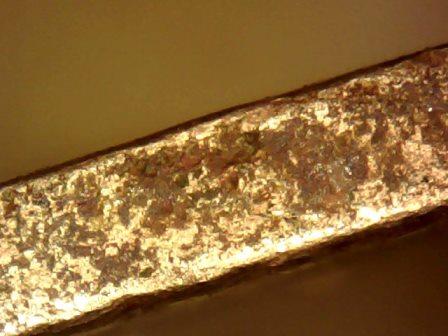
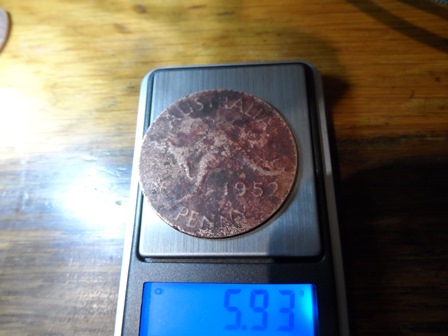
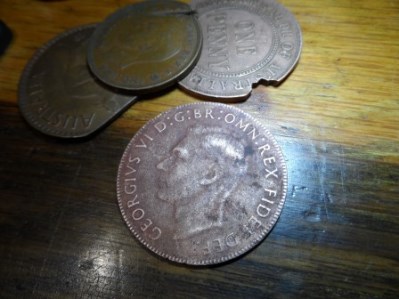
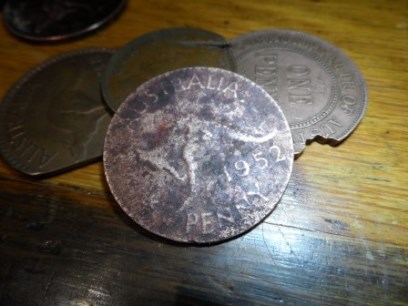
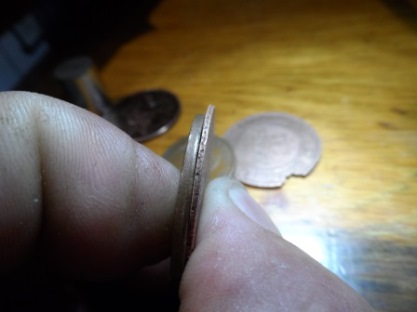
In my opinion it is almost definetely man made the main signs for me were the what looks like filed rims and I don't think the wear on the rim is consistent with the wear on the rest of the coin as well as the weight but I am happy to be wrong about this one someone else should be along soon to say either way
|
|
Pillar of the Community
 Australia
1041 Posts |
it is exact same size as a penny 30.6mm across
|
|
Pillar of the Community
Australia
1006 Posts |
Well that is quite interesting then. Now I am curious what has caused the damage on the reverse rim hmm.
|
|
Moderator
 United States
14463 Posts |
It was probably dipped in acid long ago. Then got circulation wear/dirt after the acid bath.  |
|
Pillar of the Community
Australia
1041 Posts |
|
|
Pillar of the Community
Australia
1874 Posts |
I also think it has been dipped in acid. I have a 1917 Australian Penny that looks very similar to this. The acid ate away the detail evenly.
|
|
Pillar of the Community
Australia
1041 Posts |
sounds like it there is a 1922 penny the same look and I think acid on that one
|
|
Valued Member
Australia
271 Posts |
I'm very curious to know how the diameter of the coin has not "shrunk" at the same ratio as the rest of the coin. I had(have, I think) a halfpenny exactly the same.
|
|
Pillar of the Community
Australia
1041 Posts |
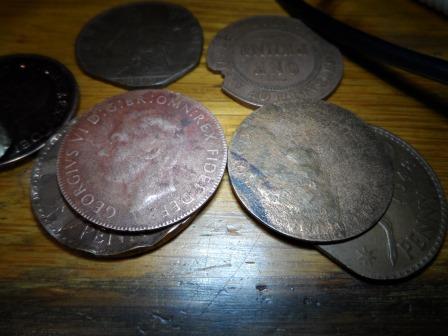
very thin and very week strike it does not have that acid feel to it still smoth to touch I have a acid one and its still rough to touch this is a acid coin beside it 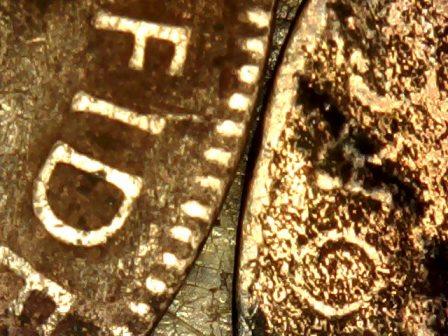 |
|
Pillar of the Community
Australia
1041 Posts |
|
|
Moderator
Australia
16963 Posts |
Different acids and different strengths of the same acid can react differently. A vigorous reaction is likely to create a rough, uneven, highly pitted surface. A gentler digestion (in, for example, coca-cola) will create a much more even effect, generally reducing the entire surface of the coin all at once without distorting or damaging the actual design of the coin. Quote:
I'm very curious to know how the diameter of the coin has not "shrunk" at the same ratio as the rest of the coin. Because the acid attacks surface area, not volume. The acid attacks all surfaces simultaneously and at the same rate. Suppose you leave a coin for long enough in acid strong enough that 0.5mm of metal will be dissolved. That means the coin will lose 1mm of thickness (because the acid attacks both sides) and 1mm diameter (because the acid is attacking all the way around the rim). A 1mm shrinkage in thickness is much more noticeable than a 1mm shrinkage in diameter. Leave the coin in there long enough and it will be wafer-thin, but only a couple of mm smaller than a normal coin. Don't say "infinitely" when you mean "very"; otherwise, you'll have no word left when you want to talk about something really infinite. - C. S. Lewis
|
| |
Replies: 11 / Views: 2,298 |
|








 Posted 11/22/2013 06:57 am